
Pamukkale sits in southwestern Turkey, famous for its surreal white terraces and mineral-rich hot springs. But there is much more than just the iconic pools here. The area blends natural wonders, ancient ruins, and vibrant local life, making it a top destination for travelers looking for a unique experience.
If you want to discover the best tourist places in Pamukkale, this guide covers the must-see spots, practical tips, and hidden gems that often escape first-time visitors.
Pamukkale Travertines
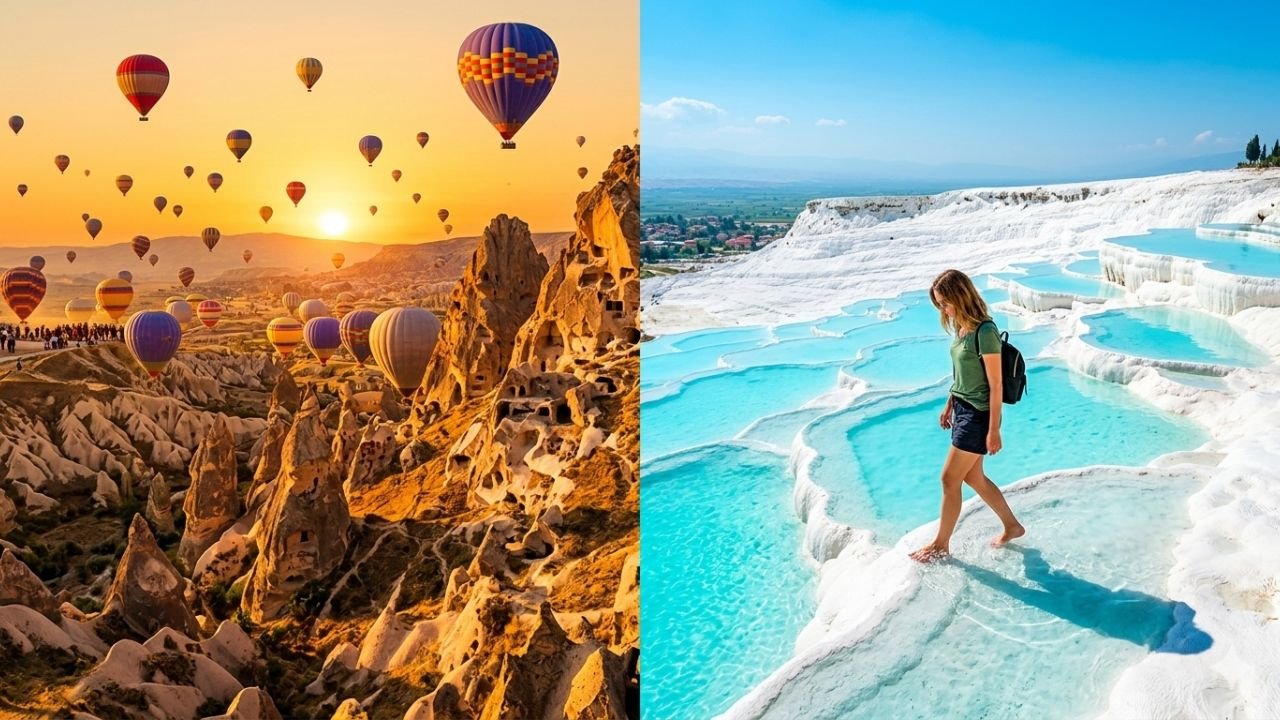
The Pamukkale travertines are the most recognizable symbol of the region. These bright white terraces are formed by calcium deposits from hot spring water, creating a series of shallow pools that cascade down the hillside. The effect looks almost like a frozen waterfall or a landscape from another planet.
Visitors can walk barefoot along designated paths to protect the delicate formations. The experience is both relaxing and photogenic, especially during sunrise or sunset when the light makes the white rocks glow. In summer, these terraces can get crowded, so visiting early in the morning gives you a quieter, more magical experience.
Non-obvious tip: The water temperature varies by pool. The lower pools are often cooler, so try climbing higher for warmer spots.
Hierapolis Ancient City
Right above the travertines sits the ancient city of Hierapolis, a UNESCO World Heritage Site. Founded in the 2nd century BC, this Greco-Roman city was famous for its baths, temples, and theater.
Notable highlights include:
- Theater: Seating around 12,000 people, this well-preserved structure still hosts performances today. The carvings and backdrop are impressive for history fans and casual travelers alike.
- Necropolis: One of the largest ancient cemeteries in Turkey, filled with sarcophagi and tombs.
- Temple of Apollo: Believed to be the center of ancient religious life in Hierapolis.
Archaeological work continues, so you may see ongoing excavations during your visit. Many travelers miss the northern Necropolis because it’s a bit farther from the main entrance, but it’s well worth the walk.
Cleopatra’s Antique Pool
This unique pool lets you swim among ancient columns and marble blocks, said to have fallen during an earthquake. The water is a comfortable 36°C (97°F), rich in minerals, and believed to have healing properties.
- Entrance fee is separate from the main site.
- Changing rooms, lockers, and a café are available.
- Bring swimwear and a towel; water shoes are optional but can help with the slippery floor.
Insider tip: Arrive early or late in the day to avoid large crowds. The pool is busiest in the afternoon.
Pamukkale Natural Park
Located at the base of the travertines, this park offers green lawns, a small lake, and paddle boats. It’s a perfect spot for families or anyone wanting a relaxing break from sightseeing. The park gives you a great view of the white terraces, especially for photos.
Hidden insight: The park’s pond reflects the travertines in the afternoon, creating beautiful mirror-like images.

Credit: www.myfreerangefamily.com
Archaeology Museum Of Hierapolis
Inside the former Roman baths, this museum displays artifacts unearthed from Hierapolis and nearby Laodicea. Exhibits include:
- Sculptures
- Sarcophagi
- Ancient coins
- Jewelry and daily items
Descriptions are in both Turkish and English. It’s a small museum, but the collection provides valuable context about the region’s rich history.
Karahayit Red Springs
About 5 kilometers from Pamukkale, Karahayit village is known for its red-colored hot springs. The iron-rich water creates a striking contrast to the white travertines of Pamukkale.
- The spring pools are open to visitors year-round.
- Temperatures can reach 55°C (131°F).
- Locals believe the water helps with skin and joint problems.
You’ll find small shops selling local products, including red clay and herbal creams.
Credit: exploreturkeys.com
Honaz Mountain National Park
For nature lovers, Honaz Mountain offers hiking trails, picnic areas, and panoramic views of the region. The summit is the highest point in western Turkey at 2,571 meters. In spring and early summer, wildflowers cover the slopes.
Hiking here is less crowded than the main attractions in Pamukkale. You’ll need sturdy shoes and should check the weather, as it can change quickly at higher altitudes.
Laodicea Ancient City
Just 10 kilometers from Pamukkale, the ruins of Laodicea are often overlooked but are worth a visit. This ancient city was a major trade and religious center, mentioned in the Bible’s Book of Revelation.
Highlights include:
- Two theaters
- Stadium
- Church ruins
- Roman streets
Excavations are ongoing, and new discoveries are frequent. There’s less tourist traffic, so you can explore at your own pace.
Credit: www.travel-break.net
Local Markets And Experiences
Pamukkale’s small town center has street markets selling:
- Handmade textiles
- Olive oil products
- Dried fruits and nuts
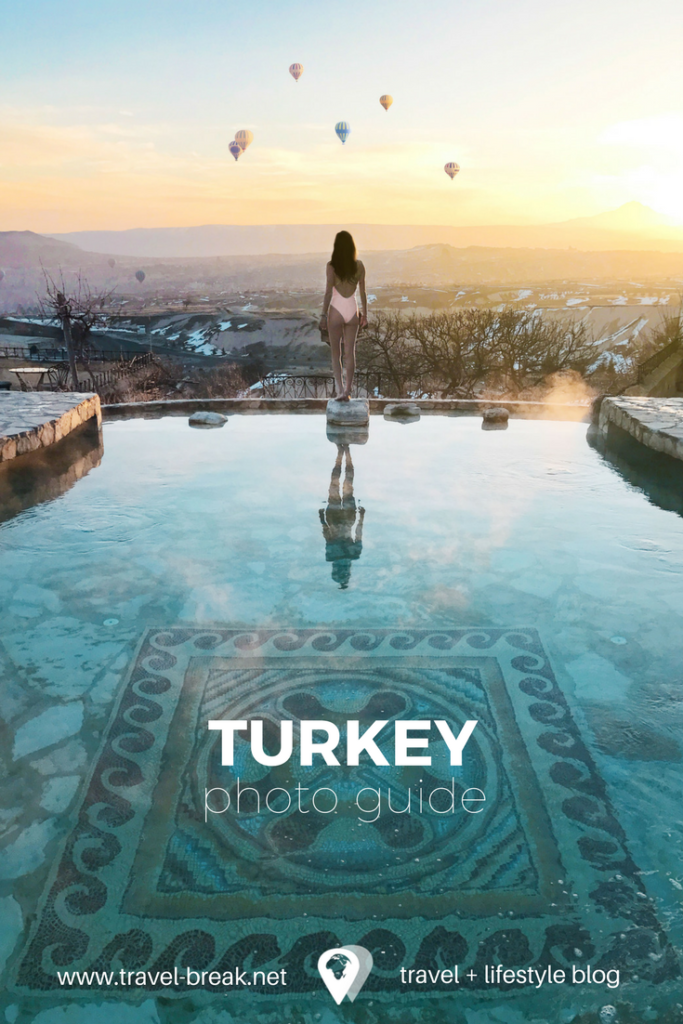
Trying local dishes like gözleme (Turkish pancake) or pomegranate juice adds flavor to your visit. If you have time, book a hot air balloon ride for a bird’s-eye view of the terraces and ancient ruins.
Sample Itinerary Comparison
To help you plan, here’s a quick side-by-side look at two sample itineraries:
| Day Trip (1 Day) | Overnight Stay (2 Days) |
|---|---|
| Arrive early morning | Arrive afternoon, relax in Natural Park |
| Visit Travertines & Hierapolis | Sunset at Travertines |
| Swim in Cleopatra’s Pool | Morning: Hierapolis & Museum |
| Return or continue to next city | Karahayit Red Springs & Laodicea |
Entrance Fees And Opening Hours (2024)
Here is a quick overview of entrance fees and times for the main attractions:
| Attraction | Fee (TRY) | Opening Hours |
|---|---|---|
| Pamukkale Travertines & Hierapolis | 700 | 06:30 – 21:00 (summer) |
| Cleopatra’s Pool | 200 | 08:00 – 20:00 |
| Museum of Hierapolis | Included | 08:00 – 19:00 |
| Laodicea | 250 | 08:00 – 20:00 |
*Fees are for adults. Prices may change, so always check the official Pamukkale Tourism site for the latest information. *
Frequently Asked Questions
Is It Safe To Walk On The Travertines?
Yes, walking is allowed in designated areas, but you must remove your shoes to protect the delicate surface. Some spots can be slippery, so walk slowly and watch your step.
Can You Swim In The Pamukkale Pools?
Swimming is not allowed in most travertine pools to preserve them. You can swim in Cleopatra’s Antique Pool and the Karahayit Red Springs.
What Is The Best Time To Visit Pamukkale?
The best months are April to June and September to October. The weather is mild, and crowds are smaller. Summer can be very hot and busy.
How Do You Get To Pamukkale From Istanbul?
You can fly to Denizli Airport (about 65 km away), then take a shuttle or taxi. Trains and buses also connect major Turkish cities to Denizli.
Are Guided Tours Worth It?
Guided tours help you understand the history and geology better, especially in Hierapolis. If you prefer exploring alone, audio guides and information boards are available.
Pamukkale is more than just a stunning landscape. It’s a place where history, nature, and local life come together. Whether you’re here for a day or a week, exploring the best tourist places in Pamukkale will leave you with unforgettable memories. For more background and planning help, check the official Wikipedia page.
