
Exploring the Hiking Difficulty Scale: How to Choose the Right Trail
Hiking is one of the most popular outdoor activities, loved for its mix of exercise, adventure, and connection with nature. But not all trails are created equal. Some are gentle strolls through forests, while others climb steep mountains with rocky paths. For both beginners and experienced hikers, understanding the hiking difficulty scale is essential. It helps you pick trails that match your abilities, avoid dangerous situations, and plan for a safe and enjoyable hike.
Many people make the mistake of underestimating or overestimating a trail, often because they do not fully understand the grading system. Choosing a trail that is too difficult can lead to injuries or a miserable experience. On the other hand, picking a hike that is too easy may leave you bored and unchallenged.
This is where the hiking difficulty scale comes in—it offers a common language for hikers, guides, and park managers to rate trail challenges.
In this guide, you’ll learn how hiking trails are graded, what each level means, the factors that influence difficulty, and how to match a trail to your skill level. You’ll also discover non-obvious tips for using the scale, practical examples, and answers to common questions.
Whether you’re planning your first walk in the woods or aiming to conquer mountain peaks, this article will help you use the hiking difficulty scale to hike smarter and safer.
What Is A Hiking Difficulty Scale?
A hiking difficulty scale is a system that rates trails based on their challenge level. These scales provide clear, simple categories that help hikers know what to expect before setting foot on a trail. The main goal is to prevent surprises and ensure everyone, from beginners to experts, can choose a suitable hike.
Why Do We Need A Difficulty Scale?
Trails vary widely in length, terrain, elevation gain, weather exposure, and other factors. Without a standard system, a short but steep and rocky trail could be more dangerous than a long but flat one. Difficulty ratings allow hikers to:
- Prepare properly with the right gear and supplies
- Avoid trails that are too hard or risky
- Make informed decisions, especially in unfamiliar areas
- Communicate better with friends, guides, and rescue teams
Who Uses These Scales?
National parks, hiking clubs, guidebook authors, and mobile apps often use difficulty scales. They appear on trailhead signs, websites, and maps. Some countries or regions have their own systems, but most follow similar principles.
Popular Hiking Difficulty Scales Around The World
While there’s no single global standard, several well-known hiking difficulty scales are used in different regions. Here are the most widely used:
1. The Yosemite Decimal System (yds)
Used across North America, the Yosemite Decimal System rates trails and climbs from Class 1 (easiest) to Class 5 (technical rock climbing).
| Class | Description | Typical Example |
|---|---|---|
| Class 1 | Easy walking on well-defined trails | City park paths |
| Class 2 | Hiking with some obstacles; may require hands for balance | Rocky or root-filled trails |
| Class 3 | Scrambling with handholds needed; exposure to heights possible | Steep mountain paths |
| Class 4 | Simple climbing; fall could be fatal; rope may be used | Exposed ridges |
| Class 5 | Technical rock climbing with safety gear | Vertical cliffs |
2. The Sac Hiking Scale (switzerland And Europe)
The Swiss Alpine Club (SAC) Hiking Scale is widely used in Switzerland and adopted by other European countries. It divides hikes into six levels (T1 to T6):
- T1 (Hiking): Well-marked, easy paths, no risk of falling
- T2 (Mountain Hiking): Steeper, may have loose rocks, minimal exposure
- T3 (Difficult Mountain Hiking): Narrow paths, exposed sections, sure-footedness needed
- T4 (Alpine Hiking): Unmarked paths, use of hands, possible snowfields
- T5 (Difficult Alpine Hiking): Exposed, steep, technical skills required
- T6 (Demanding Alpine Hiking): Challenging terrain, advanced mountaineering skills
3. Australian Walking Track Grading System
Australia uses a five-grade system:
- Grade 1: Flat, easy, suitable for wheelchairs
- Grade 2: Mostly flat, suitable for beginners
- Grade 3: Some rough surfaces, moderate fitness needed
- Grade 4: Steep sections, rough terrain, experience needed
- Grade 5: Very challenging, for highly experienced hikers
4. Uk And Ireland Trail Gradings
Many UK trails use simple terms: Easy, Moderate, Hard, and Severe. Guidebooks and national parks sometimes add descriptions for clarity.
5. Local And Park-specific Systems
Some parks create their own systems, often using color codes (green, blue, black) similar to ski trails.
| Color | Difficulty | Typical User |
|---|---|---|
| Green | Easy | Beginners, families |
| Blue | Intermediate | Regular hikers |
| Black | Challenging/Expert | Experienced hikers |
Key Factors That Determine Hiking Difficulty
Understanding a trail’s rating means knowing what goes into it. Difficulty is never about just one thing. Here are the main factors considered when grading a hiking trail:
Elevation Gain And Loss
The more a trail climbs or descends, the harder it is. For example, a 2-mile trail with a 1,000-foot gain is much tougher than a flat 2-mile trail. Steep grades put strain on your legs and lungs.
Trail Surface And Terrain
Smooth dirt paths are easier than rocky, muddy, or uneven ones. Trails with large roots, loose stones, or slippery sections require more care and skill.
Trail Length
Longer trails demand more stamina and time. A 10-mile hike, even if mostly flat, can be challenging for beginners.
Technical Features
Some trails have ladders, ropes, river crossings, or scrambling sections (using hands to climb rocks). These require extra skills and confidence.
Exposure And Risk
Exposure means how dangerous a fall would be. Narrow ridges, cliffs, or high drop-offs raise the risk and mental challenge.
Navigation
Some trails are clearly marked, while others may be faint or unmarked, making it easy to get lost. Good navigation skills are needed for harder trails.
Weather And Seasonal Changes
A trail rated “moderate” in summer can become “hard” in winter due to snow, ice, or flooding. Always check recent conditions.
Remoteness And Rescue Access
Remote trails with poor cell service and limited rescue options are riskier. Difficult trails often take longer to reach help if needed.
How To Use The Hiking Difficulty Scale
Knowing the scale is only useful if you apply it correctly. Here’s how to use it to plan your hikes:
1. Know Your Fitness And Skills
Be honest about your abilities. Can you walk uphill for an hour without stopping? Are you comfortable with heights? If you’re new, start with “easy” or “moderate” trails and work up.
2. Read The Full Trail Description
Difficulty ratings are a summary. Always read the full trail guide, which may mention obstacles, hazards, or unique features not captured by the rating.
3. Consider The Conditions
A trail that’s easy on a dry day can be dangerous in rain or snow. Always check the weather forecast and recent trail reports.
4. Plan For Extra Time
Don’t just look at the distance. Rocky or steep trails are slow going. Most hikers average 2 miles per hour on easy terrain, but this can drop to 1 mile per hour or less on hard trails.
5. Choose The Right Group
If hiking with others, pick a trail that matches the least experienced person’s ability. It’s safer and more enjoyable for everyone.
6. Bring Appropriate Gear
Harder trails require better footwear, more water, navigation tools, and sometimes safety equipment (like helmets or ropes).
7. Start Simple
If you’re new to hiking, start with well-marked, easy trails. Build your skills and confidence before trying harder routes.
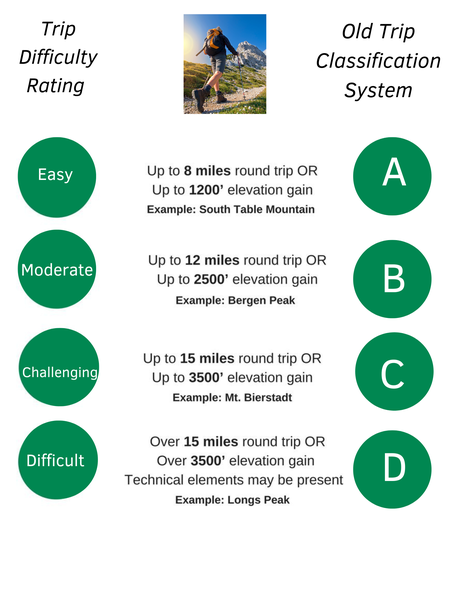
Credit: www.cmc.org
Comparing Hiking Difficulty Ratings In Practice
Let’s look at how different systems rate the same type of hike. Imagine a 5-mile trail with a 1,000-foot climb, some rocky sections, and a short, steep scramble.
| Rating System | Difficulty | Notes |
|---|---|---|
| Yosemite Decimal System | Class 2–3 | Mostly hiking, some scrambling |
| SAC Scale | T2–T3 | Mountain hike, some exposure |
| Australian System | Grade 3–4 | Moderate to hard, rocky sections |
| UK/Color Coding | Moderate/Blue | For regular hikers |
This shows why it’s important to read the full description, not just the number or color. The same trail might be “moderate” in one system and “hard” in another, depending on local standards.
Common Misunderstandings About Hiking Difficulty
Many beginners misinterpret the scale or rely too much on a single rating. Here are two insights most people miss:
1. Difficulty Is Relative To Experience
A “moderate” trail for a fit, experienced hiker can be very challenging for a beginner. Your background in sports, age, and comfort with heights or rough terrain all matter.
2. Ratings Don’t Tell The Whole Story
Some trails have one short, hard section but are otherwise easy. Others are long but not technical. Read the whole description and look at photos or videos if possible.
3. Emotional And Mental Challenge Matters
Exposure to heights or narrow ridges can feel much harder than the physical effort. If you have a fear of heights, avoid exposed trails even if the technical grade is low.
4. The Same Trail Can Change
Weather, trail maintenance, and even seasonal changes can make a trail easier or harder. A “moderate” trail in spring may be “hard” after heavy rain or landslides.
Tips For Choosing The Right Trail Using The Difficulty Scale
Picking the right trail is a mix of science and personal judgment. Here’s how to get it right:
- Assess your recent hikes: If you handled a 3-mile, 500-foot gain trail easily, try the next level up.
- Check recent trail reports: Look for comments on conditions, obstacles, or changes.
- Ask locals or park staff: They know current trail conditions and can suggest routes.
- Start early in the day: Harder trails take longer; an early start gives you more daylight and less risk.
- Don’t be afraid to turn back: If a trail feels too hard or unsafe, it’s smart to stop and try again another day.
- Track your progress: Use apps or a hiking journal to note what feels easy or hard for you.
- Travel with a group: Especially on hard or remote trails, hiking with others adds safety and support.
Trail Difficulty And Safety: What You Need To Know
Difficulty ratings are not just about fitness—they directly impact your safety. Here’s how:
Risk Of Injury
Harder trails mean more chances to trip, fall, or get lost. According to the National Park Service, most hiking injuries happen on trails rated “moderate” or “hard” because hikers underestimate the challenge.
Need For More Gear
Easy trails may only require water and snacks. Harder trails need better shoes, maps, more food, and sometimes ropes or helmets.
Emergency Response
Remote, hard trails take longer for rescue teams to reach. Cell phone service may be poor. Always leave your hiking plan with someone.
Weather Risks
High, exposed trails are more likely to have sudden storms or cold winds. Know the weather forecast and pack layers.
How Difficulty Ratings Influence Trail Management
Difficulty scales do more than help hikers—they guide park managers and rescue teams. Here’s how:
- Trail Maintenance: Harder trails need more repairs and safety checks.
- Signage: Easy trails get more signs for beginners; hard trails may have warnings.
- Rescue Planning: Knowing which trails are most dangerous helps plan for emergencies.
- Visitor Education: Parks use ratings to teach safe hiking practices.
Technology And Hiking Difficulty: The Role Of Apps
Modern technology has made it easier to access trail ratings and conditions. Apps like AllTrails, Gaia GPS, and Komoot provide:
- User-submitted difficulty ratings and reviews
- GPS maps with real-time progress
- Alerts about trail closures or hazards
However, remember that user ratings can be subjective. A trail someone rates as “easy” may be hard for you. Always double-check with official sources or park websites.
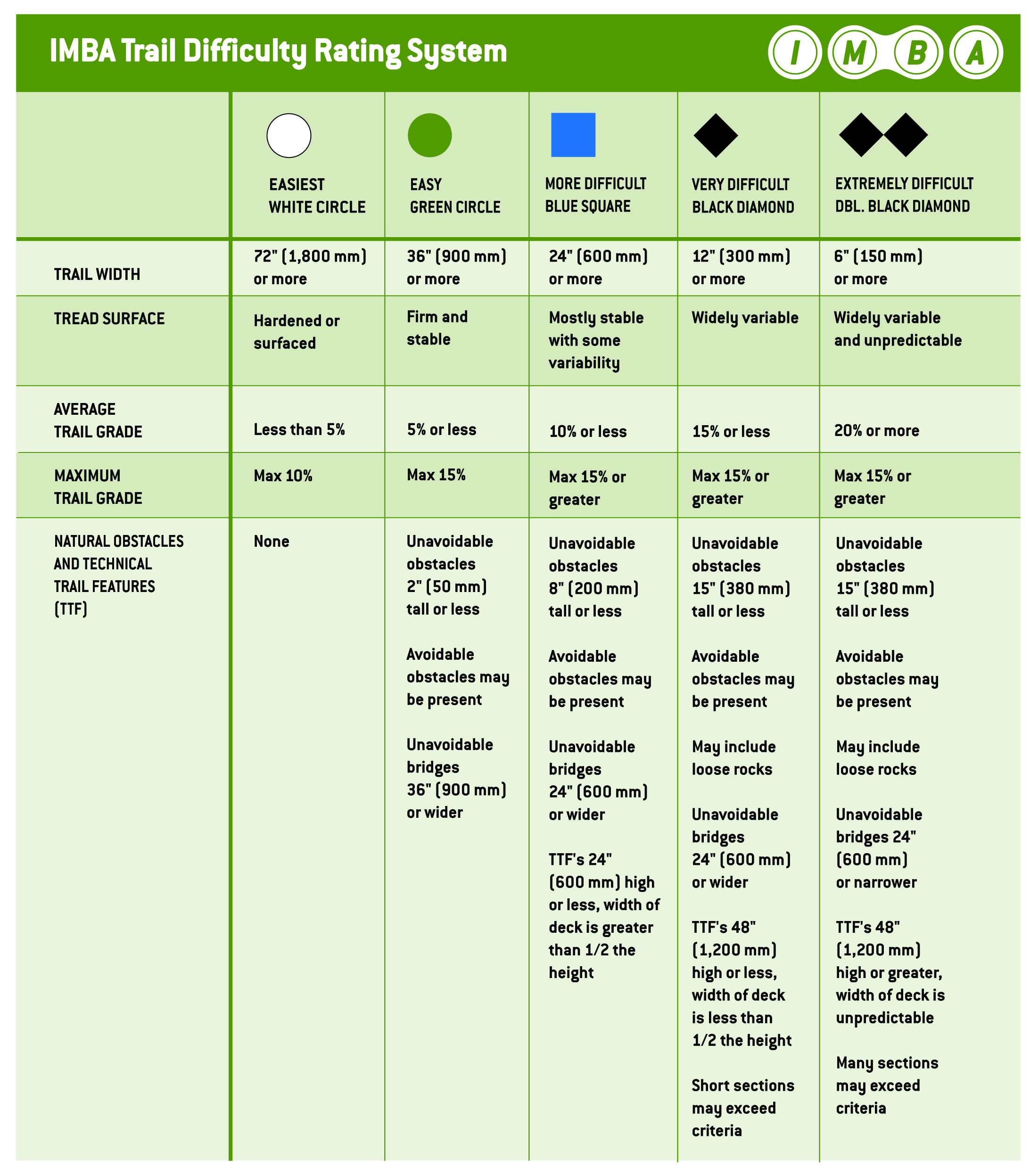
Credit: trailism.com
Example: Using The Scale To Plan A Family Hike
Imagine you want to take your family (including young kids and grandparents) on a hike. Here’s how you’d use the difficulty scale:
- Look for trails rated “Easy” or “Grade 1–2” in your area.
- Check the distance: Aim for under 3 miles.
- Read the description: Avoid trails with steep sections or rough surfaces.
- Check facilities: Pick a trail with restrooms and shade.
- Pack accordingly: Bring snacks, water, and sun protection.
This process helps ensure everyone enjoys the hike and stays safe.
How To Move Up The Difficulty Scale
As you gain experience, you might want to try harder hikes. Here’s a safe way to do it:
- Increase distance gradually: Add one or two miles to your usual hike.
- Try small elevation gains: Look for trails with 500–1,000 feet of climb.
- Practice on different surfaces: Walk on rocky, muddy, or root-filled paths.
- Join group hikes: Experienced hikers can teach you new skills.
- Take a navigation course: Learn to read maps and use a compass for harder trails.
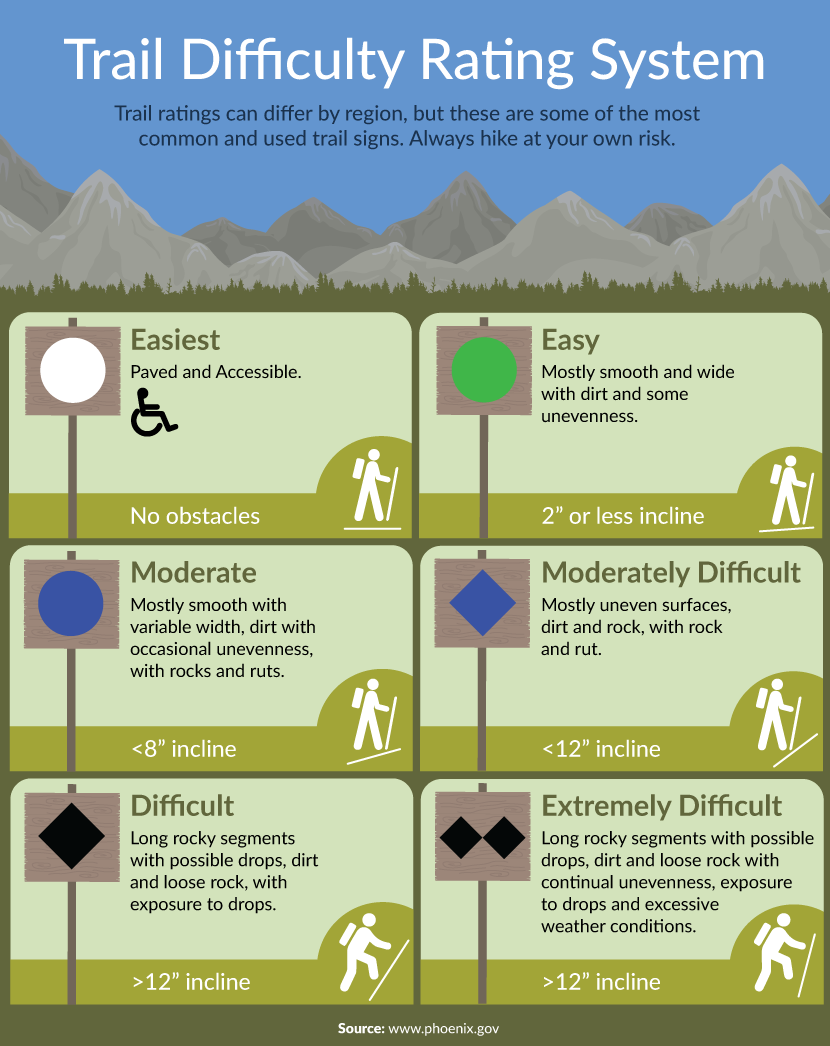
Credit: www.fix.com
When Not To Trust The Difficulty Scale
No system is perfect. Sometimes, the rating may not match reality because:
- The trail has changed due to storms, landslides, or new construction
- Seasonal changes (snow, mud, heat) make it much harder
- The scale doesn’t consider your personal fears or limits
Always use the scale as a guide, not a guarantee.
Non-obvious Insights Most Beginners Miss
- Trailhead Elevation Matters: A trail rated “easy” at sea level may feel much harder if it starts at high altitude. Lower oxygen levels increase the challenge.
- Descent is Often Harder than Ascent: Many hikers focus on climbing up, but going down steep or rocky paths can be tougher on your knees and more dangerous.
- Mental Fatigue Counts: Long, repetitive trails with little scenery can feel much harder than shorter, scenic ones—even if the physical effort is less.
- Trail Maintenance Affects Difficulty: Recently maintained trails are smoother and safer. Poorly maintained ones may have fallen trees, erosion, or unclear markings.
- Hiking with a Heavy Pack Increases Difficulty: If you plan to carry gear for camping, choose a trail one level below your usual comfort zone.
Resources For Checking Trail Difficulty
- Official park websites: National and state parks list trail difficulties and updates.
- Guidebooks: Trusted authors provide detailed, up-to-date trail ratings.
- Apps and forums: User reviews can alert you to recent changes or problems.
- Visitor centers: Staff offer the latest info and advice.
For more detailed grading systems and examples, visit the Wikipedia page on Hiking Difficulty.
Frequently Asked Questions
What Does “moderate” Mean On A Hiking Difficulty Scale?
“Moderate” usually means the trail has some uphill sections, uneven surfaces, or longer distance, but doesn’t require technical skills. It’s best for people with basic fitness and some hiking experience.
Can I Hike A “hard” Trail If I Am A Beginner But Fit?
Fitness helps, but hard trails may have steep climbs, rough terrain, or exposure to heights. Beginners should build experience on moderate trails first, and always go with a partner on harder hikes.
How Accurate Are Hiking Difficulty Ratings?
Ratings are a guide, not a guarantee. Conditions change, and everyone’s abilities differ. Always check recent trail reports, read full descriptions, and start with easier hikes to learn your limits.
Are There Universal Standards For Hiking Difficulty?
There is no single global standard. Most regions use their own scales, but the main factors (distance, elevation, terrain, risk) are similar everywhere. Always check which system is used in your area.
What Should I Do If I Get In Trouble On A Hard Hike?
Stay calm, don’t rush. If you’re lost or injured, stay put and use your phone or whistle to call for help. Always let someone know your plans before hiking difficult trails.
—
Understanding the hiking difficulty scale is your key to safer, more enjoyable adventures. By learning how trails are rated and what each level means, you can plan hikes that match your skills and avoid common mistakes. Remember, the right trail is one that challenges you but doesn’t put you at risk.
Use this knowledge, prepare well, and let every hike build your confidence for the next adventure. Safe trails!
