
Are you wondering what sets hiking apart from trekking? You’re not alone.
Many people use these words interchangeably, but there’s more to them than just a simple difference in names. Understanding how hiking and trekking differ can help you choose the right adventure for your next outdoor trip. Whether you’re planning a weekend walk or a multi-day expedition, knowing what to expect will make your experience safer and more enjoyable.
Keep reading to discover the key differences and find out which activity suits your style best.
Hiking Basics
Hiking is a popular outdoor activity enjoyed by many people worldwide. It involves walking on trails or paths in nature. Hiking helps improve health and offers a chance to explore beautiful places. This activity suits almost all ages and skill levels. Understanding the basics of hiking makes it easier and safer to enjoy.
Hiking varies in difficulty and length. It often takes place in forests, hills, or mountains. Knowing the right gear and preparation helps hikers stay comfortable and safe. Let’s explore some key hiking basics to guide beginners and curious readers.
Common Trails And Terrain
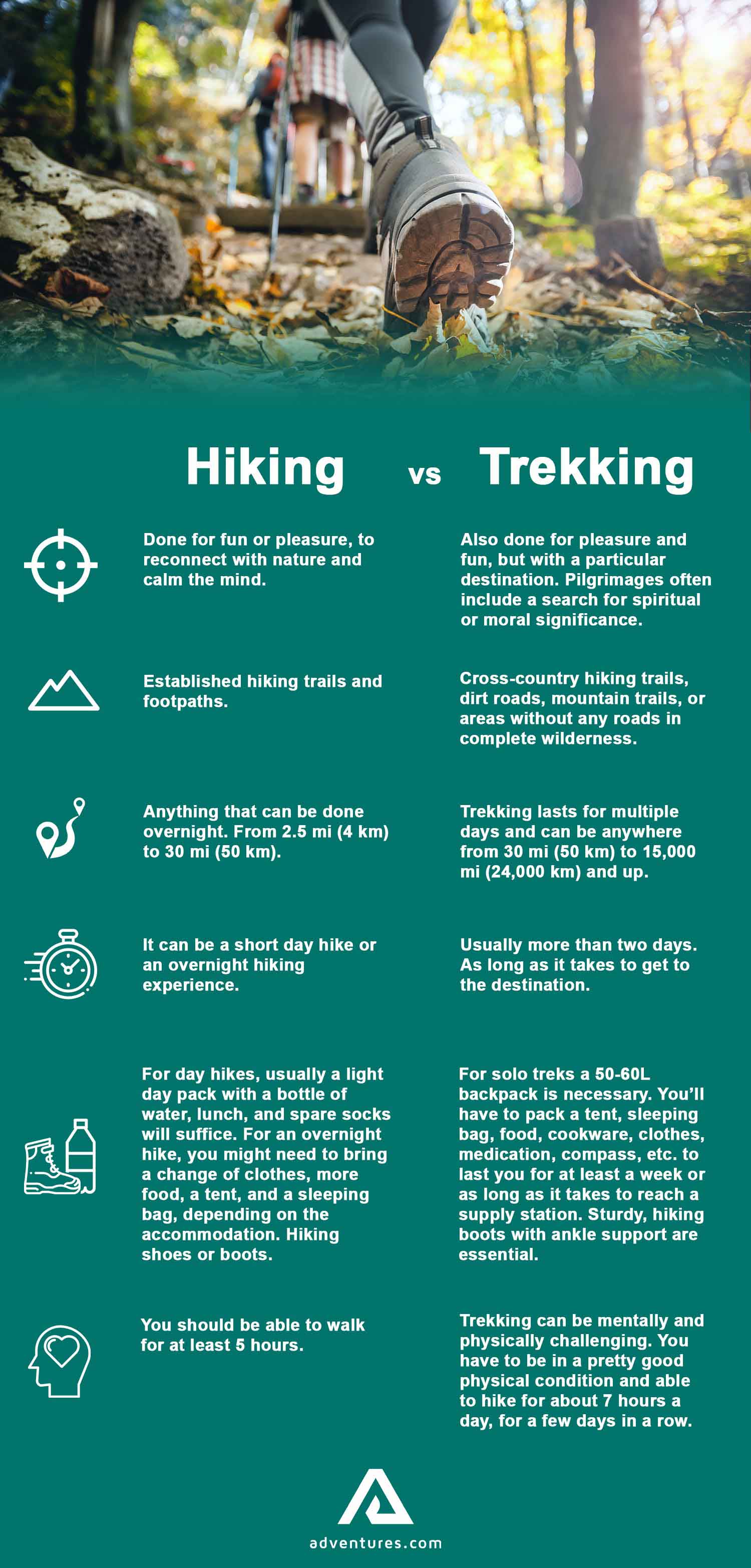
Hiking trails are usually well-marked paths. They can be flat, rocky, or slightly steep. Many trails pass through forests, fields, or near rivers. Some trails lead to scenic views or waterfalls. Trails are made for easy navigation. Most hiking paths are shorter and less rugged than trekking routes.
Typical Duration And Distance
Hiking trips often last a few hours to one day. Average distances range from 2 to 10 miles. Hikes are usually planned to finish before dark. Short hikes are great for beginners and families. Longer hikes require better fitness and more planning. Hiking allows you to enjoy nature without rushing.
Required Gear And Preparation
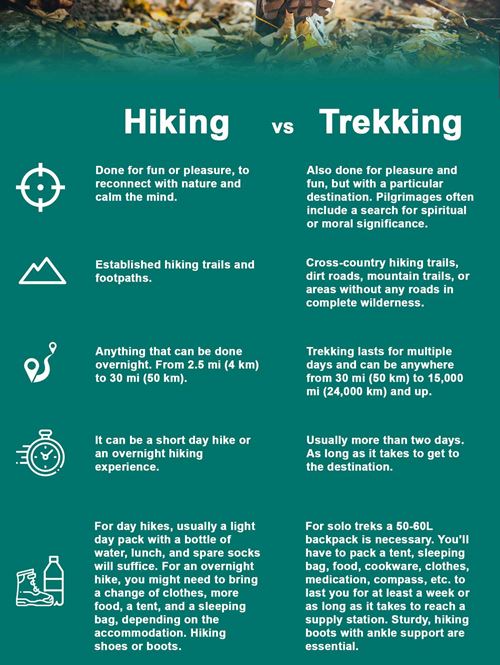
Basic hiking gear includes good walking shoes and a backpack. Carry water, snacks, and a map or GPS device. Dress in layers to adjust to weather changes. A first aid kit and sun protection are important. Prepare by checking weather and trail conditions. Light packing makes hiking easier and more fun.
Credit: adventures.com
Trekking Essentials
Trekking requires careful preparation and the right gear. It is more than just walking in nature. You need to be ready for tough paths and changing weather. Safety and comfort depend on what you bring and how you plan. Understanding the essentials helps you enjoy the trek fully and stay safe.
Challenging Routes And Environments
Trekking trails often go through mountains, forests, and rough lands. The paths can be steep and uneven. Weather can change fast and bring rain, cold, or heat. You must be physically ready and alert. Proper clothing and sturdy shoes protect you on tough terrains.
Extended Timeframes
Trekking trips usually last several days or weeks. You carry your supplies, including food and water. Planning how much to bring is important. Rest and sleep also matter a lot. Being patient and pacing yourself helps you finish the journey strong.
Specialized Equipment And Planning
Trekking needs more gear than simple hiking. A strong backpack, sleeping bag, and tent are common. Maps, compass, and first aid kits increase safety. You must know the route and check the weather. Preparing well reduces risks and makes the trek enjoyable.
Physical Demands
Physical demands differ greatly between hiking and trekking. Both activities require walking, but the effort involved varies. Understanding these demands helps you choose the right activity for your body and skills.
Fitness Levels Needed
Hiking usually needs moderate fitness. Trails are shorter and less steep. Beginners can enjoy hiking with some practice. Trekking demands higher fitness. It often involves long days and heavy backpacks. Your muscles and joints work harder on treks. Preparing your body beforehand reduces injury risks.
Endurance And Stamina
Hiking requires some stamina but for shorter times. You can rest often on the path. Trekking needs strong endurance. You walk many hours daily, often for several days. Your body must keep going despite fatigue. Building stamina takes training and patience.
Altitude And Weather Impact
Trekking often happens at higher altitudes. Thin air makes breathing harder. Weather changes fast and can be extreme. Cold, rain, or strong sun affect your energy. Hiking usually stays at lower, safer altitudes. Weather tends to be milder and easier to handle.
Cultural And Social Aspects
Cultural and social aspects shape the experiences of hiking and trekking. Both activities offer chances to connect with people and places. Yet, the depth of these connections often differs. Trekking usually leads to longer exposure to local cultures. Hiking tends to be shorter and more focused on nature.
Interaction With Local Communities
Trekking often passes through small villages and remote areas. Trekkers meet locals more frequently. They see daily life, traditions, and customs up close. Locals may share stories or offer food. Hiking mostly happens in parks or trails near towns. Hikers might see fewer local people. The chance to engage deeply with communities is less.
Group Dynamics
Trekking groups are usually larger and travel together for days. This builds strong bonds among group members. People share challenges, meals, and stories. Hiking groups tend to be smaller or solo. The focus is more on personal achievement and nature. Social interaction during hiking is often brief and casual.
Cultural Experiences
Trekking exposes travelers to unique cultural traditions. Festivals, local crafts, and ancient rituals may be part of the journey. These moments enrich the trip beyond physical activity. Hiking offers nature’s beauty and fresh air. Cultural experiences during hiking are usually limited to local parks or visitor centers. Trekking provides a richer cultural and social journey.
Safety Considerations
Safety is important in both hiking and trekking. Both activities take place outdoors and expose you to nature’s elements. Knowing safety rules helps prevent accidents and injuries. You must prepare for different risks depending on the activity’s length and difficulty. Understanding safety can make your experience more enjoyable and stress-free.
Common Risks In Hiking
Hiking usually happens on marked trails. Common risks include slipping on wet rocks or uneven paths. Insect bites and sunburn are frequent problems. Sudden weather changes can cause cold or heat issues. Getting lost is possible but less likely on well-marked trails. Carrying water and wearing good shoes reduce many risks.
Challenges Unique To Trekking
Trekking covers longer distances and rougher terrain. You may face altitude sickness on high trails. Carrying heavy backpacks can cause fatigue and muscle pain. Remote areas mean fewer chances of quick help. River crossings and steep climbs increase danger. Weather can change rapidly, bringing rain or snow. Trekking demands better physical fitness and careful planning.
Emergency Preparedness
Always carry a first aid kit for minor injuries. Know basic first aid steps like treating cuts or sprains. Inform someone about your route and expected return time. Carry a map and a compass or GPS device. Have extra food and water in case of delays. Dress in layers to adjust to temperature changes. Practice how to stay calm and signal for help if needed.
Credit: adventures.com
Choosing Between Hiking And Trekking
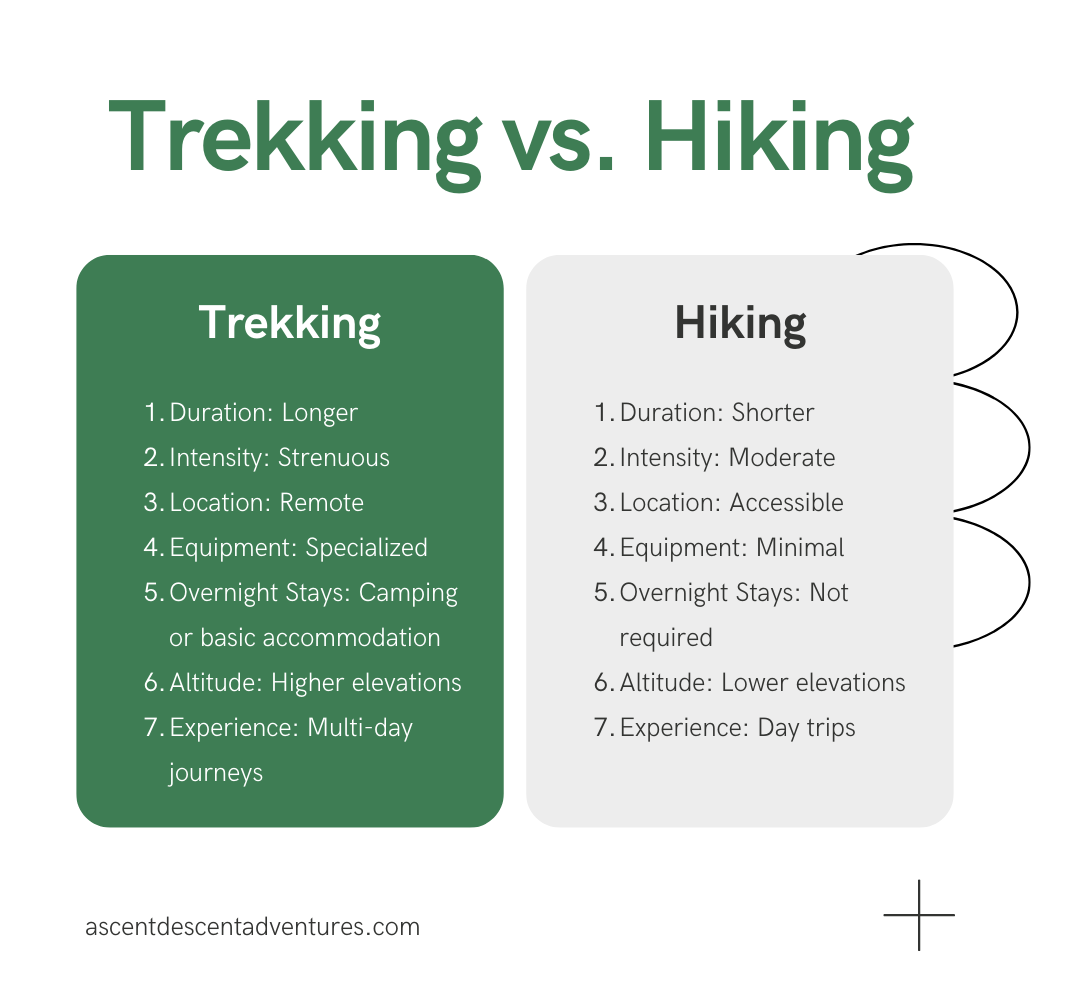
Choosing between hiking and trekking depends on several important factors. Both activities involve walking outdoors but differ in intensity and duration. Understanding your needs helps pick the right adventure. Consider what fits your lifestyle and goals best.
Personal Goals And Preferences
Decide what you want from your outdoor trip. Hiking suits those who want a short, easy walk in nature. Trekking fits people who enjoy long journeys and physical challenges. Your choice depends on how much effort you want to put in.
Time And Budget Constraints
Hiking usually takes a few hours or a day. Trekking can last several days or weeks. Choose hiking if you have less free time or a smaller budget. Trekking often needs more gear and money for trips far from home.
Skill Level Assessment
Think about your fitness and experience. Hiking needs basic skills and less stamina. Trekking requires good fitness and some experience with rough terrain. Pick the option that matches your current ability to enjoy the trip safely.
Credit: ascentdescentadventures.com
Frequently Asked Questions
What Is The Main Difference Between Hiking And Trekking?
Hiking is a short, easy walk on well-marked trails. Trekking involves longer, challenging journeys over rough terrain. Hiking is usually a day activity, while trekking can last several days or weeks. Trekking requires more preparation and endurance than hiking.
Is Trekking More Difficult Than Hiking?
Yes, trekking is generally more difficult. It involves steep climbs, uneven paths, and longer durations. Hiking is less strenuous and suitable for beginners. Trekking demands better physical fitness and mental stamina. It also requires specialized gear for safety.
Which Is Better For Beginners: Hiking Or Trekking?
Hiking is better for beginners due to its simplicity and shorter duration. It needs less experience and equipment. Trekking is suitable for those with some outdoor knowledge. Beginners can build skills and stamina through hiking before trying trekking.
Can Hiking And Trekking Improve Physical Health?
Both hiking and trekking improve cardiovascular fitness, strength, and endurance. They boost mental health by reducing stress and increasing happiness. Trekking offers higher physical benefits due to its intensity and duration. Both activities promote outdoor connection and well-being.
Conclusion
Hiking and trekking both offer fun ways to enjoy nature. Hiking is usually short and easy. Trekking takes more time and is harder. Each has its own challenges and rewards. Choose what fits your time and skill level. Enjoy the fresh air and beautiful views.
Both help you stay active and healthy. Try both to see which you like best. Adventure is waiting, just outside your door.
