Building a campfire is a simple pleasure that connects people to nature and tradition. Whether you’re cooking, keeping warm, or just enjoying the flickering light, a well-built campfire can make any outdoor trip more memorable. But starting a safe, reliable fire is not always as easy as striking a match.
Many beginners struggle with damp wood, smoky fires, or even safety hazards. With the right steps, anyone can master the basics and enjoy a safe, bright campfire.
Choosing The Right Location
Picking the correct spot is the first step to building a successful campfire. Always use an existing fire ring if one is available. If not, look for a clear, flat area at least 15 feet from tents, trees, or anything that can catch fire.
Avoid building fires under overhanging branches or near dry grass.
Clear the area of leaves, pine needles, and other flammable materials. Dig a shallow pit about one foot deep and surround it with rocks if possible. This helps keep the fire contained and reduces the risk of it spreading.
Gathering Materials
You’ll need three types of materials to build a campfire:
- Tinder: Small, dry items that catch fire easily. Examples include dry leaves, pine needles, or cotton balls.
- Kindling: Slightly larger sticks, about the size of a pencil or your finger. They catch fire from the tinder and help ignite the larger wood.
- Fuel wood: Larger pieces, like logs or thick branches, that keep the fire burning for a long time.
Collect more tinder and kindling than you think you need. Damp or green wood will make starting your fire much harder. Dry, seasoned wood burns hotter and with less smoke.
Building The Fire Structure
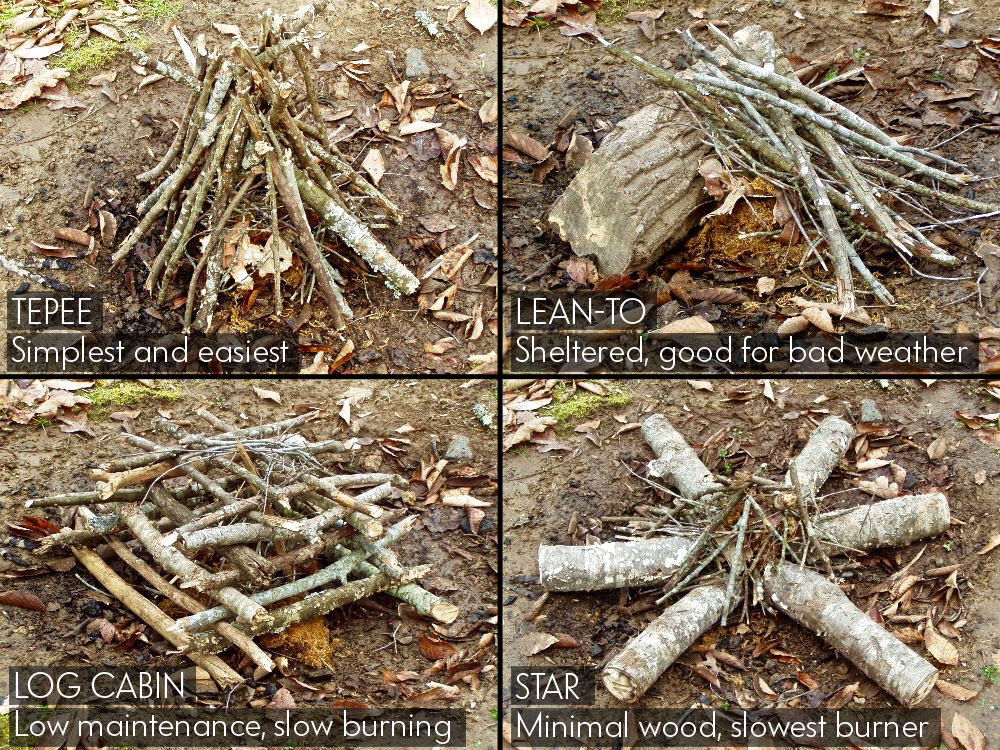
There are several ways to stack your materials. The three most common campfire structures are:
| Structure | Best For | How to Build |
|---|---|---|
| Tepee | Quick, hot fires | Stand kindling around the tinder in a cone shape, leaving space for air. |
| Log Cabin | Cooking, long-lasting fires | Stack kindling and small logs in a square, crisscrossing layers over tinder. |
| Lean-To | Windy conditions | Lean kindling against a large log with tinder underneath. |
For beginners, the tepee method is usually easiest. It lights quickly and gives you a strong flame to get larger wood burning.
Lighting The Campfire
Use a match or lighter to ignite the tinder. Light it from several sides for best results. Blow gently at the base if the fire needs more oxygen, but don’t blow too hard or you might scatter the tinder.
As the tinder burns, the flames will catch the kindling. Slowly add more kindling, then larger pieces of wood as the fire grows. Don’t stack everything on at once—too much wood too soon can smother the flames.
Keep an eye on the wind direction. Smoke should blow away from people, tents, and cooking areas. If your fire is struggling, check that your wood is dry and that air can flow through the structure.
Credit: www.atlasandboots.com
Safety Tips Every Camper Should Know
A campfire is beautiful, but it can also be dangerous if not handled with care. Here are some key safety rules:
- Never leave a fire unattended. Even a small breeze can spread sparks.
- Keep a bucket of water and a shovel nearby. Use them to quickly put out any stray flames.
- Don’t use lighter fluid or gasoline. These can cause dangerous flare-ups.
- Only burn wood. Don’t throw in cans, plastic, or food scraps.
- Make sure children and pets stay a safe distance from the fire.
Many accidents happen because people think small fires can’t cause big problems. Always treat fire with respect, even if you’re just roasting marshmallows.
Extinguishing The Campfire Properly
Putting out your fire is just as important as starting it. A fire that looks out can still hide hot coals under the ash. To make sure your campfire is fully out:
- Let the fire burn down to ash and small coals.
- Pour water over the fire, covering all embers—not just the red ones.
- Stir the ashes and embers with a stick or shovel.
- Add more water and stir again. Repeat until everything is cool to the touch.
- If you don’t have water, use dirt or sand, but water is always best.
Check the area for stray sparks or hot spots. Never leave until the whole fire ring is cold.

Credit: www.reddit.com
Common Beginner Mistakes (and How To Avoid Them)
Many new campers make small errors that can turn a fun night into a headache. Some of the most common mistakes include:
- Using wet or green wood, which leads to lots of smoke and little heat.
- Piling wood too high, blocking airflow and making it hard to light.
- Ignoring wind, which can blow sparks into unsafe areas.
- Forgetting to clear flammable material around the fire pit.
- Leaving before the fire is fully out.
A helpful tip: Always test your fire area before lighting. Kneel down and look from ground level. If you see dry grass or leaves, clear them away. This small step can prevent accidents.
Cooking Over A Campfire
A campfire isn’t just for warmth—it’s also a classic way to cook outside. Here’s how the three main fire structures compare for cooking:
| Fire Structure | Cooking Suitability | Best Foods |
|---|---|---|
| Tepee | Quick heat, less control | Hot dogs, marshmallows |
| Log Cabin | Even heat, stable base | Foil packets, pots, pans |
| Lean-To | Good in wind, uneven heat | Grilled skewers |
For best results, let the fire burn down to glowing coals before cooking. Coals give steady heat and help prevent burnt food.

Credit: www.npr.org
Environmental Responsibility
Campfires can have a big impact on the environment. Always follow local regulations and fire bans. In some areas, fires are not allowed during dry seasons due to wildfire risk.
Use fallen, dead wood instead of cutting live branches. After putting out your fire, scatter leftover ashes away from water sources. Leave your campsite looking untouched, so the next camper enjoys it as much as you did.
For more tips on safe outdoor practices, visit the National Park Service.
Frequently Asked Questions
How Do I Start A Campfire If The Wood Is Wet?
Try to find the driest wood possible, even if it’s small sticks under logs or leaves. Use extra tinder and start with a small fire. Birch bark, cotton balls with petroleum jelly, or commercial fire starters can help.
Is It Okay To Use Rocks To Ring My Campfire?
Yes, but only use rocks from dry land. Wet river rocks can explode when heated. A ring of dry rocks helps contain the fire and marks the safe area.
Can I Build A Campfire Anywhere In The Forest?
No. Always check local rules. Many parks and forests only allow fires in designated spots. In dry conditions, campfires may be banned completely for safety.
Why Does My Campfire Make So Much Smoke?
Too much smoke often means your wood is wet or green. Use dry, seasoned wood and allow for plenty of airflow. Avoid burning leaves or trash, which create more smoke.
What Should I Do If Sparks Fly Out Of My Campfire?
Move back and keep a close watch. Use water or a shovel to put out any sparks that land outside the fire area. If it’s windy, consider putting the fire out or building a windbreak.
A campfire is one of the oldest human traditions. With care, patience, and respect, you can enjoy its warmth and light in almost any outdoor setting. The skills you learn will make every camping trip safer and more enjoyable. Happy camping!
