
Are you planning a trip to Saudi Arabia but feeling confused about which visa you need? Whether you want to explore famous landmarks or perform a sacred pilgrimage, understanding the difference between a Tourist Visa and an Umrah Visa is crucial.
Choosing the right visa can save you time, money, and avoid unexpected problems during your travel. You’ll discover exactly what sets these two visas apart and which one suits your purpose best. Keep reading to make your journey smooth and hassle-free!
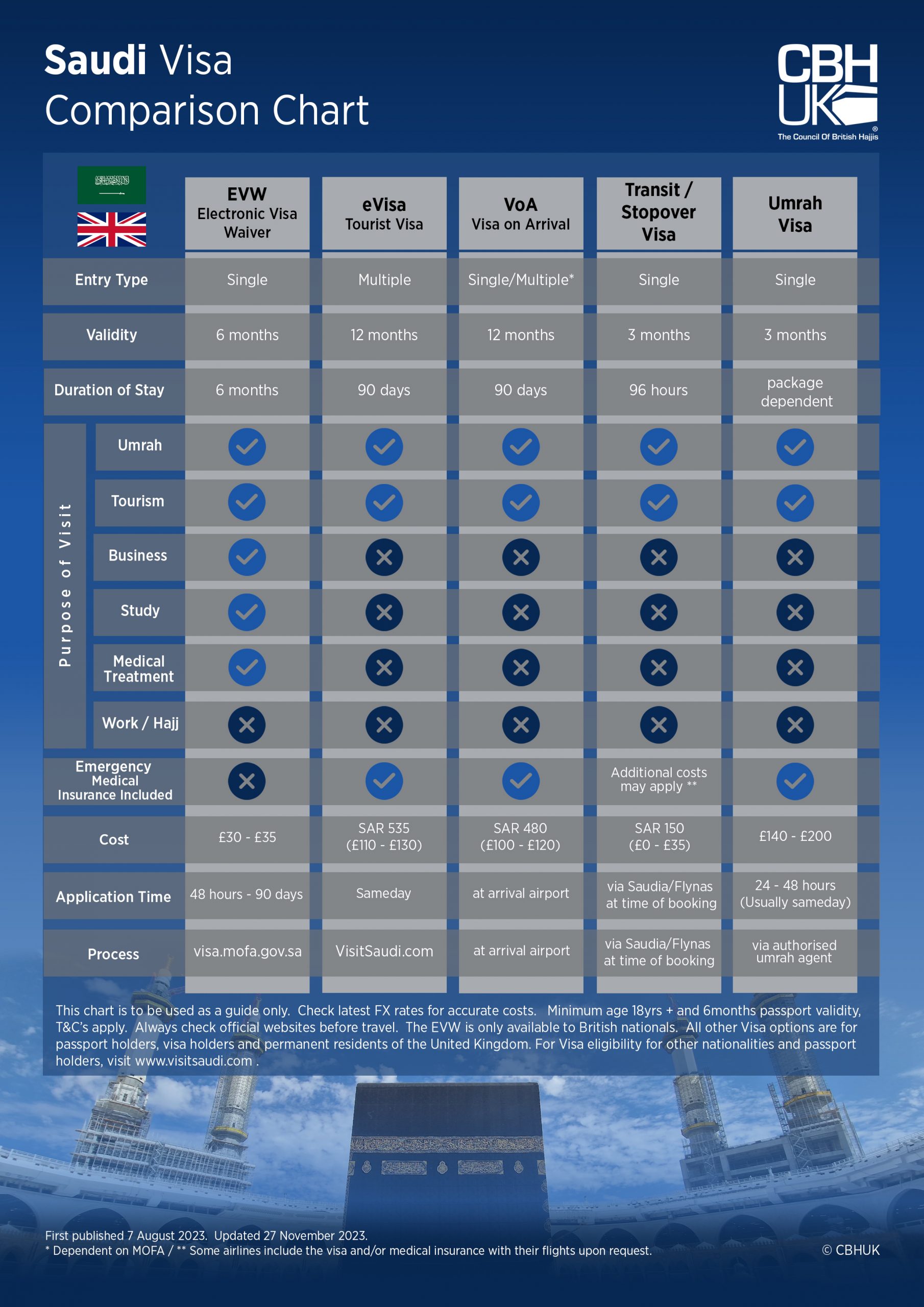
Credit: cbhuk.org
Tourist Visa Basics
A tourist visa allows people to visit a country for leisure or sightseeing. It is one of the most common visas issued by many countries. This visa helps travelers explore new places, cultures, and attractions. Understanding its basics is key before applying.
Tourist visas have specific rules about who can apply, how long they last, and the process needed. These details differ from other visas, such as the Umrah visa. Knowing these facts helps avoid confusion and plan trips better.
Purpose And Eligibility
The main purpose of a tourist visa is to visit for pleasure or tourism. It does not allow work or long-term stays. Applicants must show they intend to return home after the visit.
Eligibility usually requires proof of funds, a return ticket, and a valid passport. Some countries may ask for hotel bookings or travel plans. Each country sets its own rules for who can get this visa.
Duration And Validity
Tourist visas often last from 30 to 90 days. Some countries offer multiple-entry visas for longer periods. The exact length depends on the issuing country’s policy.
The visa’s validity date shows when travel must begin. Travelers should enter the country before this date. Overstaying can cause fines or future visa refusals.
Application Process
Applying for a tourist visa usually starts online or at a consulate. Applicants fill out forms and submit documents like passport copies and photos. Some countries require a visa fee payment.
Processing times vary from a few days to weeks. It is best to apply well before the planned trip. Approval depends on meeting all visa requirements and providing correct information.
Umrah Visa Essentials
The Umrah visa is special and different from a tourist visa. It lets travelers visit Saudi Arabia for a religious journey called Umrah. This visa has clear rules and limits. Understanding these basics helps travelers prepare well. It also ensures a smooth and respectful trip.
Specific Purpose
The Umrah visa is only for performing the Umrah pilgrimage. It does not allow tourism or business activities. Visitors must focus on religious rituals in Mecca and Medina. This visa supports spiritual visits, not sightseeing or leisure.
Validity Period
The Umrah visa lasts for a short time, usually 30 days. Visitors must enter Saudi Arabia within this period. After arrival, they can stay for up to 30 days. The visa cannot be extended or changed to another type.
How To Apply
Applying for an Umrah visa requires specific documents. A passport valid for at least six months is needed. Travelers must provide proof of vaccination and a confirmed hotel booking. The application goes through approved travel agents or Saudi embassies. Processing times vary but often take a few days.
Key Differences Between Visas
Understanding the differences between a Tourist Visa and an Umrah Visa is important. Each visa serves a different purpose and has unique rules. These rules affect what visitors can do, where they can go, and what documents they need. Knowing these differences helps travelers plan their trips correctly.
Allowed Activities
A Tourist Visa lets you explore cities, visit landmarks, and shop freely. You can attend events and enjoy entertainment options. It does not allow performing religious rituals like Umrah.
An Umrah Visa is only for performing the Umrah pilgrimage. Visitors must focus on religious activities in Mecca and Medina. Sightseeing or leisure travel is not permitted on this visa.
Travel Restrictions
A Tourist Visa grants access to all parts of Saudi Arabia. Travelers can move between different cities without limits. There are no special restrictions on travel routes.
An Umrah Visa restricts travel mainly to Mecca and Medina. Travelers must complete the pilgrimage within a set period. Leaving these areas for tourism is usually not allowed.
Documentation Requirements
For a Tourist Visa, applicants need a valid passport and proof of accommodation. Sometimes, proof of financial means and return tickets are required. The process is straightforward for most nationalities.
An Umrah Visa requires a valid passport and a confirmed Umrah booking. A vaccination certificate, especially for meningitis, is mandatory. Applicants must also show proof of hotel booking near the holy sites.

Credit: www.labbaikhajjumrah.co.uk
Costs And Fees Comparison
Tourist visas usually have different fees compared to Umrah visas. The costs depend on the visa type and the services included. Umrah visas often include specific religious travel fees not found in tourist visas.
Understanding Tourist Visa Costs
Tourist visas usually cost more than Umrah visas. The price depends on the country of origin and the visa type, such as single or multiple entry. Some countries offer e-visas that are cheaper and quicker to get. Processing fees, service charges, and travel insurance can add to the total cost. Tourist visas often include fees for leisure activities and sightseeing permits.
Umrah Visa Fees Explained
Umrah visas are generally less expensive. The Saudi government sets a fixed fee for this visa type. The cost covers religious services and accommodation arrangements. Travel agencies might charge extra for packages that include flights and hotels. The Umrah visa is valid only for a short period, usually 30 days. This keeps the fees lower than long-term tourist visas.
Additional Costs To Consider
Both visas may require extra payments. These include medical tests and vaccinations. For Umrah, pilgrims must have a COVID-19 vaccination proof. Tourist visa holders may need travel insurance or local permits. Currency exchange rates can affect the final price. Planning ahead helps avoid unexpected expenses.
Common Mistakes To Avoid
Understanding the differences between a Tourist Visa and an Umrah Visa is important. Many travelers make mistakes that cause delays or problems. Avoiding these errors helps ensure a smooth trip. Below are common mistakes to avoid for each visa type.
Applying For The Wrong Visa Type
Choosing the wrong visa wastes time and money. A Tourist Visa does not allow performing Umrah. An Umrah Visa only permits religious visits. Know your travel purpose before applying.
Ignoring Visa Validity Periods
Each visa has a specific validity period. Overstaying can lead to fines or bans. Check the start and end dates carefully. Plan your trip within the allowed time.
Not Meeting Documentation Requirements
Both visas need specific documents. Missing papers cause rejection or delays. Submit all required documents correctly. Double-check passport, photos, and application forms.
Overlooking Health And Vaccination Rules
Saudi Arabia requires certain vaccinations for Umrah travelers. Tourist Visa holders may have different health rules. Follow all health guidelines strictly. Carry vaccination certificates if needed.
Booking Unauthorized Travel Packages
Umrah Visa requires booking through approved operators. Tourist Visas do not have this rule. Using unapproved agents can lead to visa denial. Always book through official channels.
Misunderstanding Travel Restrictions
Some activities are not allowed on certain visas. Tourist Visas do not permit religious rituals like Umrah. Umrah Visas restrict leisure tourism. Know what each visa allows to avoid issues.

Credit: umrahvisafromindia.com
Tips For Smooth Visa Application
Tourist visas allow travel for sightseeing and leisure, while Umrah visas are for religious pilgrimage to Mecca. Each visa has specific requirements and limits on stay duration. Knowing these differences helps apply correctly and avoid delays in processing.
Prepare All Required Documents
Gather all necessary documents before starting your application. Check the visa type requirements carefully. Missing papers cause delays and rejection. Keep your passport valid for at least six months. Include recent passport-sized photos as per specifications.
Complete The Application Form Accurately
Fill the visa form with correct information. Double-check names, dates, and other details. Mistakes can lead to visa denial. Use clear and simple language. Avoid abbreviations or unclear handwriting if applying on paper.
Apply Early To Avoid Last-minute Stress
Submit your visa application well before your travel date. Processing times vary by visa type. Early application helps handle unexpected delays. It also allows time for additional document requests.
Follow Visa Fee Payment Instructions
Pay the visa fee as required. Use approved payment methods only. Keep receipts or payment confirmations. This proof may be needed during processing or at the border.
Use Trusted Visa Processing Channels
Apply through official government websites or authorized agencies. Avoid unofficial sites that may charge extra or cause fraud. Trusted sources ensure your data security and faster processing.
Track Your Application Status
Regularly check the status of your visa application online. This keeps you informed about any updates or additional requirements. Respond quickly if asked for more information.
Frequently Asked Questions
What Is A Tourist Visa For Saudi Arabia?
A Tourist Visa allows travelers to visit Saudi Arabia for leisure, sightseeing, and cultural experiences. It is valid for multiple entries and usually for 90 days. This visa does not permit religious activities like Umrah or Hajj.
What Is An Umrah Visa?
An Umrah Visa is specifically issued for performing the Umrah pilgrimage in Saudi Arabia. It is valid for a limited period, usually 30 days, and strictly allows religious visits to Mecca and Medina only. Tourism activities are not permitted on this visa.
Can I Perform Umrah On A Tourist Visa?
No, Umrah cannot be performed on a Tourist Visa. The Saudi government requires a specific Umrah Visa for religious pilgrimage. Tourist Visas are for sightseeing and general tourism only, without access to religious rites like Umrah.
How Long Is A Tourist Visa Valid?
A Saudi Tourist Visa is generally valid for 90 days with multiple entries. Travelers can stay up to 30 days per visit within this period. The visa duration may vary based on nationality and visa type.
Conclusion
Tourist and Umrah visas serve different purposes for travelers to Saudi Arabia. Tourist visas allow visits to explore the country and enjoy its culture. Umrah visas focus solely on religious pilgrimage to Mecca. Each visa has specific rules and time limits.
Choosing the right visa depends on your travel goals. Understanding these differences helps avoid problems during your trip. Plan your journey carefully and follow all visa requirements. This ensures a smooth and meaningful visit to Saudi Arabia.
