
Axe Vs Hatchet: Understanding the Differences, Uses, and Choosing the Right Tool
Every outdoor enthusiast, camper, or homeowner has seen axes and hatchets. Both are timeless tools. But many people don’t know what makes them different, or which one is better for their needs. If you’ve ever wondered whether you should grab an axe or a hatchet for your next project, you’re not alone.
While they look similar, axes and hatchets are built for different jobs. Choosing the wrong tool can make your work harder, less safe, or even damage your equipment.
In this article, you’ll discover the real differences between axes and hatchets. We’ll explore their designs, best uses, and key features. You’ll see comparison tables, practical examples, and expert advice. Whether you’re chopping wood, preparing for survival, or just want to improve your tool knowledge, you’ll find clear answers here.
Let’s dive in and clear up the confusion once and for all.
What Is An Axe?
Axes are one of the oldest tools used by humans. They have been around for thousands of years, evolving from simple stone blades to modern steel heads. Today, an axe is usually a long-handled tool with a heavy, sharp head.
The design is focused on power and leverage.
Key Features Of An Axe
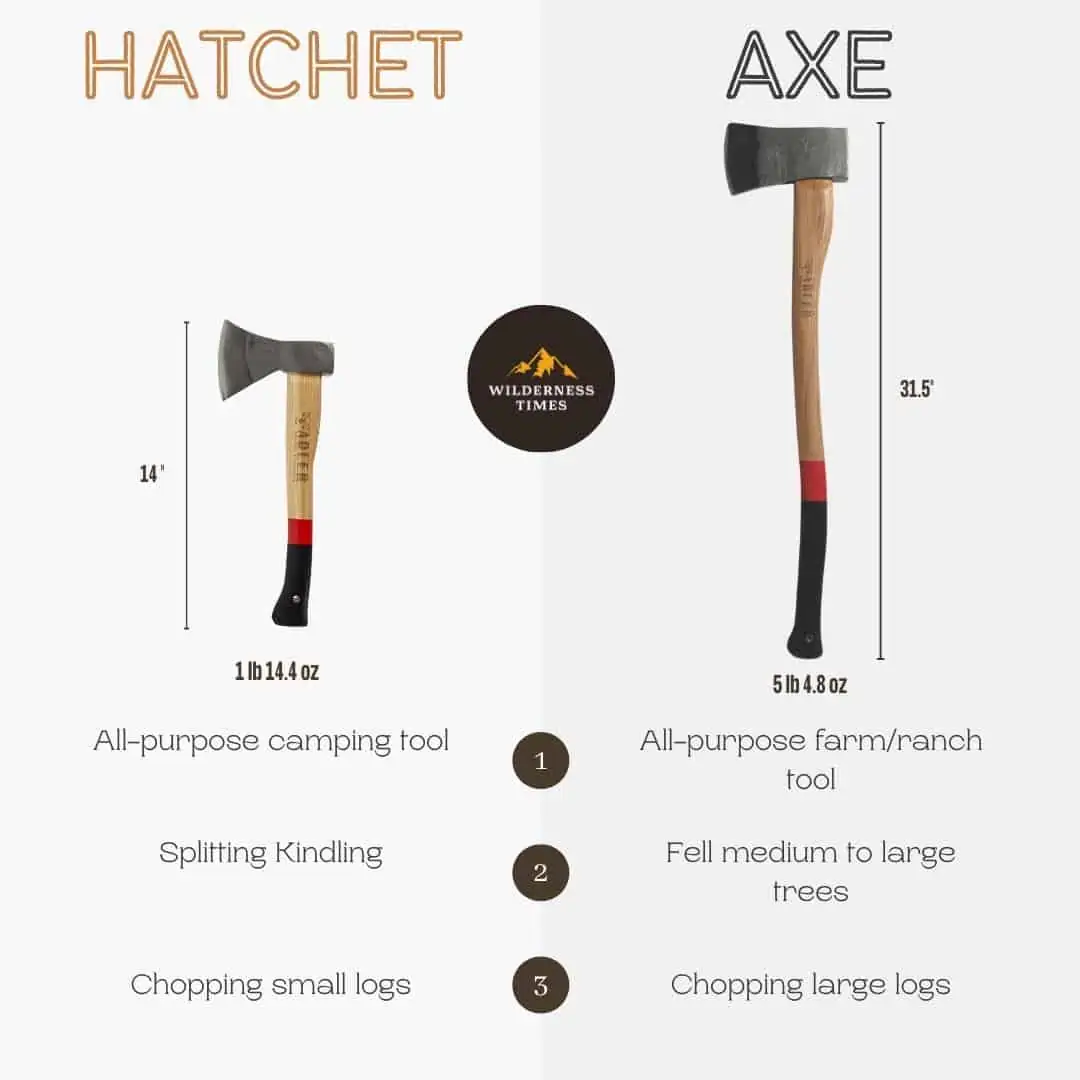
- Long handle: Usually between 24 and 36 inches.
- Heavy head: Usually weighs 2 to 6 pounds.
- Blade shape: Often wider and curved for deep cuts.
- Two-handed use: Designed for swinging with both hands.
Common Types Of Axes
- Felling axe: Used for cutting down trees.
- Splitting axe: Made for splitting logs.
- Broad axe: Used for shaping wood.
- Double-bit axe: Has two blades, often for logging.
Typical Uses
- Chopping large logs and trees.
- Splitting firewood.
- Clearing land.
- Construction and carpentry (historically).
Example
A homeowner chopping firewood for winter will usually use a splitting axe. Its heavy head and long handle deliver powerful strikes, splitting thick logs in half.
What Is A Hatchet?
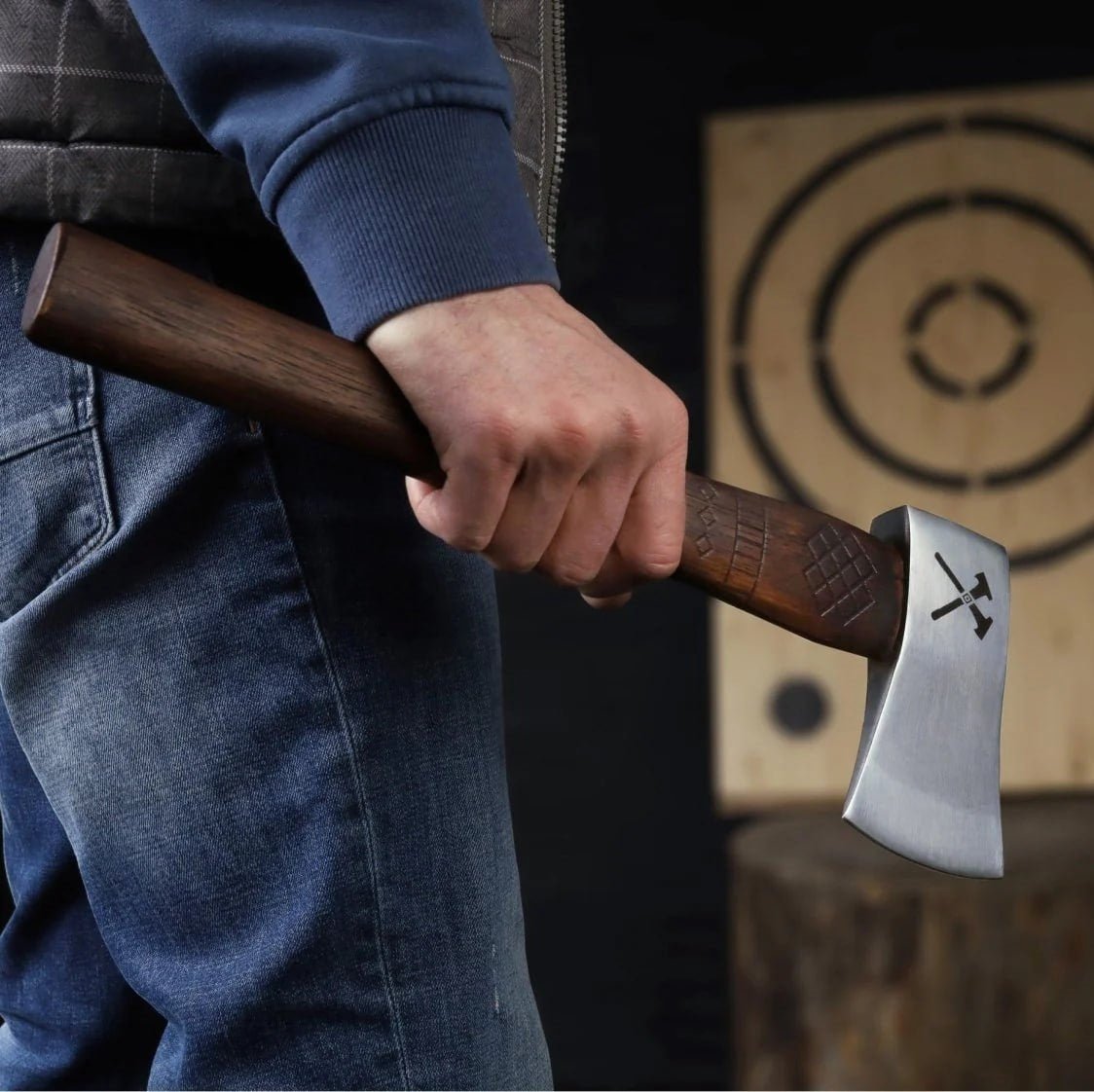
A hatchet is a small, lightweight version of an axe. It’s designed for one-handed use and easy carrying. Hatchets are a favorite among campers, hikers, and survivalists because they’re compact and versatile.
Key Features Of A Hatchet
- Short handle: Usually 10 to 14 inches.
- Lighter head: Usually weighs 1 to 2 pounds.
- Compact blade: Smaller, but still sharp.
- One-handed use: Designed for control and precision.
Common Types Of Hatchets
- Camping hatchet: For general outdoor use.
- Survival hatchet: Often includes extra features, like a hammer.
- Utility hatchet: For small jobs around the house.
Typical Uses
- Cutting small branches.
- Making kindling.
- Carving wood.
- Hammering tent stakes.
- Light clearing tasks.
Example
A camper making a fire at a campsite will use a hatchet to split small logs into kindling. Its size lets them control the blade and avoid accidents.
Credit: ancientsmithy.com
Axe Vs Hatchet: Design Differences
The biggest difference is size and weight. But other design features also matter.
Handle Length And Material
Axe handles are much longer. This gives more leverage, but less control. Hatchets have short handles, making them easier to handle in tight spaces.
Handles are usually made of wood, fiberglass, or metal. Wood is traditional and absorbs shock. Fiberglass is strong and weatherproof. Metal is tough but can transmit vibration to your hands.
Head Shape And Weight
Axe heads are heavier and wider. This lets them cut deeper and split thicker wood. Hatchet heads are lighter, for quick, precise cuts.
Some hatchets have a flat side for hammering. Axes rarely do.
Blade Geometry
Axes often have a wedge-shaped blade. This helps split wood. Hatchets may have a thinner blade for slicing or carving.
Balance
Axes are balanced for heavy swings. Hatchets are balanced for control and accuracy.
Here’s a quick comparison of the main design differences:
| Feature | Axe | Hatchet |
|---|---|---|
| Handle Length | 24–36 inches | 10–14 inches |
| Head Weight | 2–6 pounds | 1–2 pounds |
| Use | Two-handed | One-handed |
| Blade Shape | Wider, wedge | Narrower, compact |
| Balance | Power-focused | Control-focused |
Axe Vs Hatchet: Practical Uses
Knowing what each tool is for helps you choose wisely.
Axe: When And Why
Axes are for big jobs. If you need to fell a tree or split thick logs, an axe is the tool. The long handle lets you swing hard, cutting deep into wood. Axes are also good for clearing land and heavy-duty tasks.
Hatchet: When And Why
Hatchets are for smaller jobs. They’re perfect for chopping branches, making kindling, carving stakes, or handling light clearing work. A hatchet is easier to carry on hikes and fits in a backpack.
Real-world Examples
- Campfire Prep: Use an axe to split large logs. Use a hatchet to make kindling.
- Backpacking: Take a hatchet for light cutting and emergencies.
- Home Use: Use an axe for firewood, a hatchet for garden work.
Safety
Axes need two hands and room to swing. Hatchets are safer in tight spaces. Both tools can cause injuries if used carelessly.
Axe Vs Hatchet: Which One Should You Choose?
Choosing between an axe and a hatchet depends on your needs. Here’s how to decide.
What Are You Cutting?
- Large logs or trees: Axe
- Small branches or kindling: Hatchet
Where Will You Use It?
- Home or backyard: Axe for big jobs, hatchet for small ones.
- Camping or hiking: Hatchet is easier to carry.
How Much Weight Can You Carry?
Axes are heavy and bulky. Hatchets are light and portable. If you need to walk far, choose a hatchet.
Skill Level
Axes need strength and practice to use safely. Hatchets are easier for beginners.
Budget
Hatchets are usually cheaper. Good quality axes cost more.
Comparison Table: Choosing The Right Tool
| Situation | Recommended Tool | Reason |
|---|---|---|
| Splitting firewood | Axe | Power and deep cuts |
| Making kindling | Hatchet | Control and precision |
| Backpacking | Hatchet | Lightweight, portable |
| Felling trees | Axe | Heavy-duty work |
| Carving stakes | Hatchet | Accuracy, easy handling |
Axe Vs Hatchet: Maintenance And Care
Every tool needs good care to last. Axes and hatchets both need sharpening, cleaning, and safe storage.
Sharpening
A sharp blade is safer and works better. Use a file or whetstone. Axes need a wider edge, hatchets can be sharper for slicing.
Cleaning
After use, wipe the blade clean. Remove sap, dirt, or moisture. This prevents rust.
Handle Care
Wood handles need oil to stop drying or cracking. Fiberglass and metal handles need less care, but check for damage.
Storage
Keep tools dry. Store them in a safe place, away from children. Use a blade cover for safety.
Common Mistakes
- Using a dull blade.
- Storing tools wet.
- Ignoring cracks or loose heads.
Repair Tips
If the head is loose, fix it before using. A cracked handle should be replaced. Don’t use damaged tools—they can break and cause injury.
Credit: wildernesstimes.com
Axe Vs Hatchet: Safety Tips
Both tools are sharp and powerful. Follow these safety tips:
- Always check the tool before use.
- Wear gloves and eye protection.
- Use the right tool for the job.
- Make sure the work area is clear.
- Swing away from your body.
- Keep others at a safe distance.
- Store tools safely after use.
Two non-obvious safety insights:
- Fatigue increases risk: If you’re tired, your grip weakens and you lose control. Take breaks often.
- Blade covers prevent accidents: Always use a cover when carrying or storing your tool. Many injuries happen not during use, but while transporting.
Axe Vs Hatchet: Outdoor And Survival Uses
Many people choose between an axe and a hatchet for outdoor adventures. Here’s how they perform in the wild.
Camping
A hatchet is ideal for campers. It can cut branches, split kindling, and even hammer tent stakes. Axes are good if you need to prepare large amounts of firewood.
Backpacking
Weight matters. Most backpackers carry a hatchet or a small axe called a pack axe. These are lighter and easier to pack.
Survival
In survival situations, a hatchet is more versatile. You can use it for shelter building, food prep, and defense. Some hatchets include saw blades or emergency whistles.
Bushcraft
Bushcraft experts often carry both tools. An axe for heavy work, a hatchet for detail and carving.
Non-obvious Outdoor Tip
- Dual use for hatchet: Many hatchets have a hammer back. This lets you drive nails or stakes, reducing the need to carry extra tools.
Axe Vs Hatchet: History And Cultural Significance
Both axes and hatchets have rich histories. They appear in myths, legends, and daily life.
Axe History
Axes date back to the Stone Age. They became symbols of power and strength. Vikings used axes in battle. Lumberjacks relied on axes for work.
In many cultures, the axe is a tool and a weapon.
Hatchet History
Hatchets were used by Native Americans and early settlers. They are linked to survival, exploration, and camping.
The tomahawk, a type of hatchet, was both a tool and a weapon.
Modern Use
Today, axes and hatchets are mostly tools. But they still carry cultural meaning.
Fun Fact
- The phrase “bury the hatchet” comes from a Native American tradition of ending conflict by literally burying a hatchet.
Axe Vs Hatchet: Popular Brands And Models
Several brands make high-quality axes and hatchets. Here are some favorites:
Axe Brands
- Fiskars: Known for durable axes, especially for splitting.
- Gränsfors Bruk: Swedish company, famous for hand-forged axes.
- Estwing: Popular in the US, solid steel construction.
Hatchet Brands
- Gerber: Makes compact, outdoor hatchets.
- Husqvarna: Offers reliable camping hatchets.
- Estwing: Also makes well-built hatchets.
Popular Models
- Fiskars X27 Splitting Axe: Great for firewood.
- Gränsfors Bruk Small Forest Axe: A favorite among bushcrafters.
- Estwing Sportsman’s Hatchet: Tough and versatile.
- Gerber Bear Grylls Hatchet: Designed for survival.
Price Ranges
- Axes: $40–$300+
- Hatchets: $20–$100+
You can find more details on brands at Outdoor Life.
Axe Vs Hatchet: Environmental Impact
Tool choice affects the environment. Here’s how:
Material Choices
Wood handles are renewable but need care. Metal and fiberglass last longer, but can be harder to recycle.
Responsible Use
Don’t over-cut trees or branches. Only use what you need. Leave nature as you found it.
Eco-friendly Tips
- Buy quality tools that last.
- Maintain tools to avoid waste.
- Recycle old handles or blades.
Less Obvious Insight
- Sharpening saves resources: Keeping your blade sharp reduces the energy and wood needed for each cut. A dull tool requires more force and wastes material.
Axe Vs Hatchet: Myths And Misconceptions
Many people believe myths about these tools. Let’s clear up a few:
Myth 1: Axes Are Always Better
Not true. Axes are powerful, but not right for every job. Hatchets offer control and portability.
Myth 2: Hatchets Can Replace Axes
Hatchets are handy, but not strong enough for big tasks like felling trees.
Myth 3: Only Men Use Axes
Both men and women use axes and hatchets. The right tool depends on skill and need, not gender.
Myth 4: Axes Are Dangerous
Any tool can be dangerous if misused. Proper technique and safety gear make axes and hatchets safe.
Myth 5: Sharpening Is Hard
With the right tools, sharpening is easy. A file or stone, and a little practice, keeps your blade sharp.

Credit: www.youtube.com
Axe Vs Hatchet: Advanced Tips For Experienced Users
If you already own and use axes and hatchets, here are advanced tips:
Customization
You can change handles, adjust blade angles, or add grips. Custom tools fit your hand better and work more efficiently.
Dual Carry
Some experts carry both tools. Use the axe for big cuts, the hatchet for detail work. This saves energy and time.
Blade Maintenance
Use a strop or fine stone for a razor-sharp edge. Clean after each use, and oil the blade to prevent rust.
Handle Upgrades
Replace cheap handles with high-quality wood or fiberglass. This improves balance and comfort.
Storage Solutions
Use a tool rack or sheath. This keeps tools safe and ready for use.
Axe Vs Hatchet: How To Buy The Right Tool
Buying the right axe or hatchet is important. Here’s what to look for:
Handle Comfort
Pick up the tool. Does the handle feel good in your hand? Is it smooth, balanced, and easy to grip?
Blade Quality
Look for high-carbon steel. It stays sharp longer and is easier to sharpen.
Weight
Choose a tool you can control. Heavier is not always better. Try swinging it before you buy.
Price Vs. Quality
Cheap tools may break or dull quickly. Invest in quality—it saves money in the long run.
Warranty
Some brands offer lifetime warranties. This shows confidence in their product.
Common Buying Mistake
- Buying based on looks, not function. Fancy tools may look nice, but don’t always perform well.
Axe Vs Hatchet: Comparison Table (quick Reference)
For quick reference, here’s a summary table:
| Category | Axe | Hatchet |
|---|---|---|
| Typical Length | 24–36 inches | 10–14 inches |
| Head Weight | 2–6 pounds | 1–2 pounds |
| Main Use | Large logs, trees | Small branches, kindling |
| Portability | Low | High |
| Skill Level | Intermediate–advanced | Beginner–advanced |
| Price Range | $40–$300+ | $20–$100+ |
Axe Vs Hatchet: Frequently Asked Questions
What Is The Main Difference Between An Axe And A Hatchet?
The biggest difference is size and weight. Axes have long handles and heavy heads for two-handed use, making them ideal for big jobs like chopping large logs. Hatchets are smaller, lighter, and meant for one-handed tasks, such as making kindling or cutting small branches.
Can A Hatchet Be Used For Splitting Firewood?
A hatchet can split small pieces of wood or kindling, but it’s not strong enough for large logs. For bigger pieces, an axe is much more effective and safer.
Which Tool Is Better For Camping And Hiking?
A hatchet is usually the best choice for camping and hiking. It’s lightweight, fits in a backpack, and can handle most camp tasks. Only bring an axe if you need to process a lot of wood or build large shelters.
How Do I Maintain An Axe Or Hatchet?
Keep the blade sharp and clean. Oil wood handles to prevent cracking. Store your tools dry and use a blade cover. Regularly check for damage and fix loose heads or cracks right away.
Are Axes And Hatchets Safe For Beginners?
Both tools are safe if you follow proper techniques. Beginners should start with a hatchet, as it’s easier to control. Always wear protective gear, and never use damaged equipment.
Axes and hatchets are both essential tools, but each shines in different situations. Knowing their differences, strengths, and weaknesses lets you choose the right tool for your needs. Whether you’re splitting firewood, camping, or learning about tools, the right choice will make your work safer and easier. Remember: good care and proper use help your tools last for years. If you want to learn more about axes and hatchets, visit Wikipedia for detailed history and information.
