
Camping trips with kids create memories that last a lifetime. The fresh air, freedom, and adventure can make children happier and more confident. But sometimes, after the excitement of setting up the tent, kids need more than nature to stay entertained. Camping games for kids are the secret to keeping everyone smiling, active, and connected. Whether you’re deep in the woods or at a family-friendly campsite, the right games can turn downtime into the highlight of your trip.
Parents often worry about kids getting bored, glued to screens, or struggling to make friends at camp. You don’t need expensive equipment or perfect weather to make camping fun. With simple games, teamwork, and a bit of imagination, you can spark laughter and learning outdoors.
This guide covers a wide range of camping games—from classic outdoor favorites to creative activities for rainy days. You’ll discover options for all ages and group sizes, plus practical tips and clever twists that most beginners miss.
Why Camping Games Matter
Camping is more than just sleeping outside. It’s a chance to help children grow, socialize, and challenge themselves. Games are not only entertainment—they teach teamwork, patience, and problem-solving. Playing together can make shy kids feel included and help families bond.
Statistics show that children who spend time outdoors and play active games have better physical health, improved mood, and stronger friendships. According to the American Camp Association, 74% of parents say their kids became more confident after a camp experience.
Games are a big reason for this boost.
Sometimes, parents think nature alone is enough to keep kids busy. In reality, even at beautiful campsites, young campers often need structure and guidance to make the most of their time. Camping games for kids fill the gaps and prevent boredom, making every trip enjoyable for everyone.
Outdoor Camping Games
The best camping games use what’s around you—trees, open space, sticks, or rocks. They encourage movement, teamwork, and creativity.
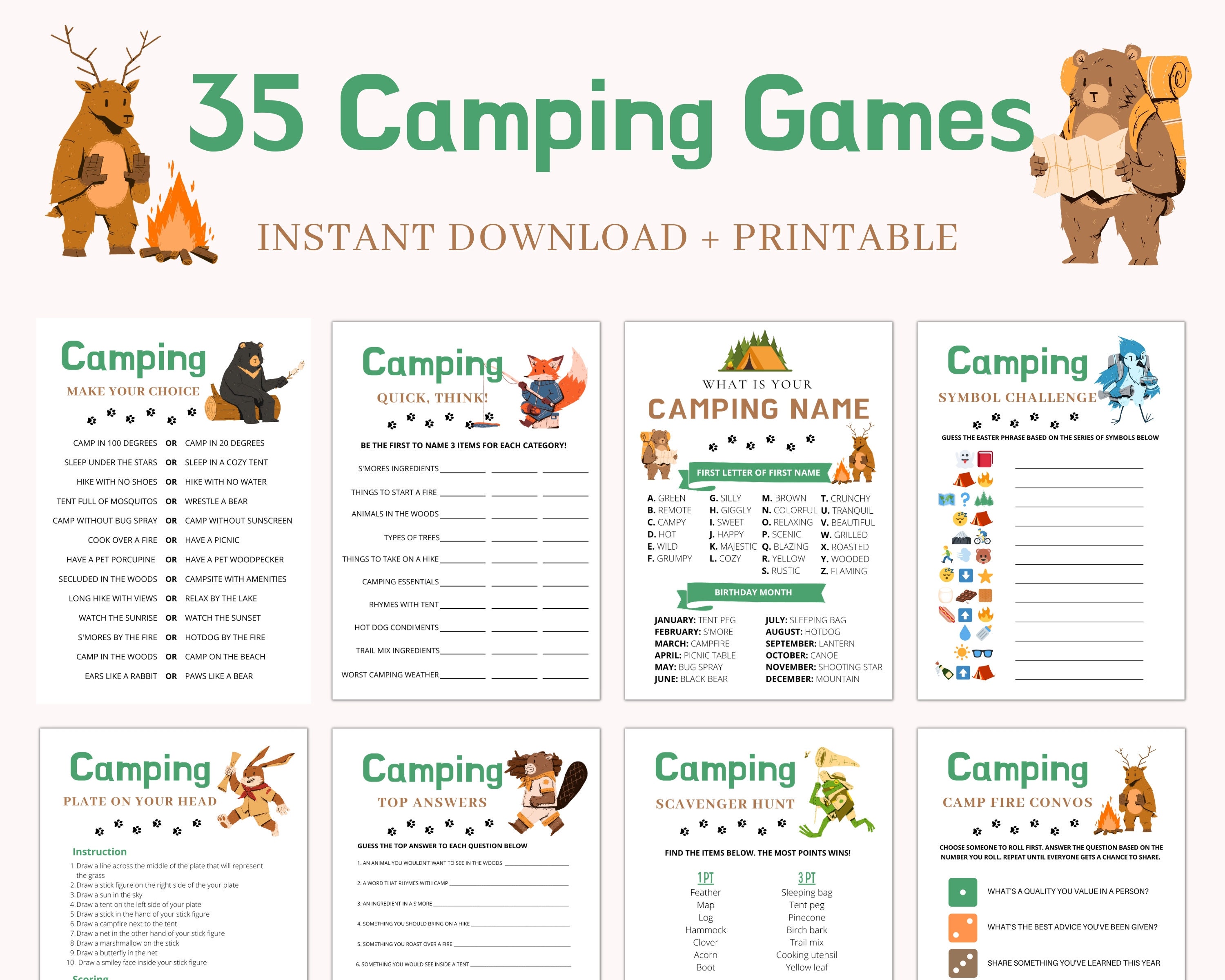
1. Capture The Flag
This classic game works well at any campsite with space to run. Divide kids into two teams, each with a “flag” (a scarf or colored object). Teams hide their flag and try to capture the other’s without being tagged. The game teaches strategy and teamwork.
*Tip:* For small groups, use smaller boundaries. For older kids, add rules like “safe zones” or “prison.”
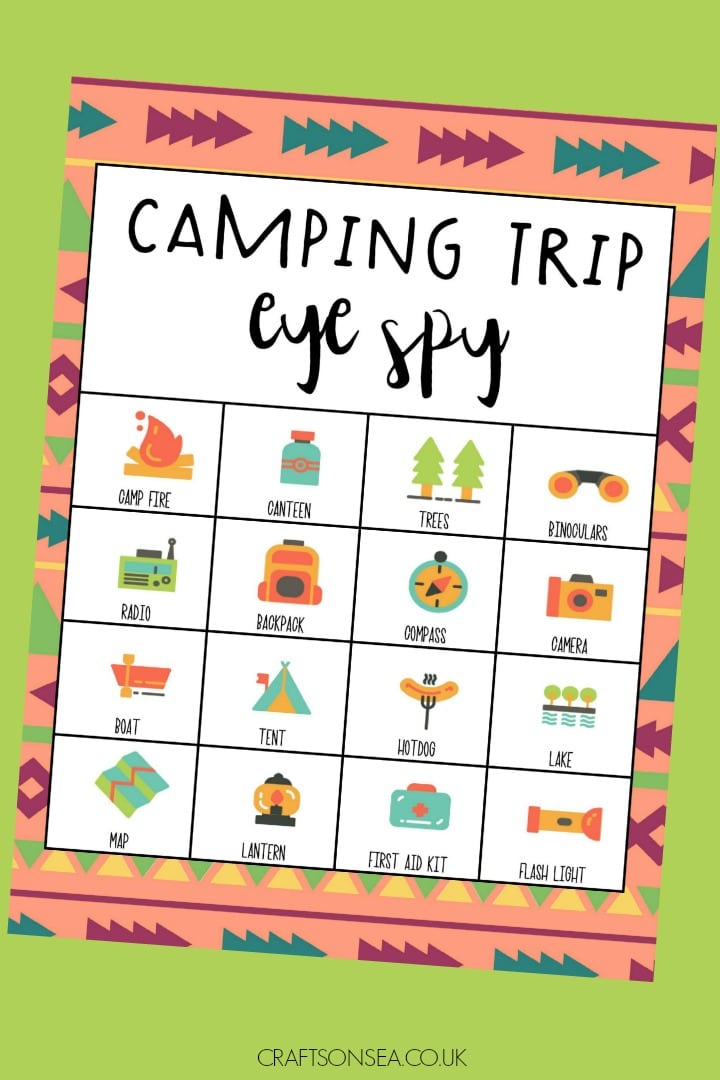
2. Nature Scavenger Hunt
Kids get a list of items to find: pinecones, feathers, or smooth rocks. The hunt makes children notice details in nature and learn about the environment.
*Non-obvious insight:* Include “sound” items like “bird call” or “rustling leaves.” This makes the hunt more sensory and inclusive for younger kids.
3. Sardines
A twist on hide-and-seek. One child hides, and the others search. When someone finds the hidden player, they join them in the hiding spot. The last person to find the group is the next “hider. ”
*Why it works:* Sardines encourages teamwork and is less competitive, perfect for mixed ages.
4. Glow Stick Tag
At dusk, give each child a glow stick. One player is “it” and tries to tag others. Tagged players hand over their glow stick and become “it.” The glowing colors add excitement and make supervision easier after dark.
*Safety tip:* Use boundaries and remind kids to avoid rough terrain.
5. Obstacle Course
Use natural features—logs, rocks, and sticks—to create a course. Kids crawl under branches, jump over stones, and balance on logs. Time each child or let them compete in teams.
*Practical tip:* Make the course adjustable for different ages. Younger kids can skip harder parts.
6. Campfire Stories With A Twist
Instead of just telling stories, make it a game. Start with a sentence, and each child adds to the story. For added challenge, use a random word (like “spider” or “rainbow”) every few turns.
*Why it works:* Builds creativity and keeps kids involved, even those who are shy.
7. Nature Art Contest
Give kids 15 minutes to collect natural items and create art—a sculpture, picture, or necklace. The “judging” can be playful, with awards for “most creative,” “funniest,” or “best use of leaves. ”
*Non-obvious insight:* Encourage kids to explain their art. This boosts confidence and communication.

Credit: partygoat.com
Group Camping Games
Some games are perfect for larger groups, such as family reunions or scout trips. These activities build community and teach valuable social skills.
1. Human Knot
Everyone stands in a circle and grabs two other hands (not next to them). The group must untangle themselves without letting go. It’s a fun, silly challenge that encourages teamwork.
2. Camp Olympics
Set up several mini games: sack races, three-legged races, and tug-of-war. Teams earn points for each event. Use a simple score sheet and award medals or prizes.
*Data insight:* Physical group games help reduce screen time and increase happiness, according to CDC studies.
3. Simon Says (outdoor Edition)
The leader gives commands—“Simon says jump,” “Simon says touch a tree. ” If the leader doesn’t say “Simon says,” anyone who obeys is out. Outdoors, you can add actions like “hug a tree” or “find a pinecone. ”
4. Balloon Volleyball
Tie a rope or use imaginary lines for a net. Use a balloon as the ball. Kids bat it across, trying not to let it touch the ground.
*Safety tip:* Balloons are safer than balls for young kids and work in small spaces.
5. Blanket Toss
Kids hold the edges of a blanket and toss a lightweight object (like a stuffed animal) into the air. The goal is to keep it up as long as possible.
*Practical tip:* Use two teams and see which team keeps the object up longer.
6. Charades (camping Edition)
Write nature-themed words or camping items on slips of paper. Kids act them out without speaking. Categories can include animals, camping gear, or actions like “building a tent. ”
7. Water Relay
If your campsite allows, use buckets, cups, or sponges. Teams race to fill a container using only what they can carry. This game works well on hot days and can be adapted for different ages.
Quiet Or Rainy Day Camping Games
Rain, tiredness, or evening can make kids restless indoors. These games keep spirits high when outdoor fun isn’t possible.
1. Card Games
Bring a deck of cards for classics like Go Fish, Crazy Eights, or Uno. Easy rules and quick rounds make card games perfect for all ages.
2. Story Cubes
Dice with pictures (or homemade versions) inspire kids to create stories. Roll the dice and build a story using the images. This game sparks imagination and can be played quietly.
3. Coloring And Drawing
Pack paper, crayons, or colored pencils. Kids can draw campsite scenes, animals, or imaginary creatures. Display artwork on the tent or picnic table.
*Tip:* Hold a mini art show and let kids explain their drawings.
4. Mystery Bag
Fill a bag with objects from the campsite or home. Kids feel inside and guess what each item is. For younger kids, use familiar items. For older kids, add tricky objects.
*Non-obvious insight:* Use the Mystery Bag to teach about nature—include leaves, bark, or stones and discuss each item.
5. Puzzle Building
Bring small puzzles or encourage kids to build with sticks or rocks. Working together on a puzzle helps with patience and cooperation.
6. Reading Time
Books about camping, nature, or adventure are perfect for quiet moments. Storytelling can calm excited kids and help them wind down before bed.
7. Shadow Puppets
Use a flashlight inside the tent to make animal shapes on the walls. Kids can guess the creature and try making their own.
*Practical tip:* Teach basic shapes like birds or rabbits to help younger children.
Night-time Camping Games
Darkness adds excitement and challenge. Night games teach kids to use their senses and work as a team.
1. Flashlight Hide And Seek
Players hide while one uses a flashlight to search. The darkness makes the game more thrilling and encourages stealth.
*Safety tip:* Set clear boundaries and always supervise.
2. Star Counting
Lie on blankets and count stars. Turn it into a competition or a calm activity before bed. Older kids can try to spot constellations.
*Non-obvious insight:* Use a star map app for extra learning.
3. Firefly Catching
If fireflies are present, challenge kids to catch them gently and release after viewing. This game sparks curiosity about insects.
4. Ghost Stories
Around the campfire, take turns telling spooky or silly stories. Keep tales age-appropriate and end with a funny story to lighten the mood.
5. Night Walk
Organize a slow, quiet walk with flashlights. Listen for night sounds—owls, frogs, or insects. Teach kids about nocturnal animals and safe walking in darkness.
6. Glow-in-the-dark Ring Toss
Bring glow rings or bracelets. Set up targets and see who can toss rings onto them. This game is safe and visible, even in dim light.
7. Lantern Parade
Each child decorates a lantern or flashlight. Parade around the campsite, showing off designs. This game combines creativity and movement.
Table: Age Suitability For Camping Games
Choosing the right game depends on children’s ages. Here’s a quick reference for popular camping games:
| Game | Ages 3–6 | Ages 7–10 | Ages 11–14 |
|---|---|---|---|
| Capture the Flag | ✗ | ✓ | ✓ |
| Nature Scavenger Hunt | ✓ | ✓ | ✓ |
| Glow Stick Tag | ✗ | ✓ | ✓ |
| Obstacle Course | ✓ | ✓ | ✓ |
| Card Games | ✓ | ✓ | ✓ |
| Human Knot | ✗ | ✓ | ✓ |
| Lantern Parade | ✓ | ✓ | ✓ |
*✓ = Suitable, ✗ = Not recommended without help*
Credit: www.etsy.com
Table: Indoor Vs Outdoor Camping Games
Some games work best outdoors, while others are ideal for rainy days or evenings. Here’s a guide:
| Game | Outdoor | Indoor/Tent |
|---|---|---|
| Capture the Flag | ✓ | ✗ |
| Nature Art Contest | ✓ | ✓ |
| Card Games | ✗ | ✓ |
| Shadow Puppets | ✗ | ✓ |
| Glow Stick Tag | ✓ | ✗ |
| Mystery Bag | ✓ | ✓ |
Tips For Organizing Camping Games
Successful camping games depend on planning and adapting to your group and environment. Here are practical tips to make your games fun and safe:
- Know your group: Consider ages, energy levels, and group size. Younger kids may need shorter games and more help.
- Use the environment: Natural features are perfect game props. Logs, rocks, and trees can be used creatively.
- Safety first: Set clear boundaries, supervise at all times, and check for hazards before starting.
- Include everyone: Avoid games that leave some kids out. Modify rules to include shy or less active children.
- Mix it up: Alternate active and quiet games. This keeps kids from getting too tired or bored.
- Keep supplies simple: Bring items like glow sticks, cards, or balloons. Most games need little equipment.
- Ask kids for ideas: Children often invent games and rules that suit their group.
*Non-obvious insight:* Plan backup games for bad weather. Rainy day activities can save a trip from boredom.
Table: Game Supplies Checklist
A well-prepared camping trip includes basic supplies for games. Here’s a comparison of what’s useful for different types of games:
| Supply | Outdoor Games | Indoor/Tent Games | Night Games |
|---|---|---|---|
| Glow sticks | ✓ | ✗ | ✓ |
| Deck of cards | ✓ | ✓ | ✗ |
| Blanket | ✓ | ✓ | ✗ |
| Balloons | ✓ | ✗ | ✗ |
| Colored pencils/crayons | ✓ | ✓ | ✗ |
| Lantern/flashlight | ✗ | ✓ | ✓ |
Common Mistakes When Playing Camping Games
Even experienced campers can make mistakes. Here are some issues to watch for:
- Ignoring safety: Kids can trip, get lost, or wander into unsafe areas. Always check the play area and supervise.
- Too few games: If you rely on one or two games, kids may get bored. Prepare several options.
- Inflexible rules: Strict rules can frustrate younger kids. Be ready to adjust for different ages and abilities.
- Forgetting quiet time: After active games, kids need calm activities to relax and recharge.
- Not involving everyone: Some kids may feel left out if games are too competitive or require special skills.
*Non-obvious insight:* Rotate leaders or let kids create their own games. This increases participation and confidence.
Credit: www.craftsonsea.co.uk
Learning Benefits Of Camping Games
Camping games are fun, but they also teach valuable skills:
- Teamwork: Most games require cooperation and communication.
- Problem-solving: Strategy games like Capture the Flag build thinking skills.
- Physical health: Active games encourage movement and fitness.
- Emotional growth: Playing together helps kids express feelings and handle winning or losing.
- Nature appreciation: Games that use natural elements make children more aware of their environment.
According to American Camp Association, outdoor play boosts creativity, reduces stress, and improves social skills.
Adapting Games For Different Ages And Abilities
Not all games fit every child. Adapt activities so everyone can join and enjoy:
- Younger kids: Use simple rules, shorter rounds, and lots of encouragement. Avoid games with complicated strategies.
- Older kids: Add challenges, longer rounds, or competition. Let them help with organizing.
- Mixed groups: Create teams with different ages. Older kids can guide younger ones.
- Kids with disabilities: Choose inclusive games. Modify rules or playing areas as needed.
*Practical tip:* Ask parents or caregivers for advice on adapting games. Kids often know what works best for them.
Making Camping Games Memorable
Great camping games become traditions. Here’s how to make your games unforgettable:
- Record scores or stories: Keep a notebook or take photos.
- Give awards: Prizes don’t need to be fancy. Ribbons, stickers, or funny certificates are enough.
- Let kids lead: Children love being in charge. Rotate leaders for each game.
- Create rituals: Start every game with a cheer or song. End with a group photo or storytelling.
Planning Games For Your Next Camping Trip
Before you leave home, plan which games to play:
- Check your campsite: Know the space, rules, and safety concerns.
- Pack supplies: Bring a basic kit—cards, glow sticks, balloons, and art materials.
- List game ideas: Prepare a mix of active, quiet, and night games.
- Prepare for weather: Have backup games for rain or cold.
- Involve kids: Ask for suggestions and let them help with setup.
*Non-obvious insight:* Create a “game box” with all supplies in one place. This saves time and keeps kids organized.
Frequently Asked Questions
What Are The Best Camping Games For Young Children?
The best games for young kids are simple, safe, and easy to play. Nature scavenger hunts, obstacle courses, and blanket toss work well. Card games and coloring are perfect for quiet moments. Always supervise and use clear boundaries.
How Can I Organize Camping Games For A Large Group?
For large groups, choose games like Human Knot, Camp Olympics, or Water Relay. Divide kids into teams and use score sheets. Make sure everyone gets a turn and adjust rules for different ages. Rotate leaders to keep things fair and fun.
What Supplies Should I Bring For Camping Games?
Pack basics like glow sticks, deck of cards, balloons, blankets, and art materials (crayons, paper). Flashlights and lanterns are needed for night games. Always check that supplies are safe and suitable for all ages.
How Do I Keep Camping Games Safe?
Set clear boundaries, check for hazards, and supervise all activities. Avoid games near water, cliffs, or rough terrain. Use soft objects for tossing games and keep a first aid kit handy. Safety is more important than competition.
Can Camping Games Be Educational?
Yes! Many camping games teach teamwork, problem-solving, and nature appreciation. Story games build creativity, and scavenger hunts teach about plants and animals. Adapt games to include learning and discussion.
Camping games are more than just fun—they shape children’s confidence, friendships, and love for nature. With a little planning and creativity, you can turn any campsite into a playground for laughter and learning. Kids remember these moments for years, and parents enjoy sharing in the adventure.
The next time you pack for camp, don’t forget the games. They’re the spark that makes every trip special.
