
Car camping is more popular than ever. Many people want to escape the city, enjoy nature, and sleep under the stars—but without leaving the comfort of their car behind. Whether you’re a beginner or a seasoned outdoor fan, packing the right gear makes all the difference.
A well-prepared trip means less stress, more fun, and safer adventures.
This guide will help you get ready for your next car camping journey. You’ll learn what essentials to pack, how to organize your gear, and tips that even experienced campers sometimes miss. You’ll also find helpful data, comparisons, and expert advice that make car camping easier and more enjoyable.
If you’re looking for a clear, practical checklist and a deeper understanding of this outdoor activity, you’re in the right place.
What Is Car Camping?
Car camping is simply camping with your vehicle nearby. Unlike backpacking, where you carry everything on your back, car camping lets you bring more gear and comfort items. You can sleep inside your car, set up a tent next to it, or use the car as storage.
This flexibility makes car camping ideal for families, beginners, and anyone who wants a relaxed outdoor experience. You don’t need expensive equipment or expert skills. It’s easy to customize your trip: stay at a developed campground, find a remote spot, or use your car for a road trip with overnight stops.
Shelter: Your Base For Comfort And Safety
The most important part of car camping is your shelter. It protects you from weather, insects, and gives you privacy. You have several options:
Tent Vs. Sleeping In Your Car
Some campers prefer a tent. Others sleep inside their car (SUV, van, or hatchback). Both have pros and cons.
| Option | Pros | Cons |
|---|---|---|
| Tent | More space, fresh air, easier to stretch | Setup needed, can be cold, less secure |
| Car | Quick setup, warmer, secure, waterproof | Limited space, less ventilation, can get stuffy |
Choosing The Right Tent
If you pick a tent, look for these features:
- Weather resistance: Waterproof, windproof
- Easy setup: Quick to pitch, especially in the dark
- Size: Enough room for you, gear, and maybe family
A three-season tent works for most trips. For cold weather, a four-season tent offers more protection.
Sleeping Inside Your Car
If your car is big enough, you can fold down seats and use a mattress or sleeping pad. SUVs, minivans, and hatchbacks are best. Some campers add curtains for privacy or screens for ventilation.
Non-obvious tip: Always crack a window for airflow, but use mesh screens to keep insects out. Many beginners forget this and wake up hot or stuffy.
Sleeping Gear: Rest Well Anywhere
A good night’s sleep is essential. You’ll need sleeping gear that matches the weather and your comfort needs.
Sleeping Bags
Pick a sleeping bag with a temperature rating lower than the expected night temperature. For example, if you expect 45°F nights, a 35°F-rated bag will keep you warm.
- Down bags: Lightweight, compressible, but lose warmth if wet
- Synthetic bags: Cheaper, dry faster, slightly heavier
Sleeping Pads & Mattresses
A pad or mattress protects you from the cold ground and adds comfort. Options include:
- Foam pads: Affordable, durable
- Inflatable pads: Compact, more comfortable
- Air mattresses: For extra comfort, but need a pump
If sleeping in your car, measure the space before buying a mattress.
Pillows And Blankets
Don’t forget a small pillow or inflatable pillow. Extra blankets are useful for chilly nights or sitting outside.
Cooking Equipment: Eat Well Outdoors
One of the best parts of car camping is eating outside. You can bring more cooking gear than backpackers, but you still need to pack smart.
Stoves And Fuel
Most campers use a portable stove. Popular options:
- Propane stoves: Easy, reliable, fast
- Butane stoves: Lightweight, good for short trips
- Campfire cooking: Only where fires are allowed
A two-burner stove is great for families. Always bring extra fuel.
Cookware And Utensils
Bring pots and pans that fit your stove. Don’t overpack—one pot, one pan, and a kettle are enough for most meals. Add plates, bowls, forks, knives, spoons, and a spatula.
Non-obvious insight: Silicone or collapsible cookware saves space. Many new campers don’t realize how bulky traditional pots can be.
Food Storage
Keep food in airtight containers. Use a cooler for perishable items. Some campgrounds require bear-proof boxes.
Tip: Freeze bottles of water before your trip to use as ice packs and drinking water.
Cleaning Supplies
Pack a sponge, dish soap, and a small towel. A collapsible sink helps, but you can use a basin or bucket.
Water: Stay Hydrated And Clean
Water is critical. You need it for drinking, cooking, and cleaning. Don’t rely on campgrounds to always have water.
How Much Water To Bring
Plan for at least 1 gallon per person per day. This covers drinking and basic cleaning. In hot weather or remote areas, bring more.
Water Storage
Large jugs (5 gallons) are good for group trips. Smaller bottles are easier to carry for day hikes.
Water Filtration
If you camp near lakes or streams, bring a water filter or purification tablets. This lets you refill safely.
Hygiene
Hand sanitizer, biodegradable soap, and wipes help keep you clean. Never dump soapy water near natural water sources.
Lighting: See Clearly At Night
Proper lighting makes evenings safer and more enjoyable. Pack a mix of lights:
- Headlamp: Hands-free, useful for cooking or walking
- Lantern: Lights up your camp area
- Flashlight: Backup or for emergencies
Bring extra batteries or a power bank. Solar-powered lanterns are popular, but charge them before your trip.
Non-obvious tip: Use string lights for cozy atmosphere. They help you see and make your campsite feel inviting.
Clothing: Dress For Changing Conditions
Weather can change quickly outdoors. Bring layers:
- Base layer: Moisture-wicking shirt and pants
- Insulating layer: Fleece or down jacket
- Outer layer: Waterproof jacket
Pack extra socks and underwear. Closed-toe shoes protect your feet. Consider sandals for relaxing at camp.
Mistake to avoid: Don’t pack only shorts and T-shirts. Even summer nights can be cold.
Food: Planning Meals For Car Camping
Planning food is easier than backpacking, but still needs thought. Aim for simple meals with little prep.
Breakfast Ideas
- Oatmeal packets
- Eggs (packed in a hard container)
- Bagels or muffins
Lunch Options
- Sandwiches with deli meat and cheese
- Wraps with hummus and veggies
- Crackers, fruit, and trail mix
Dinner Examples
- Pasta with sauce
- Grilled sausages or burgers
- Rice with canned beans
Bring snacks: nuts, granola bars, dried fruit. Don’t forget drinks—coffee, tea, or hot chocolate.
Tip: Pre-chop veggies and marinate meat before your trip. This saves time and reduces mess.
Organization: Packing Efficiently
Good organization keeps your trip smooth. Messy gear wastes time and causes stress.
- Storage bins: Stackable plastic bins keep gear sorted
- Drawstring bags: Separate clothes, food, and tools
- Cargo organizers: Fit in your trunk or back seat
Label everything if you’re with a group. Keep daily-use items within reach.
Non-obvious insight: Keep a small bag for trash and recycling. Many campers forget and litter their site.
Safety: Protect Yourself And Your Gear
Safety comes first. Prepare for accidents, wildlife, and weather.
First Aid Kit
Bring a complete first aid kit:
- Bandages
- Antiseptic wipes
- Pain relievers
- Tweezers
- Allergy medicine
Check expiration dates before every trip.
Emergency Gear
- Multi-tool: Knife, scissors, screwdriver
- Whistle: For signaling
- Fire extinguisher: Small, for car or campfire accidents
- Emergency blanket: Reflects heat, useful in cold or shock
Wildlife Safety
Store food away from your sleeping area. In bear country, use bear-proof containers. Keep a safe distance from animals.
Weather Awareness
Check forecasts before your trip. Bring extra tarps for rain. If lightning is nearby, stay in your car.
Toiletries And Hygiene
Staying clean makes camping more pleasant. Pack these essentials:
- Toothbrush and toothpaste
- Biodegradable soap
- Towel
- Toilet paper
- Wet wipes
- Menstrual products (if needed)
Bathroom Solutions
Some campgrounds have restrooms. For remote areas, use a portable toilet or dig a “cat hole” (6-8 inches deep, 200 feet from water). Always follow Leave No Trace rules.
Tip: Bring a small mirror and hand sanitizer. Useful for quick cleanups and checking for ticks.
Recreation And Activities
Car camping is about more than sleeping and eating. Plan fun activities:
- Hiking: Bring a map and comfortable shoes
- Fishing: Pack a rod, license, and tackle
- Biking: If you have space for bikes
- Photography: Camera or smartphone
- Board games or cards: For evenings
If camping with kids, bring toys or nature guides. Don’t forget books or music for relaxing.
Navigation And Connectivity
Staying connected helps you find your way and stay safe.
- GPS device: Reliable in remote areas
- Smartphone: For maps, weather, emergencies
- Offline maps: Download before your trip
- Charging cables: For devices
Mistake to avoid: Don’t rely only on cell service. Many campgrounds have poor signal.
Car Maintenance And Preparation
Your car is your base. Make sure it’s ready for the trip.
- Check oil, brakes, and tires
- Fill up gas before leaving town
- Pack a spare tire, jack, and jumper cables
- Bring extra windshield washer fluid
Tip: Clean your car before packing. It’s easier to organize gear and avoids surprises.
Campsite Selection: Finding The Right Spot
Where you camp affects your experience. Consider these factors:
- Accessibility: Is the site easy to reach?
- Amenities: Bathrooms, water, picnic tables
- Safety: Flat ground, away from hazards
- Rules: Check regulations for fires, pets, and quiet hours
Popular campgrounds often require reservations. Remote sites offer privacy but may lack facilities.
Comparing Campsite Types
| Type | Amenities | Privacy | Cost |
|---|---|---|---|
| Developed Campground | Bathrooms, water, tables | Lower | $20–$40/night |
| Dispersed Site | None | Higher | Free |
| Backcountry | None | Highest | Free/permit |
Tip: Use apps like Recreation.gov or AllStays to find and book sites.
Weather Preparation: Being Ready For Anything
Weather is unpredictable. Pack for sun, rain, and cold.
- Tarps: For shelter or ground cover
- Rain gear: Poncho or waterproof jacket
- Sun protection: Hat, sunscreen, sunglasses
- Cold weather gear: Gloves, extra blankets
Monitor forecasts and adjust plans as needed. If storms are coming, consider changing sites or delaying your trip.
Insight: Many campers don’t realize how quickly weather changes in mountains or forests. Always pack for unexpected cold and rain.
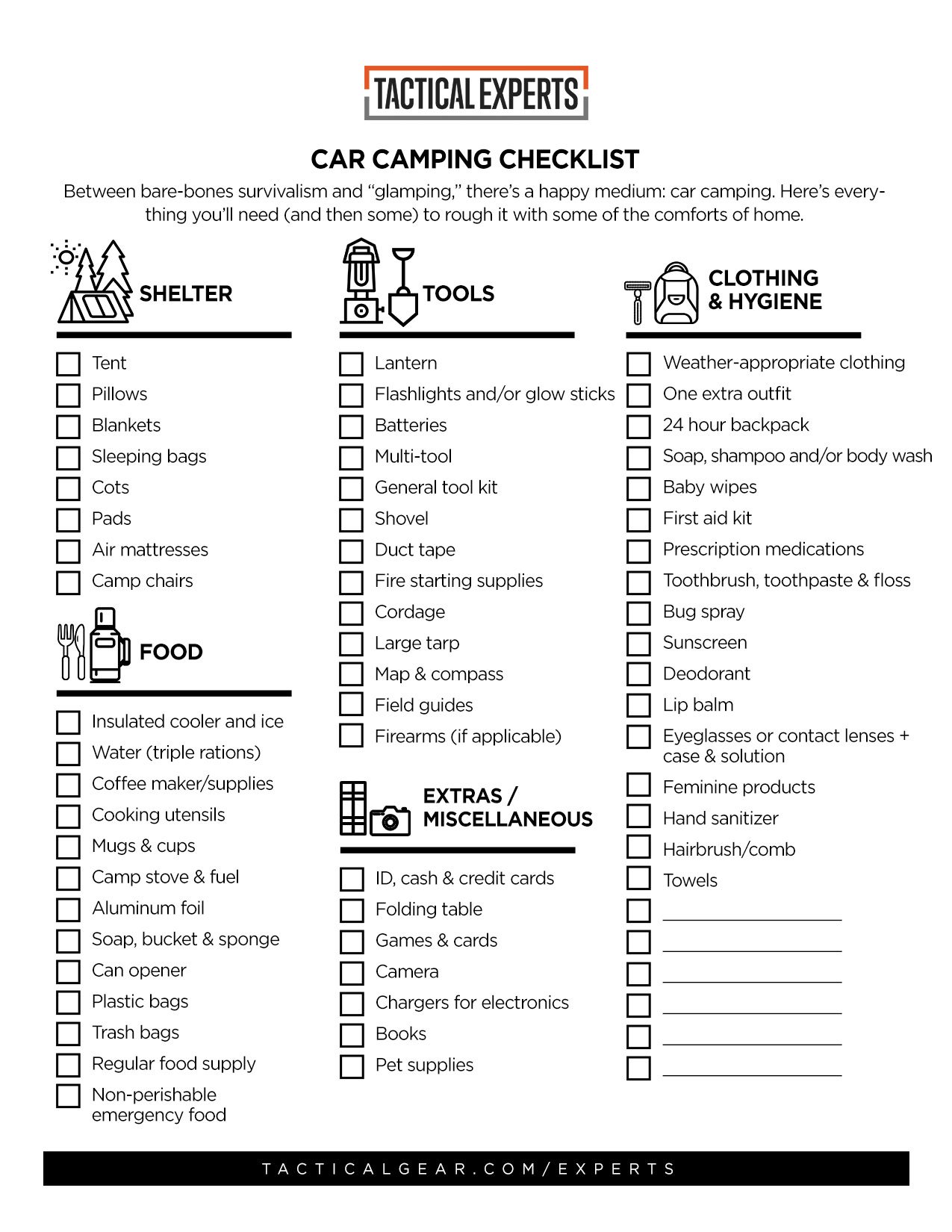
Credit: tacticalgear.com
Entertainment: Making The Most Of Your Trip
Car camping is a chance to relax and recharge. Bring entertainment:
- Music: Bluetooth speaker or headphones
- Books or Kindle
- Drawing or journaling supplies
- Nature guides: Learn about local plants and animals
Games help pass time during rain or evenings. If you play music, keep volume low to respect other campers.
Packing Checklist: Don’t Forget Anything
Here’s a basic car camping checklist. Adjust for your needs:
- Tent or sleeping setup
- Sleeping bag and pad
- Pillow and blankets
- Cooking stove and fuel
- Pots, pans, utensils
- Plates, bowls, cups
- Food and snacks
- Cooler and ice packs
- Water bottles and jugs
- Lighting: Headlamp, lantern, flashlight
- Clothing: Layers, extra socks, jacket
- First aid kit
- Emergency gear: Multi-tool, whistle, fire extinguisher
- Toiletries: Toothbrush, soap, towel, toilet paper
- Trash bags
- Recreation items: Games, books, camera
- Navigation: Maps, GPS, phone charger
- Car maintenance: Spare tire, jumper cables
- Weather gear: Tarp, rain jacket, sunscreen
- Storage bins and organizers
Tip: Double-check your list before leaving. Pack essentials first.

Credit: www.plattar.com
Budgeting For Car Camping
Car camping can be affordable, but costs vary. Here’s an example budget for a weekend trip for two people:
| Item | Estimated Cost |
|---|---|
| Campground Fee (2 nights) | $50 |
| Food and Drinks | $40 |
| Fuel (round trip) | $30 |
| Cooking Fuel | $10 |
| Ice for Cooler | $5 |
| Miscellaneous (games, toiletries) | $20 |
| Total | $155 |
Prices vary by region and how much gear you already own. Car camping is usually cheaper than hotels or cabin rentals.
Sustainability: Leave No Trace
Respect nature by following Leave No Trace principles:
- Pack out all trash
- Avoid disturbing wildlife
- Use established campsites
- Don’t pick plants or damage trees
- Minimize campfire impact
Some campgrounds offer recycling bins. If not, take recyclables home.
Insight: Many beginners skip Leave No Trace, but it keeps sites beautiful for everyone.
For more information, visit Leave No Trace Center for Outdoor Ethics.
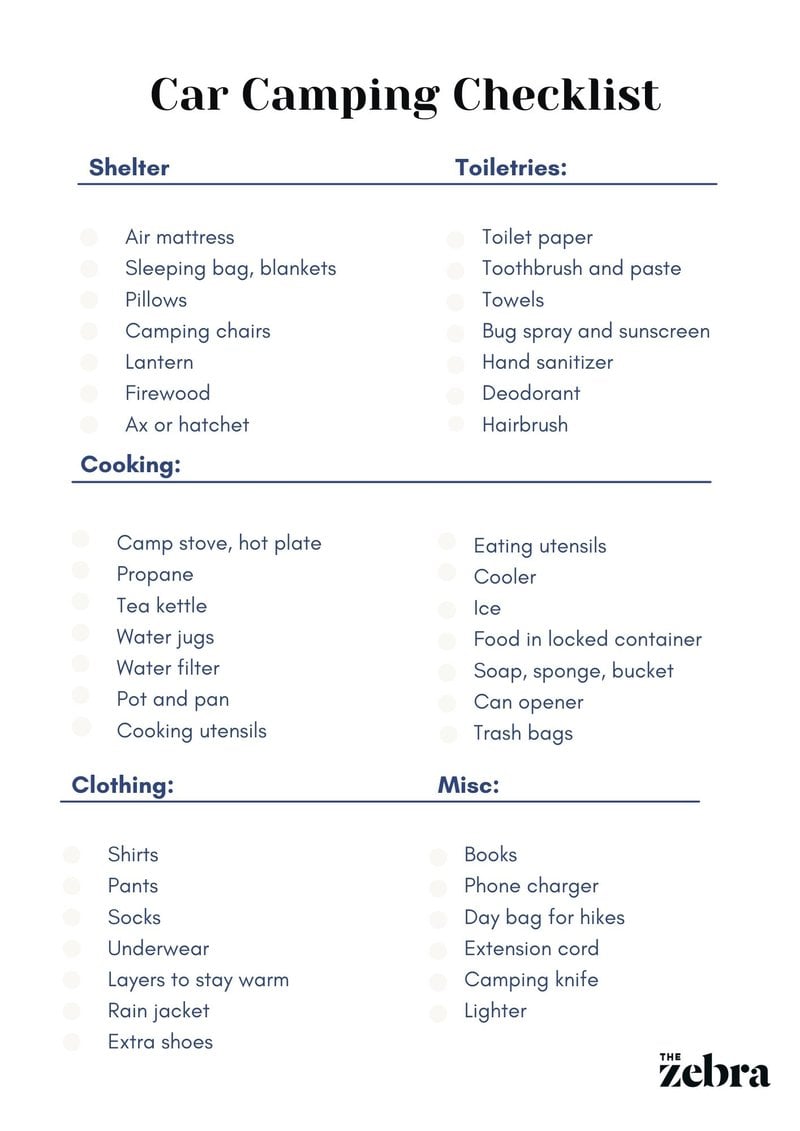
Credit: www.thezebra.com
Frequently Asked Questions
What Is The Best Car For Car Camping?
The best cars are SUVs, minivans, and hatchbacks. These offer flat space to sleep, easy access to gear, and good ventilation. Smaller cars can work, but space is limited.
How Do You Stay Warm While Car Camping?
Use a sleeping bag rated for low temperatures, layer your clothes, and bring extra blankets. If sleeping in your car, crack a window for airflow but block drafts with towels. Avoid using car heaters overnight, as this can be dangerous.
Can You Camp Anywhere With Your Car?
No. You must follow local laws and campground rules. Some public lands allow dispersed camping, but others ban overnight stays. Check regulations before your trip.
How Do You Keep Food Safe From Animals?
Store food in airtight containers and keep it in your car or a bear-proof box. Never leave food outside or in your tent. Clean up crumbs and wash dishes right away.
What If You Run Out Of Water?
Always pack extra water. If you run out, use a water filter or purification tablets on natural sources (lake, stream). Boil water for at least 1 minute if you’re unsure. Don’t rely on campgrounds to always have water.
Car camping offers freedom, comfort, and adventure. With the right essentials, you’ll enjoy the outdoors without hassle. Preparation and smart packing make your trip safer and more fun. Use these tips to plan your next journey—nature is waiting.
