
Hiking Vs Trekking: Key Differences, Experiences, And Choosing Your Adventure
Outdoor walking is more popular than ever. People want a break from the city, fresh air, and a new challenge. But when you search for outdoor walking activities, you find two main words: hiking and trekking. Many use these words as if they mean the same thing. But are they? If you’re wondering which activity is right for you—or if you’re confused by the terms—you’re not alone.
This article will clear up the confusion. You’ll learn the real difference between hiking and trekking, how each experience feels, what you need to prepare, and how to choose the right adventure for yourself. By the end, you’ll understand both activities deeply and make a confident decision.
Hiking And Trekking: What Do They Mean?
Many guides mix up hiking and trekking, but there are important differences. Both involve walking outdoors, but the duration, terrain, and challenge change a lot.
What Is Hiking?
Hiking means walking on well-marked paths or trails, usually in the countryside or mountains. These trails are often maintained and mapped. Hiking is usually a day activity—you start in the morning, finish before dark, and return home or to your lodging.
Most hikes are between 2 and 20 miles (3–32 km), though some can be longer. The terrain can be gentle or steep, but it’s rarely wild or dangerous. Many people hike for exercise, relaxation, or nature photography. You can hike alone, with friends, or in organized groups.
What Is Trekking?
Trekking is a longer, more demanding journey on foot. It often covers multiple days and goes through remote, rugged, or wild areas. Treks rarely follow maintained paths. Instead, you cross valleys, rivers, forests, and mountains. Treks require more planning and equipment because you often camp or stay in basic shelters.
Treks can last from 2 days to several weeks. Famous treks include the Everest Base Camp trek (about 12 days) and the Appalachian Trail (up to 6 months). Trekking is not just about walking; it’s about adventure, endurance, and exploring places most people never see.
Main Differences: Hiking Vs Trekking
Let’s break down the main differences so you can see them clearly.
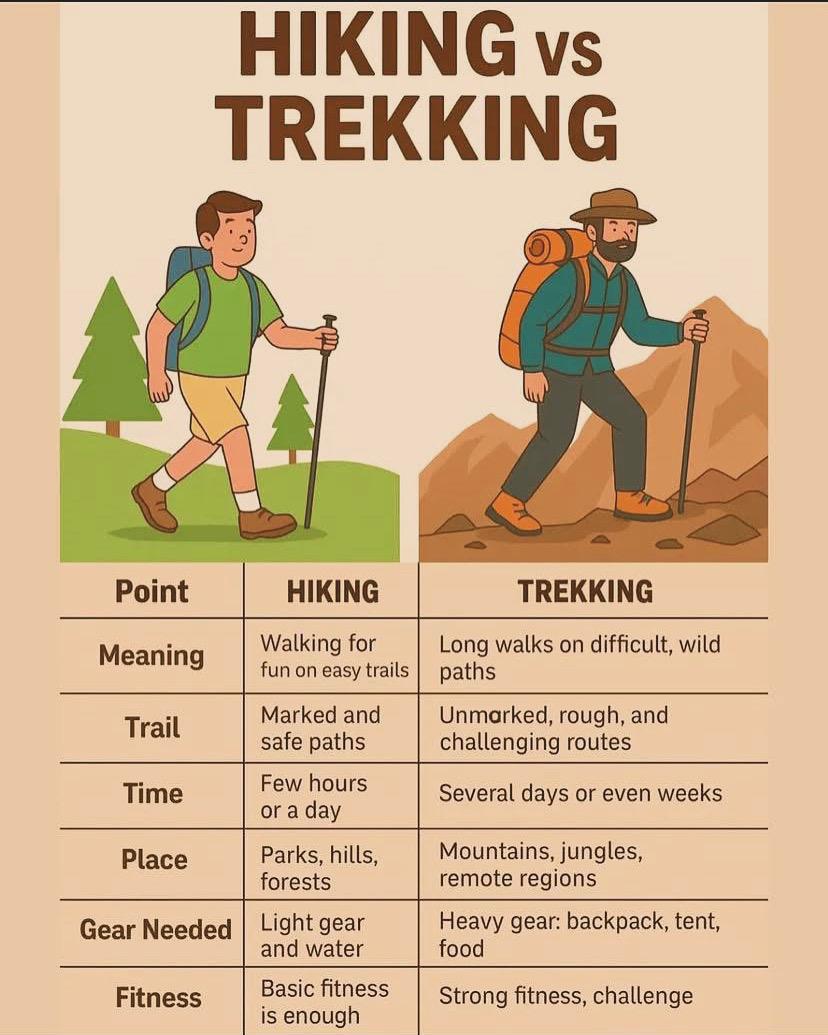
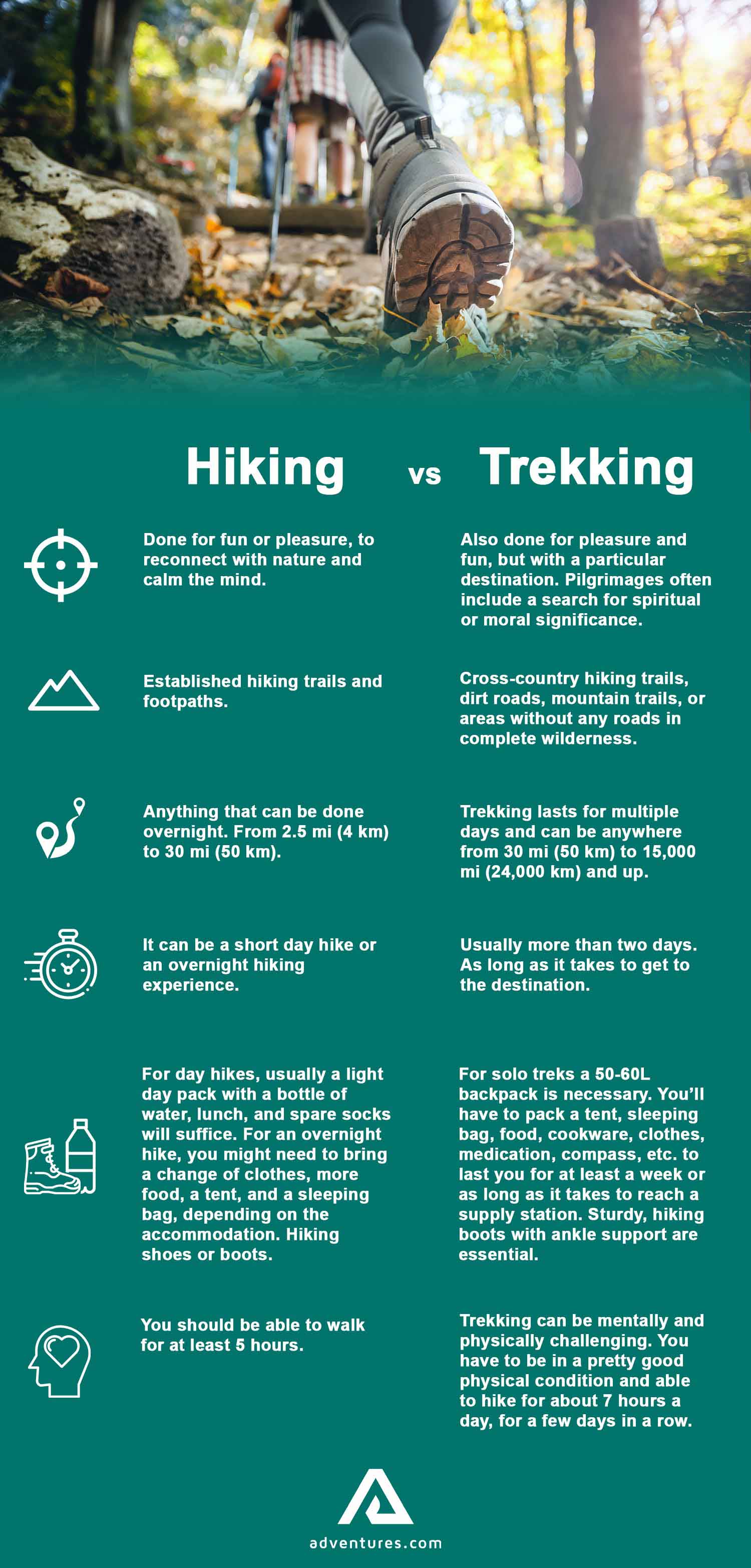
| Feature | Hiking | Trekking |
|---|---|---|
| Duration | Few hours to 1 day | 2 days to several weeks |
| Terrain | Marked trails, gentle to moderate | Wild, rugged, remote areas |
| Difficulty | Beginner to moderate | Moderate to extreme |
| Gear | Basic—water, snacks, comfortable shoes | Advanced—camping gear, survival tools |
| Safety | Low risk, easy rescue | Higher risk, limited support |
| Purpose | Exercise, leisure, nature | Adventure, endurance, exploration |
Why Choose Hiking?
If you want to enjoy nature with less stress, hiking is a great choice. Let’s look at what makes hiking appealing:
- Easy to start: You don’t need special gear or lots of experience.
- Flexible: Choose short or long hikes to match your fitness.
- Accessible: Most cities have hiking trails nearby.
- Safer: Rescue is easier if you get lost or injured.
- Social: Many people hike in groups or meet others on the trail.
- Health benefits: Hiking improves your heart, lungs, and muscles.
- Mental relaxation: Walking in nature reduces stress and boosts mood.
Non-obvious insight: Many beginners don’t realize hiking can help build confidence for more challenging outdoor activities. Short hikes teach navigation, gear management, and basic outdoor skills.
Why Choose Trekking?
For a deeper adventure, trekking is your path. Trekking offers:
- Exploration: Discover places with few people—remote valleys, high mountains, wild forests.
- Challenge: Trekking tests your endurance, strength, and planning skills.
- Personal growth: Long treks teach patience, resilience, and teamwork.
- Cultural experience: Some treks pass through villages where you meet locals and learn about their lives.
- Nature immersion: Spend days or weeks in nature, away from distractions.
- Achievement: Completing a trek is a big accomplishment, often remembered for life.
Non-obvious insight: Most beginners think trekking is only for elite athletes. But with training and planning, people of all ages can trek. The key is to choose a route that matches your ability and build up slowly.
Credit: www.missionsummittreks.com
Skills Needed: Hiking Vs Trekking
The skills you need depend on the activity.
Skills For Hiking
- Navigation: Reading trail maps or signs.
- Basic fitness: Able to walk for several hours.
- Packing light: Carrying only what you need.
- Weather awareness: Knowing when to avoid bad conditions.
- First aid basics: Treating minor injuries.
Skills For Trekking
- Advanced navigation: Using GPS, compass, or topographic maps.
- Endurance: Walking long distances day after day.
- Camping skills: Setting up tents, cooking outdoors, staying warm.
- Survival skills: Finding water, handling emergencies.
- Teamwork: Working with a group, sharing tasks.
- Mental toughness: Staying positive when tired or facing challenges.
Extra tip: Many trekkers learn their skills during hiking trips. Start with day hikes, then slowly move to longer treks as your skills grow.
Gear Comparison: What You Need
Your equipment can make or break your experience. Here’s a detailed comparison:
| Item | Hiking | Trekking |
|---|---|---|
| Footwear | Light hiking shoes or boots | Heavy-duty boots, waterproof |
| Backpack | Small (15–25 liters) | Large (40–70 liters) |
| Clothing | Comfortable, weather-appropriate | Layered, durable, quick-dry |
| Navigation | Trail maps, phone GPS | Compass, topographic maps, GPS device |
| Food | Snacks, water | Meals, water purification, cooking tools |
| Shelter | None or emergency poncho | Tent, sleeping bag, ground mat |
| Safety | Basic first aid kit | Advanced first aid, emergency kit |
| Other | Sunblock, hat | Trekking poles, repair kit |
Mistake to avoid: Beginners often bring too much gear for hiking, making the walk uncomfortable. For trekking, not bringing enough equipment can be dangerous.

Credit: www.ultimategearlists.com
Physical And Mental Benefits
Both hiking and trekking offer strong health benefits, but they differ in intensity.
Hiking Benefits
- Improves heart health: Regular hiking lowers blood pressure.
- Builds muscle: Leg, core, and back muscles strengthen.
- Boosts mental health: Nature walks reduce anxiety and depression.
- Supports weight loss: Burns 300–600 calories per hour.
- Enhances balance: Trails train your body to adjust.
Trekking Benefits
- Increases stamina: Multi-day treks build endurance.
- Strengthens immunity: Exposure to nature boosts immune function.
- Improves problem-solving: Handling tough situations grows mental skills.
- Develops discipline: Sticking to routines and goals.
- Creates lasting memories: The adventure and challenge stay with you.
Stat: According to the American Hiking Society, hiking is one of the top ways to fight obesity and heart disease.
Environmental Impact
Outdoor walking impacts the environment. It’s important to protect nature for future generations.
Hiking Impact
Hiking trails are designed to handle foot traffic. Staying on the path avoids harming plants and animals. However, too many hikers in popular spots can cause erosion, litter, and disturbance.
Trekking Impact
Trekking often goes through wild areas. If trekkers are careless, they can damage fragile ecosystems, scare wildlife, and leave waste. Responsible trekking means following Leave No Trace principles: pack out all trash, minimize campfire use, and respect local cultures.
Tip: Always check local rules and permits. Some places limit trekking to protect nature.
Popular Hiking Destinations
If you love hiking, you have many options around the world. Here are some famous hiking spots:
- Yosemite National Park, USA – Over 800 miles of scenic trails, waterfalls, and granite cliffs.
- Cinque Terre, Italy – Colorful villages and coastal trails.
- Banff National Park, Canada – Lakes, forests, and mountain views.
- Great Smoky Mountains, USA – Misty peaks and wildflowers.
- Blue Mountains, Australia – Eucalyptus forests and sandstone cliffs.
Each place has easy and tough trails. Choose what matches your level.
Popular Trekking Routes
Trekking takes you further. Here are some world-famous treks:
- Everest Base Camp, Nepal – 12 days, high altitude, incredible Himalayan views.
- Inca Trail, Peru – 4 days to Machu Picchu, ancient ruins, cloud forests.
- Torres del Paine, Chile – 5–10 days, Patagonia’s wild landscapes.
- Appalachian Trail, USA – 2,200 miles, takes months to finish.
- Annapurna Circuit, Nepal – 2–3 weeks, diverse terrain and cultures.
These treks are physically and mentally demanding. You’ll need planning, permits, and training.
Credit: adventures.com
Preparing For Hiking And Trekking
Preparing For Hiking
Preparation is simple for hiking:
- Check the weather
- Wear comfortable shoes
- Bring water and snacks
- Pack a map or GPS
- Tell someone your plan
- Start early and finish before dark
Extra tip: Always carry a small first aid kit, even for short hikes.
Preparing For Trekking
Trekking needs careful preparation:
- Research the route: Study maps, read guides, join forums.
- Physical training: Walk long distances, practice carrying a backpack.
- Gather gear: Buy quality boots, camping equipment, and layered clothing.
- Plan food and water: Meals, purification tablets, and cooking tools.
- Arrange permits: Some areas require advance permission.
- Pack emergency tools: Satellite phone, whistle, and extra batteries.
- Learn basic survival: How to find water, make shelter, and handle injuries.
Mistake to avoid: Don’t skip training. Even a short trek can be exhausting if you’re unprepared.
Safety Concerns
Safety is always important. Know the risks and how to handle them.
Hiking Safety
- Stay on marked trails
- Watch for weather changes
- Avoid hiking alone in remote areas
- Bring a phone and tell someone your plan
- Carry basic first aid
Hiking accidents are rare, but slips, falls, or getting lost can happen.
Trekking Safety
- Travel in groups
- Check altitude sickness risks
- Carry emergency contacts
- Know local wildlife dangers
- Get insurance for remote treks
Trekking risks are greater—injury, illness, or getting lost far from help. Always prepare and have backup plans.
Stat: About 35% of trekking injuries are caused by slips and falls, mostly in rocky or wet terrain.
Hiking Vs Trekking: Cost Comparison
Money matters for adventure planning. Here’s a cost breakdown:
| Expense | Hiking | Trekking |
|---|---|---|
| Gear | $50–$200 | $500–$2,000 |
| Permits | Usually free or <$30 | $50–$300 |
| Guides | Rarely needed | $20–$100/day |
| Travel | Local or day trip | Often international |
| Total Typical Cost | $100–$300 | $1,000–$5,000+ |
Mistake to avoid: Many first-time trekkers forget to budget for gear upgrades, insurance, or guides. Always plan for extra costs.
Group Vs Solo: Which Is Better?
You can hike or trek alone or with others. Each has pros and cons.
Group Adventures
- Safety: More eyes, help in emergencies.
- Motivation: Friends push you to finish.
- Social: Shared memories and fun.
- Learning: Experienced members teach skills.
Solo Adventures
- Freedom: Move at your own pace.
- Self-discovery: Test your limits.
- Peace: Enjoy nature quietly.
- Challenge: Builds confidence.
Non-obvious insight: Solo trekking is risky for beginners. Start with group treks, then move to solo as you gain skills.
Choosing Your Adventure: Hiking Or Trekking?
How do you decide which activity is right for you? Consider these factors:
- Fitness level: If you’re new to outdoor walking, start with hiking. Trekking needs higher endurance.
- Available time: Hiking fits busy schedules. Trekking requires days or weeks.
- Budget: Hiking costs less. Trekking is expensive due to gear and travel.
- Desired experience: Want relaxation? Choose hiking. Crave adventure? Try trekking.
- Safety comfort: Hiking is safer. Trekking needs more risk management.
- Cultural interest: Trekking often includes meeting locals and learning traditions.
- Nature goals: Hiking offers beautiful views. Trekking brings wild, untouched landscapes.
Extra tip: Try both. Start with short hikes. If you enjoy them, plan a short trek with a group.
Environmental Responsibility
Whether you hike or trek, protect nature:
- Leave no trace: Take all trash home.
- Respect wildlife: Don’t feed or disturb animals.
- Stay on trails: Avoid harming plants.
- Use eco-friendly gear: Avoid single-use plastics.
- Support local communities: Buy from locals, follow their rules.
Stat: According to National Park Service, responsible hikers and trekkers help preserve trails for future generations.
Famous Stories: Hiking And Trekking
Outdoor adventures create amazing stories. Here are a few:
- Cheryl Strayed’s Pacific Crest Trail hike: Her solo journey led to the book “Wild” and inspired thousands.
- Sir Edmund Hillary’s Everest trek: The first successful climb of Everest started with a trek to base camp.
- Bill Bryson’s Appalachian Trail hike: His humorous book “A Walk in the Woods” shows both the beauty and challenge of long hikes.
These stories show how hiking and trekking change lives, both physically and mentally.
Technology In Hiking And Trekking
Modern technology helps hikers and trekkers:
- GPS devices: Accurate navigation in wild areas.
- Fitness trackers: Measure steps, heart rate, and calories.
- Smartphone apps: Trail maps, weather updates, emergency contacts.
- Solar chargers: Keep devices powered during long treks.
- Satellite phones: Emergency communication in remote areas.
Mistake to avoid: Don’t rely only on technology. Devices can fail—always bring a backup map and compass.
The Future Of Hiking And Trekking
Outdoor activities are changing. Here’s what to expect:
- More people outdoors: After COVID-19, hiking and trekking grew by 20%.
- New trails: Governments and communities create new paths for tourism.
- Eco-friendly gear: Companies focus on sustainable materials.
- Digital maps: Apps offer real-time safety updates.
- Adventure tourism: Trekking is part of travel packages in many countries.
Extra tip: Check online forums and local clubs for new routes and group events.
Frequently Asked Questions
What Is The Main Difference Between Hiking And Trekking?
The main difference is duration and difficulty. Hiking is usually a day walk on marked trails, while trekking is a multi-day journey through wild, rugged terrain.
Can Beginners Try Trekking?
Yes, but start with easy treks and join a group. Train your body with regular hikes before attempting longer treks.
What Gear Do I Need For Hiking Vs Trekking?
For hiking, you need comfortable shoes, water, snacks, and a map. For trekking, you need sturdy boots, a large backpack, camping gear, food, water purification, and survival tools.
Are There Health Risks In Hiking Or Trekking?
Both activities have risks. Hiking risks include slips and minor injuries. Trekking risks are higher—injuries, illness, altitude sickness, and getting lost. Prepare well and know emergency contacts.
How Do I Protect Nature While Hiking Or Trekking?
Follow Leave No Trace principles: take all trash home, stay on trails, respect wildlife, use eco-friendly gear, and support local communities.
Final Thoughts
Hiking and trekking are both rewarding ways to connect with nature. Hiking suits those who want exercise, relaxation, and easy access. Trekking is for adventurers who seek challenge, endurance, and wild landscapes. Both activities improve your health, build confidence, and create unforgettable memories.
If you’re unsure, start with hiking. Build your skills, then try a short trek with a group. No matter which you choose, respect the environment and enjoy the journey. Outdoor walking is not just a sport—it’s a path to growth, discovery, and lasting happiness.
