Camping and campfires go hand in hand. The warmth, the glow, and the feeling of community around a fire are unforgettable parts of the experience. But one question comes up for almost every camper: How much firewood do I need for camping? Getting this right can make your trip easier, safer, and more enjoyable. If you bring too little, you might end up cold or hungry. Too much, and you waste space and energy. Let’s break down the details, so you can plan your next camping adventure with confidence.
Why Firewood Matters For Camping
Firewood is more than just fuel. It’s a central part of camping life. You use it for cooking, warmth, light, and even keeping insects away. The right amount of firewood helps you:
- Cook meals evenly
- Stay warm at night
- Enjoy safe, consistent fires
- Avoid running out unexpectedly
It’s easy to underestimate how much you need, especially if you’re new to camping or camping in different conditions. The amount depends on many factors, including the weather, the number of people, the length of your trip, and your fire habits.
What Affects Firewood Usage?
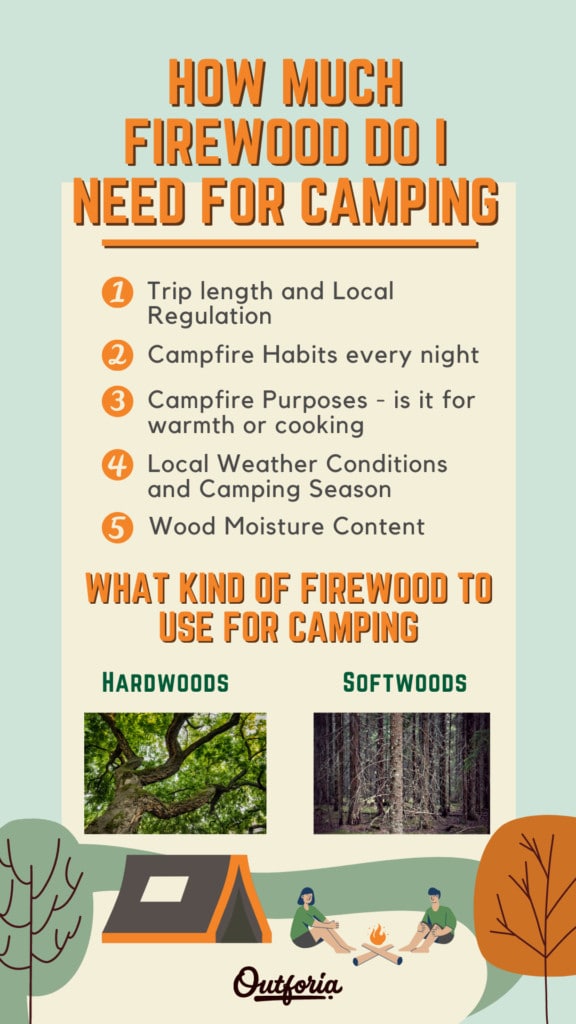
Several things influence your firewood needs. Let’s look at each factor in detail.
1. Type Of Camping Trip
Are you camping for one night, a weekend, or a full week? The longer your trip, the more firewood you need. Short trips may only require a few bundles, while extended stays need careful planning.
2. Group Size
More people means bigger fires and more wood. Cooking for four is different than cooking for ten. Larger groups may also spend more time by the fire, using more wood.
3. Campfire Purpose
What Will You Use Your Fire For?
- Cooking: Requires steady heat, often for longer periods.
- Warmth: Needs bigger fires, especially in cold weather.
- Ambience: Smaller, controlled fires for relaxing.
4. Weather Conditions
Cold, windy, or wet weather increases firewood needs. You’ll burn more wood to stay warm or to dry out wet logs.
5. Firewood Quality
Hardwoods like oak and hickory burn longer and hotter than softwoods like pine or spruce. Wet or green wood burns poorly and produces more smoke.
6. Fire Regulations
Some campsites limit fire size or require you to buy wood locally. Always check rules before you go.
7. Fire Efficiency
How you build and manage your fire matters. Efficient fires use less wood. Poorly built fires waste fuel.

Credit: www.campingforfoodies.com
How To Estimate Firewood Needs
Estimating firewood is not an exact science, but you can get close. Here’s a practical method:
- Average Bundle Size: Most store-bought bundles contain about 0.75 cubic feet of wood.
- Burn Rate: A typical campfire burns 1–2 bundles per night for a small group (2–4 people).
- Cooking Fires: If you cook over fire, add 1 bundle per meal.
- Cold Weather: Add 1–2 extra bundles per night.
Let’s look at a scenario:
- Weekend camping (2 nights)
- 4 people
- Cooking breakfast and dinner over the fire
- Cool weather
You’ll need:
- 2 nights × 2 bundles = 4 bundles for night fires
- 2 dinners + 2 breakfasts × 1 bundle = 4 bundles for cooking
- Cool weather: Add 2 bundles
Total: 10 Bundles (about 7.5 Cubic Feet)
This is a starting point. Adjust as needed for your trip.
Typical Firewood Amounts For Different Camping Scenarios
Let’s compare firewood needs for common situations.
| Camping Scenario | Group Size | Trip Length | Cooking? | Weather | Estimated Wood Needed |
|---|---|---|---|---|---|
| Quick Overnight | 2–4 | 1 night | No | Mild | 1–2 bundles |
| Weekend (2 nights) | 4–6 | 2 nights | Yes | Cool | 8–10 bundles |
| Family week-long trip | 6–8 | 7 nights | Yes | Cold | 30–40 bundles |
| Large group event | 10+ | 3 nights | Yes | Variable | 20–25 bundles |
Credit: outforia.com
Firewood Measurement: Bundles, Cubic Feet, And Cords
Understanding how firewood is sold helps you buy the right amount. Firewood is measured in bundles, cubic feet, and cords.
- Bundle: Usually 0.75 cubic feet
- Cubic Foot: Standard unit of volume
- Cord: Large amount, 128 cubic feet (4 ft × 4 ft × 8 ft)
Most campers buy bundles, not cords. But if you camp often or for long trips, buying in bulk can save money.
How Much Is A Bundle?
A bundle is a manageable size for carrying and storing. Here’s what you get:
- 6–8 pieces of split wood
- Enough for 1–2 hours of fire
If you want to be precise, measure the cubic feet. Use this formula:
Number of Bundles × 0.75 = Total Cubic Feet
For example, 8 bundles × 0. 75 = 6 cubic feet.
Comparing Firewood Quantities
Here’s a quick comparison of common firewood units.
| Unit | Volume (cubic feet) | Typical Use |
|---|---|---|
| Bundle | 0.75 | Short trips, small fires |
| 1/4 Cord | 32 | Extended camping, frequent use |
| Full Cord | 128 | Seasonal supply, home use |
Firewood Types: Hardwoods Vs. Softwoods
The type of wood affects how much you need. Hardwoods burn longer and hotter, meaning you use less. Softwoods burn fast and are good for kindling.
Hardwoods
- Examples: Oak, hickory, maple
- Burn time: Long
- Heat output: High
- Best for: Cooking, warmth
Softwoods
- Examples: Pine, spruce, cedar
- Burn time: Short
- Heat output: Lower
- Best for: Starting fires
If possible, mix hardwood and softwood. Start your fire with softwood, then add hardwood for steady heat.
Fire Preparation Tips
Bringing enough wood is just the start. Preparing it makes a big difference.
- Split wood: Smaller pieces catch fire faster.
- Keep it dry: Wet wood is hard to burn.
- Store off the ground: Use a tarp or crate to protect from moisture.
- Bring kindling: Small sticks and twigs help start fires.
- Use local wood: Many parks require this to prevent pests.
How To Build Efficient Campfires
Efficient fires use less wood. Here’s how to do it:
- Use the right size fire: Don’t build bigger than needed.
- Stack wood loosely: Let air flow for better burning.
- Add wood slowly: Let each piece burn before adding more.
- Use a fire ring or pit: Contains heat and saves fuel.
- Keep fires small: For cooking, a small, steady fire is best.
Many campers waste wood by burning too much, too fast. Slow, steady fires save wood.
Example Calculations For Firewood Needs
Let’s walk through three real-world examples.
Example 1: Two-person Weekend Trip
- 2 nights
- Cooking breakfast and dinner
- Mild weather
Calculation:
- Night fires: 2 × 1 bundle = 2 bundles
- Cooking: 2 × 1 bundle = 2 bundles
- Total: 4 bundles
Example 2: Family Camping (5 People, 3 Nights)
- Cold weather
- Cooking all meals over fire
Calculation:
- Night fires: 3 × 2 bundles = 6 bundles
- Cooking: 3 × 2 bundles = 6 bundles
- Cold weather: +3 bundles
- Total: 15 bundles
Example 3: Large Group Campout (12 People, 2 Nights)
- Fires for warmth and socializing
- Cooking some meals
Calculation:
- Night fires: 2 × 4 bundles = 8 bundles
- Cooking: 2 × 2 bundles = 4 bundles
- Total: 12 bundles
These examples show how quickly firewood adds up. Always round up, especially in cold or wet conditions.
Buying Firewood: Local Vs. Bringing Your Own
Where you get your firewood matters. Many parks and campsites ask campers to buy wood locally. This stops the spread of pests like emerald ash borer.
- Local purchase: Safe for the environment, often sold in bundles
- Bringing your own: Only allowed if the wood is from nearby
Always check site rules. Never bring wood from far away.
Practical Tips For Firewood Planning
Here are some tips to help you plan:
- Check campsite rules: Some places ban outside wood.
- Estimate generously: Bring a little more than you think you need.
- Store wood safely: Keep it dry and off the ground.
- Mix wood types: Use hardwood for heat, softwood for kindling.
- Share with neighbors: Sometimes you can swap or share wood.
Common Mistakes Beginners Make
Many campers run into problems because they underestimate firewood needs or make other mistakes. Avoid these pitfalls:
- Underestimating the amount: Most people need more wood than expected.
- Ignoring weather: Cold or wet nights use more wood.
- Using only softwood: Burns too fast; not enough heat.
- Not bringing kindling: Hard to start fires without small sticks.
- Poor fire management: Building fires too big, wasting wood.
One less obvious mistake is not considering cooking time. Fires for meals need steady heat, so plan for extra wood. Another is forgetting about morning fires. Many campers only plan for evening fires but want warmth in the morning, too.
How Much Firewood Fits In A Car Or Truck?
Transporting firewood can be tricky. Here’s a comparison:
| Vehicle Type | Firewood Capacity (Bundles) | Best Use |
|---|---|---|
| Sedan | 4–6 | Short trips, small groups |
| SUV | 8–12 | Medium trips, families |
| Pickup Truck | 25–40 | Long trips, large groups |
Always pack wood last and keep it dry. Cover bundles with a tarp if rain is expected.
Alternatives To Firewood
Sometimes, you can’t use firewood. Here are some alternatives:
- Portable propane fire pits: Safe, easy to use, allowed in some places.
- Charcoal: Good for cooking, but not for warmth.
- Camp stoves: Efficient, use less fuel.
- Compressed logs: Burn clean, but may be banned in some parks.
If fire restrictions are in place, plan for other heat sources.
Environmental Considerations
Firewood impacts the environment. To camp responsibly:
- Use local wood to prevent pest spread
- Leave no trace: Clean up ash and unburned logs
- Use only dead and downed wood if allowed
- Don’t cut live trees
Some campsites ban fires during dry periods. Always respect fire bans and restrictions.
Firewood Storage And Handling
Proper storage keeps your wood usable.
- Elevate the wood: Use a rack or crate.
- Cover with tarp: Protect from rain and dew.
- Keep away from tents: Bugs may hide in wood.
- Organize by size: Kindling, medium, large logs.
Dry wood burns better and produces less smoke. Wet wood wastes fuel and makes for poor fires.
Planning For Emergencies
Always have a backup plan. Weather can change quickly.
- Bring extra wood for cold snaps
- Keep fire-starting materials handy (matches, fire starters)
- If wood runs out, use alternative fuels
Being prepared keeps your camp safe and comfortable.
Advanced Firewood Planning: Long Trips And Remote Camps
For remote or extended trips, planning gets more complex. Here’s how to manage:
- Calculate daily usage: Track how much you burn each day.
- Plan resupply: Know where to buy more if needed.
- Use efficient fire techniques: Keep fires small and steady.
- Bring fire starters: Saves wood and time.
Some experienced campers use a fire log—notebook tracking daily use. This helps adjust for future trips.

Credit: exploringparks.com
Real-world Insights From Experienced Campers
Many campers report that they underestimated firewood needs on their first trip. Here are two insights you might not expect:
- Wood burns faster at high altitude: Thin air means less oxygen, so fires need more wood to stay hot.
- Windy nights double consumption: Wind blows heat away, requiring larger fires and more wood.
For big groups, assign one person to manage firewood. This prevents waste and ensures everyone has enough.
How To Save Firewood
You can reduce your firewood needs with smart habits:
- Use a reflector wall behind the fire to bounce heat toward your group.
- Cook meals together, so you don’t need separate fires.
- Only light fires when needed, not all day.
These tricks can cut your wood usage by 20–30%.
Firewood For Different Cooking Methods
Cooking over fire uses wood differently depending on the method.
- Grilling: Needs steady, hot coals; hardwood is best.
- Boiling: Requires long, consistent heat.
- Roasting: Can use smaller fires.
If you plan to cook multiple meals, bring extra bundles. It’s better to have too much than too little.
Campfire Safety
Safety is always important.
- Never leave fires unattended
- Extinguish completely before leaving or sleeping
- Keep fires small and manageable
- Have water or sand nearby for emergencies
Fire safety protects you, your group, and the environment.
Frequently Asked Questions
How Many Bundles Of Firewood Do I Need For A Weekend Camping Trip?
For a typical weekend (2 nights) with 2–4 people, plan on 6–8 bundles. This covers night fires, cooking, and some extra for cold weather. Adjust up for larger groups or colder conditions.
What’s The Difference Between Hardwood And Softwood For Campfires?
Hardwood burns longer and hotter, making it better for warmth and cooking. Softwood burns quickly and is good for starting fires but not for sustained heat.
Can I Bring Firewood From Home To My Campsite?
Most campsites prefer you buy wood locally to prevent the spread of insects and diseases. Always check rules. In many states, bringing wood from far away is not allowed.
How Do I Keep Firewood Dry While Camping?
Store wood off the ground, cover it with a tarp, and keep it out of the rain. Use crates or racks to improve airflow. Wet wood burns poorly and produces more smoke.
What Should I Do If I Run Out Of Firewood While Camping?
If you run out, look for local supplies or use alternatives like propane fire pits or camp stoves. Never cut live trees or use wood from restricted areas.
Camping is all about preparation and enjoying the outdoors. Knowing how much firewood you need—and planning for surprises—makes your trip safer and more comfortable. The right firewood brings warmth, good food, and great memories. Always follow local rules, respect the environment, and plan generously. With these tips, your next camping trip will be cozy and stress-free. For more information on firewood regulations and pest risks, check out this national resource.
