
Every hiker knows that water is essential, but many people still underestimate just how much they need to bring on a hike. Too little water can lead to dehydration and serious health risks. Too much, and you’re weighed down with unnecessary load, making your hike harder than it needs to be.
Getting the right amount is not only about comfort—it can be a matter of safety. This article will guide you through everything you need to know about how much water to bring hiking, including practical calculations, what affects your needs, and expert tips you may not have heard before.
Why Water Matters So Much On The Trail
Water does much more than quench your thirst. It helps regulate your body temperature, lubricates joints, and supports almost every function inside your body. On a hike, you lose water through sweat and breath, often much faster than you realize.
Even mild dehydration can reduce your energy and focus, making trails feel steeper and distances longer.
It’s easy to think you’ll just drink when you’re thirsty, but by the time you feel thirsty, you’re often already dehydrated. Planning ahead for your water needs can keep you safe and make your hiking experience far more enjoyable.
How Much Water Do You Need Per Hour Of Hiking?
The classic rule is to drink about half a liter (17 ounces) of water per hour of moderate activity in moderate temperatures. But that’s only a starting point. Your actual needs can vary widely depending on factors like weather, trail difficulty, your age, fitness level, and even your personal sweat rate.
General Water Consumption Guidelines
| Condition | Recommended Water Intake |
|---|---|
| Cool Weather, Easy Hike | 0.5 liters/hour (17 oz/hour) |
| Hot Weather, Moderate Hike | 1.0 liters/hour (34 oz/hour) |
| Very Hot/Strenuous Hike | 1.0–1.5 liters/hour (34–51 oz/hour) |
These are averages. Some people sweat more than others. If you tend to sweat heavily, you may need more. And if you’re carrying a heavy pack or climbing steep trails, your body will use more water.
Real-world Example
Let’s say you plan a moderate 5-hour hike on a warm day (around 75°F/24°C). Using the guideline of 1 liter per hour, you’d bring 5 liters (170 ounces) of water. If you know you sweat a lot or the hike is more strenuous, consider increasing this to 6 or even 7 liters.
Factors That Affect Your Water Needs
There is no one-size-fits-all answer. Understanding what changes your water requirements helps you plan smarter and stay safe.
Temperature And Humidity
Heat makes you sweat more, so you lose water faster. Humid air also makes it harder for sweat to evaporate, which means you keep sweating to try to cool down. Cold weather can trick you into drinking less, but your body still loses water, especially at altitude.
Trail Difficulty And Elevation
Steep climbs and rough trails require more effort, so you sweat more. Higher altitudes can also increase water loss through faster breathing and drier air.
Length Of The Hike
Longer hikes mean you need more water, but also more careful planning. Carrying all your water for a full-day hike can get heavy, so knowing where you might refill is key.
Your Body And Fitness Level
Heavier people, or those who are less fit, may need more water. Conversely, some very fit hikers are efficient and need less. Age matters too—older adults often feel less thirsty, even when they need to hydrate.
Personal Sweat Rate
Everyone sweats at a different rate. If you finish hikes with salty stains on your clothes or skin, you likely need to drink more. You can weigh yourself before and after a hike to estimate your personal water loss.
Common Beginner Mistake
Many new hikers forget to adjust for altitude. At higher elevations, the air is drier and you breathe more rapidly, causing you to lose water faster—even if it’s cool outside. Always increase your water intake when hiking above 5,000 feet (1,524 meters).
How To Calculate Your Water Needs
A simple formula isn’t always enough. Here’s how to get a more accurate estimate tailored to your hike.
1. Estimate Duration And Intensity
Multiply the expected hours of hiking by your average water need per hour (see the table above).
2. Factor In Weather
Increase the amount by 50% for hot, humid, or high-altitude conditions.
3. Adjust For Your Body
If you know you sweat a lot, add an extra 0. 25–0. 5 liters per hour.
4. Plan For Emergencies
Bring at least an extra 0. 5–1 liter as a safety buffer in case your hike takes longer than expected.
Example Calculation
You’re planning an 8-hour hike, the forecast is hot (85°F/29°C), and you know you sweat a lot.
- Base: 1 liter/hour × 8 hours = 8 liters
- Hot weather: Add 50% = 4 liters extra
- Heavy sweating: Add 0.5 liters/hour × 8 = 4 liters extra
- Total = 8 + 4 + 4 = 16 liters
This is a huge amount to carry, so you’ll need to plan water refills (more on this below).

Credit: footstepsintheforest.com
How To Carry Water Efficiently
Carrying enough water is only half the challenge—you also need to make sure it’s accessible and not a burden. Here are the main ways to carry water on a hike.
Bottles Vs. Hydration Bladders
| Method | Pros | Cons |
|---|---|---|
| Water Bottles | Simple, durable, easy to refill | Can be bulky, may need to stop to drink |
| Hydration Bladders | Drink on the go, fits in backpack, even weight distribution | Harder to clean, can leak if not sealed properly |
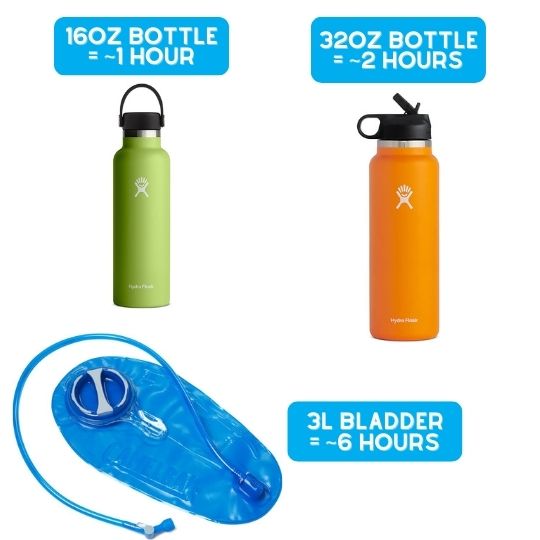
Most hikers use a combination. For day hikes, a 2–3 liter hydration bladder is often enough. For longer hikes, carry extra water bottles as backup.
Weight Considerations
Water is heavy—1 liter weighs about 2.2 pounds (1 kg). Carrying 4 liters means nearly 9 pounds (4 kg) of extra weight. Balance your needs with what you can comfortably carry.
Accessibility
Keep at least one bottle or your hydration hose within easy reach. If water is buried deep in your pack, you’re less likely to drink regularly, which increases risk of dehydration.
Pro Tip For Beginners
Mark your bottles with time goals. For example, if you want to finish 1 liter every 2 hours, mark the bottle at those intervals. This helps you pace your hydration throughout the hike.
Planning For Water Refills On The Trail
For hikes longer than 3–4 hours, it can be impractical to carry all your water from the start. Knowing where you can refill is essential.
Finding Water Sources
Look for streams, rivers, lakes, or springs on the trail map. Check recent reports or ask rangers if these sources are reliable, especially in dry seasons. Never assume water will always be available.
Treating Water On The Trail
Even clear mountain streams can carry bacteria or parasites. Always treat water before drinking. Here are common methods:
1. Water Filters
Remove bacteria and protozoa. Some also remove viruses.
2. Purification Tablets/drops
Chemical treatment kills most germs. Wait times vary, often 30 minutes.
3. Boiling
Brings water to a rolling boil for at least 1 minute (3 minutes above 6,500 ft/2,000 m).
4. Uv Purifiers
Portable devices that use ultraviolet light to kill germs.
Each method has pros and cons. Filters are fast, but can clog. Tablets are light, but sometimes leave a taste. Boiling is reliable, but needs time and fuel.
How Much Extra Water To Treat
Always treat more water than you think you’ll need. It’s easy to underestimate how thirsty you’ll be after a long climb or in unexpected heat.

Credit: amandaoutside.com
Water Needs For Special Situations
Some hikes require extra planning due to unique risks or circumstances.
High Altitude Hikes
Above 8,000 feet (2,438 m), your body loses water faster. Plan to drink at least 1 liter per hour, even if it’s cool. Headaches and fatigue at altitude are often signs of dehydration, not just altitude sickness.
Cold Weather Hiking
You may not feel thirsty, but you still lose water through breath and sweat. Insulate your bottles (put them in your pack or use bottle covers) to keep them from freezing. Consider warm drinks in insulated bottles for comfort.
Desert Hiking
There is often no water to refill, and dry air increases water loss. Carry extra water, plan for slower pace, and start your hike early to avoid the hottest part of the day.
Group Hikes
Everyone’s needs are different. Make sure each hiker carries their own supply, plus extra in case someone runs out or has an emergency.
Hiking With Kids Or Pets
Children dehydrate faster. Carry extra water and remind kids to drink regularly. For dogs, bring a collapsible bowl and plan at least 0.5–1 ounce per pound of body weight per hour.
Signs Of Dehydration And What To Do
Recognizing dehydration early is crucial. Symptoms include:
- Dry mouth or lips
- Headache
- Dizziness or confusion
- Dark yellow urine or little/no urination
- Fatigue
- Muscle cramps
If you or a hiking partner shows these signs:
- Stop and rest in the shade.
- Drink small sips of water slowly.
- Loosen tight clothing and cool the body if it’s hot.
- Do not continue hiking until symptoms improve.
Pro Insight: Thirst is not a reliable early warning. Urine color is a better indicator: pale yellow means you’re hydrated, dark yellow or amber means you need more fluids.
Smart Strategies To Stay Hydrated
Beyond just bringing water, use these tips to avoid dehydration and make your hike safer.
Start Well Hydrated
Drink at least 0.5–1 liter of water before you leave home. You want to start the hike with a “full tank,” but don’t overdo it and feel bloated.
Drink Small, Frequent Sips
Gulping a lot of water at once can upset your stomach. Take small sips every 15–20 minutes instead.
Combine Water With Snacks
When you eat salty snacks, you retain water better and replace lost electrolytes. Trail mix, crackers, or energy bars work well. On long hikes, consider electrolyte tablets or powders added to your water.
Watch For Hidden Water Loss
Windy conditions, high altitude, and sun exposure all increase water loss, sometimes without you noticing. Adjust your intake even if you don’t feel sweaty.
Don’t Rely On Natural Water Sources
Streams can dry up or be contaminated. Always bring enough water to finish your hike in case you can’t refill.
Hydration Packs: Not Just For Pros
Many beginners think hydration bladders are only for advanced hikers. In reality, they’re convenient for anyone. The hose makes it easy to sip as you walk, and you’ll likely drink more regularly.
Common Myths About Water And Hiking
You may hear advice that sounds good, but isn’t always true. Let’s clear up a few myths.
Myth 1: “you Only Need To Drink When You’re Thirsty”
Fact: Thirst is a late signal. Drink before you feel thirsty, especially on hot or high-altitude hikes.
Myth 2: “clear Water From Mountain Streams Is Always Safe”
Fact: Even clear water can carry Giardia, bacteria, or viruses. Always treat or filter water from natural sources.
Myth 3: “carrying More Water Is Always Better”
Fact: Carrying too much water can slow you down and cause fatigue. Balance your load with real needs and refill opportunities.
Myth 4: “you Can Drink Your Way Out Of Heat Stroke”
Fact: Hydration helps prevent heat illness, but if you develop heat stroke, you need medical attention—water alone won’t fix it.
Myth 5: “alcohol Or Soda Can Replace Water”
Fact: Alcohol and caffeinated sodas can increase dehydration risk. Water or electrolyte drinks are best.
How To Plan Water For Multi-day And Backpacking Hikes
Longer hikes require even more careful planning. Here’s how to manage your water over several days.
Research Water Sources In Advance
Use maps, recent trip reports, or park websites to locate reliable water sources. Mark these on your map or GPS.
Carry Water Treatment Gear
On multi-day trips, bring a lightweight water filter or purification tablets. Boiling is reliable but not always practical.
Plan Campsites Near Water
Whenever possible, camp near a stream or lake. This reduces how much you need to carry and allows for easier refills for cooking and cleaning.
Calculate Daily Needs
For backpacking, plan at least 4–6 liters per day per person for drinking and cooking. Increase in hot or dry conditions.
Hidden Insight: Water Caches
In dry areas with no natural sources, experienced hikers sometimes “cache” (hide) water bottles at known spots before the hike. This requires planning and honesty—never take water from a cache unless it’s yours or the owner has offered.
Gear To Help You Manage Water On Hikes
Smart gear choices make hydration easier and safer.
Water Bottles
Reusable bottles (like Nalgene or stainless steel) are durable and easy to clean. Collapsible bottles save space as you drink.
Hydration Bladders
Fit inside your pack and let you drink on the move. Look for ones with wide openings for easy filling and cleaning.
Filtration And Purification
- Pump filters: Fast, good for groups.
- Straw filters: Drink directly from the source.
- Gravity filters: Hang and let gravity do the work—great for campsites.
Electrolyte Supplements
Tablets or powders add minerals to your water, replacing what you lose in sweat.
Insulated Covers
Prevent water from freezing in cold weather or getting too hot in the sun.
Mistakes To Avoid With Water On Hikes
Learning from others’ mistakes can save you trouble.
1. Underestimating Needs
Err on the side of caution. It’s better to finish with extra water than run out.
2. Ignoring Weather Changes
Check the forecast and adjust your water plan accordingly.
3. Not Testing New Gear
Try your bottles or filters on short hikes before relying on them for big adventures.
4. Carrying All Water In One Container
If it leaks or breaks, you lose everything. Split your water between two or more containers.
5. Skipping Electrolytes On Long Hikes
Pure water alone may not replace lost salts. Use snacks or supplements for balance.
6. Failing To Check For Water Sources
Streams can dry up in late summer or drought years. Always verify before you go.
7. Not Drinking Until Thirsty
Stay ahead of dehydration by drinking at regular intervals.
8. Ignoring Early Signs Of Dehydration
Don’t tough it out—stop and address symptoms early.
Data: Water Loss And Hiking Performance
Understanding the science helps you make smarter choices.
- A study in the Journal of Applied Physiology found that losing just 2% of your body weight in water can reduce physical performance and mental sharpness.
- On a 150-pound (68 kg) person, this is only 3 pounds (1.4 kg)—about 1.4 liters of water lost.
- Hikers in hot conditions can sweat out 1–2 liters per hour, or even more during intense climbs.
This shows how quickly dehydration can become a problem, even on moderate hikes.
Credit: www.bottlepro.net
Simple Checklist For Water Planning
Use this quick guide before your next hike:
- Check the weather and trail conditions
- Estimate hike duration and intensity
- Calculate base water need (0.5–1.5 liters/hour)
- Adjust for personal sweat rate and environment
- Identify water refill points, if any
- Pack water treatment gear if refilling
- Split water between at least two containers
- Bring extra water for emergencies
- Add electrolyte tablets or salty snacks
- Remind hiking partners about their needs
Frequently Asked Questions
How Do I Know If I’m Drinking Enough Water On A Hike?
Check your urine color—it should be pale yellow. Dark yellow or amber means you need more water. Also, if you feel thirsty, tired, or dizzy, drink more. Don’t wait for thirst; sip water regularly.
Can I Drink Stream Or Lake Water If It Looks Clean?
No, even clear water can contain bacteria, parasites, or viruses. Always treat or filter natural water before drinking. Use a filter, purification tablets, or boil the water for safety.
How Do I Carry Enough Water For Long Hikes Without Getting Weighed Down?
Plan your route to include reliable water sources for refilling, and bring a lightweight filter or purifier. Carry a mix of bottles and a hydration bladder. For desert or dry hikes, consider caching water in advance at known points.
What Should I Do If I Run Out Of Water On The Trail?
Stop moving and rest in the shade. Don’t eat (digestion requires water) and try to find a water source. If you find water, treat it before drinking. If you’re lost, stay put to be found faster.
Do I Need Electrolyte Drinks, Or Is Water Enough?
On short hikes, water is usually enough. For long, hot, or strenuous hikes, you lose salts in sweat. Electrolyte tablets or salty snacks help prevent cramps and keep your body balanced.
Staying hydrated is one of the most important parts of a safe and enjoyable hike. By understanding your real water needs, planning ahead, and using smart strategies, you can hit the trail with confidence. For more detailed data on hydration and outdoor safety, check the CDC’s Wilderness Safety Guidelines. Happy hiking—remember, every step is easier with enough water in your pack!
