
Getting tree sap on your clothes can be frustrating. Sap is sticky and hard to remove. If you work outdoors, go hiking, or have children who play outside, you may have faced this problem. Many people try to wash sap out with normal laundry detergent, but this rarely works. Sap is thick and oily, so it bonds tightly to fabric. Removing it needs a special approach.
This guide will show you how to get sap out of clothes step by step. You’ll learn why sap is so stubborn, which products work best, and how to avoid damaging your clothes. Whether you spilled pine sap, maple sap, or another type, these methods will help.
We’ll also look at mistakes people make, compare removal products, and answer common questions. By the end, you’ll know exactly what to do when sap strikes.
Why Sap Is Hard To Remove
Sap comes from trees as a sticky, thick liquid. It contains resins and sugars that help seal wounds on the tree. When sap gets onto fabric, it quickly seeps into the fibers. Water alone cannot break it down, because sap is both oily and sugary. Over time, sap hardens, making it even tougher to remove. If you wash sap-stained clothes without treating them first, the stain can set permanently.
It’s important to understand this before you start. Many people use hot water or scrub hard, but this often makes things worse. Using the right solvents and techniques is the key to success.
Common Types Of Tree Sap
Sap isn’t all the same. Different trees produce sap with unique properties. Here are some common types and their effects on clothing:
| Tree Type | Sap Features | Stain Difficulty |
|---|---|---|
| Pine | Sticky, thick, yellowish | Very hard |
| Maple | Watery, sweet, clear | Moderate |
| Cedar | Oily, fragrant | Hard |
| Birch | Thin, clear | Easy |
| Fir | Sticky, thick, amber color | Very hard |
Pine and fir sap are the most stubborn. Maple sap is easier because it contains more sugar and less resin. Knowing the type of sap can help you choose the right removal method.
Step-by-step Sap Removal Guide
Removing sap from clothes takes patience. Follow these steps for the best results.
1. Act Quickly
The sooner you treat the stain, the easier it is to remove. If sap dries and hardens, it bonds deeper to fibers. Try to start cleaning within a few hours.
2. Freeze Or Harden The Sap
Place the stained clothing in the freezer for about 30 minutes. This makes the sap brittle and easier to scrape off. If you can’t use a freezer, hold an ice pack on the stain.
3. Scrape Off Excess Sap
Use a blunt knife, spoon, or credit card to gently scrape off as much sap as possible. Don’t rub hard or use a sharp blade, as this can damage the fabric. Remove only the surface layer.
4. Apply A Solvent
You need something to break down the oily resin. Here are the most effective solvents:
- Rubbing alcohol (isopropyl alcohol)
- Hand sanitizer (contains alcohol)
- Acetone (nail polish remover)
- Vegetable oil
- WD-40 (for tough cases)
Pour a small amount of your chosen solvent onto a clean cloth. Dab the stained area, working from the outside in. Let it sit for 10–15 minutes. Test on a hidden area first, especially for colored fabrics, as some solvents may affect the dye.
5. Blot And Remove Sap
After the solvent soaks in, use a clean cloth to blot up the softened sap. Don’t rub, as this spreads the stain. Repeat until most of the sap is gone.
6. Pre-treat With Laundry Detergent
Apply a small amount of liquid laundry detergent directly to the stained area. Rub gently with your fingers or a soft brush. Let it sit for another 10–15 minutes.
7. Wash As Usual
Wash the garment in the hottest water safe for the fabric. Check the care label. Use your regular laundry detergent. If possible, add a stain remover booster.
8. Air Dry And Check
Don’t use the dryer until you are sure the stain is gone. Heat can set remaining sap permanently. Air dry and check the area. If any sap remains, repeat the process.
9. Repeat If Needed
Some sap stains need several rounds. Be patient and avoid harsh scrubbing.
Comparing Sap Removal Methods
Different solvents and products have pros and cons. Here’s a comparison to help you choose:
| Solvent | Effectiveness | Safe for Colors? | Easy to Find? |
|---|---|---|---|
| Rubbing alcohol | High | Usually yes | Yes |
| Hand sanitizer | Medium | Yes | Yes |
| Acetone | Very high | No (may fade) | Yes |
| Vegetable oil | Medium | Yes | Yes |
| WD-40 | High | Usually yes | Yes |
Acetone is powerful but risky for colored fabrics. Rubbing alcohol works well for most sap types and is safe for color. Vegetable oil is gentle but may leave an oily residue. For delicate fabrics, test solvents first.
Special Tips For Delicate Fabrics
Delicate fabrics like silk, wool, or rayon need extra care. Some solvents can damage these materials. For these fabrics:
- Use rubbing alcohol or hand sanitizer, not acetone or WD-40.
- Dab gently, don’t scrub or twist.
- Avoid hot water; use cool or lukewarm instead.
- Air dry only.
If the stain is stubborn, consider professional cleaning.
Removing Dried Or Old Sap
If sap has dried for days or weeks, removal is harder. Here’s what to do:
- Soak the area in rubbing alcohol for 20–30 minutes.
- Gently scrape the sap with a blunt tool.
- Apply extra detergent and wash as usual.
- Repeat as needed.
Old sap can sometimes leave a faint yellow mark. You may need to use a commercial stain remover. Avoid bleach unless the fabric is white and bleach-safe.

Credit: www.reddit.com
Home Remedies That Work
Some simple home solutions can help remove sap:
- Baking soda paste: Mix baking soda and water, apply to stain, let sit for 30 minutes, then rinse.
- Vinegar: Dab with white vinegar, wait 10 minutes, blot, then wash.
- Lemon juice: Good for light stains, but may fade colors.
These methods are less powerful than alcohol or acetone, but useful for small stains or sensitive fabrics.
What Not To Do
Many people make mistakes when trying to remove sap. Avoid these:
- Using only water and detergent (won’t break down sap)
- Scrubbing hard (damages fabric)
- Using bleach on colored clothes (causes fading)
- Putting stained clothes in the dryer (sets the stain)
- Applying solvents directly without testing
Taking the wrong approach can ruin your clothes.
How To Prevent Sap Stains
Prevention is better than cure. Here’s how to avoid sap stains:
- Wear old clothes or a protective apron when working near trees.
- Check your clothes for sap after outdoor activities.
- Treat stains quickly before they dry.
- Educate children about sticky tree sap.
Some outdoor workers use special laundry sprays to make sap easier to remove.
Commercial Stain Removers: Are They Worth It?
There are many stain removal products sold online and in stores. Brands like Shout, OxiClean, and Zout claim to remove tough stains. But how do they compare to home remedies?
| Product | Type | Price Range | Effectiveness |
|---|---|---|---|
| Shout Advanced | Spray | $5-$8 | Good |
| OxiClean Max Force | Gel | $7-$10 | Very good |
| Zout | Spray | $6-$9 | Good |
| Homemade (alcohol) | Liquid | $2 | Very good |
OxiClean Max Force is rated highly for tough stains, including sap. However, rubbing alcohol works just as well and costs less. Commercial removers are convenient, but not always necessary.
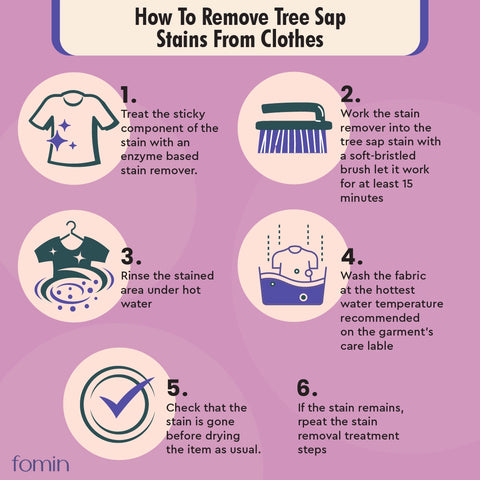
Credit: fominsoap.com
Non-obvious Insights
Many guides miss these points:
- Sap stains can contain tannins (tree chemicals) that cause yellowing after removal. If you see a yellow mark, treat it with hydrogen peroxide or a tannin remover.
- Temperature matters: Using cold water helps prevent sap from setting, but once removed, hot water helps remove oily residues.
- Fabric structure: Sap is harder to remove from rough fabrics (like denim or canvas) because it gets deep into fibers. Smooth fabrics are easier.
Real-world Example
Anna, a gardener, often gets pine sap on her jeans. She found that freezing her jeans, then scraping and using rubbing alcohol, removed most of the sap. For stubborn stains, she switched to OxiClean. She avoids using the dryer until the stain is gone.
Anna noticed that sap stains on her cotton t-shirts were easier to remove than on denim.
:max_bytes(150000):strip_icc()/Remove-tree-sap-clothes-2147118-6b7339dd707143de9acb10a55a8a97e4.jpg)
Credit: www.thespruce.com
Environmental And Health Considerations
Some solvents, like acetone and WD-40, can be harsh on the environment. If you want a safer approach, use rubbing alcohol, vegetable oil, or baking soda. Always wash your hands after using chemical solvents. Keep them away from children.
According to the EPA Safer Choice Program, rubbing alcohol and baking soda are safer for home use. Avoid strong chemicals unless necessary.
When To Seek Professional Help
If you have an expensive garment (wool coat, silk dress) or a large, stubborn stain, consider a dry cleaner. Professionals have special solvents and machines for tough stains. Tell them the stain is sap, so they use the right method.
Sap Removal For Outdoor Workers
Outdoor workers (tree trimmers, landscapers, campers) face sap stains often. Wearing water-resistant clothing helps. Some work pants have special coatings to repel sap. After each workday, check for stains and treat them promptly.
Sap Removal On Kids’ Clothing
Children love to climb trees and play outside. Sap stains are common on kids’ clothes. For parents:
- Use rubbing alcohol or hand sanitizer for quick cleanup.
- Avoid harsh chemicals.
- Check clothes before washing.
- Use stain remover sprays for heavy stains.
Many children’s fabrics are colorfast, but always test solvents first.
How Sap Stains Affect Fabric Longevity
Sap stains, if not treated, can weaken fabric. The sticky resin attracts dirt and causes discoloration. Over time, this can create holes. Removing sap quickly helps your clothes last longer.
Quick Checklist For Sap Removal
If you need a fast reminder, follow these steps:
- Freeze garment (30 min)
- Scrape off sap
- Apply solvent (alcohol, oil, etc.)
- Blot and remove sap
- Pre-treat with detergent
- Wash in hot water (if safe)
- Air dry and check
- Repeat if needed
Frequently Asked Questions
How Do I Get Sap Out Of Jeans?
Jeans are tough fabric, so you can use rubbing alcohol or WD-40. Freeze the jeans, scrape off excess sap, then apply the solvent. Blot and wash in hot water. Repeat if needed.
Can I Use Hand Sanitizer To Remove Sap?
Yes. Hand sanitizer contains alcohol, which breaks down sap. Apply directly to the stain, let sit for 10–15 minutes, then blot and wash. It works well for small stains.
Is It Safe To Use Acetone On Colored Clothes?
Acetone is strong and can fade colors. Test on a hidden area first. For colored clothes, rubbing alcohol or hand sanitizer are safer options.
What If Sap Has Dried And Hardened?
For dried sap, soak the area in rubbing alcohol for 20–30 minutes. Scrape gently, then treat with detergent and wash. Old stains may need several treatments.
Does Hot Water Help Remove Sap?
Hot water helps remove oily residue after sap is treated with a solvent. Don’t use hot water before solvent treatment, as it can set the stain.
Getting sap out of clothes isn’t easy, but the right approach makes it possible. With patience and the steps above, you can tackle even stubborn stains. Remember to treat quickly, use solvents wisely, and avoid harsh scrubbing. By following these methods, your clothes will stay clean and last longer.
