
Lighting a fire outdoors is not just a basic survival skill—it’s the heart of camping, hiking, and adventure. Whether you’re cooking a meal, staying warm, or signaling for help, knowing how to use a fire starter can make all the difference. Many beginners struggle with fire starters, especially when conditions are wet or windy. If you’ve ever wasted matches or felt frustrated with damp kindling, you’re not alone. This guide is here to help you master fire starters, from understanding their types to achieving reliable flames every time.
You’ll learn practical steps, key safety tips, and common mistakes to avoid. We’ll also compare popular fire starters, share expert tricks, and answer frequent questions. By the end, you’ll feel confident and ready to build fires safely and efficiently—whether you’re deep in the woods or on your own patio.
Understanding Fire Starters
Before you strike your first spark, let’s clarify what a fire starter is. Fire starters are tools or materials designed to help you quickly light a fire, especially when conditions are tough. They come in many forms, but all share the goal of making fire-starting easier and more reliable.
Types Of Fire Starters
There’s a wide variety available. Here are the most common types:
- Ferrocerium Rods (Ferro rods): These are metal rods that produce hot sparks when scraped with a striker. They work well in wet conditions.
- Magnesium Blocks: A block of magnesium that you shave into fine chips, then ignite with a spark.
- Matches: Traditional, easy to use, but can fail in wind or damp environments.
- Lighters: Compact and reliable, but can run out of fuel or malfunction in cold.
- Firestarter Cubes/Pads: Compressed materials (often paraffin or sawdust) that burn for several minutes.
- Char Cloth: Made by charring cotton fabric, catches sparks easily.
- Flint and Steel: Old-school method, steel strikes flint to make sparks.
Each type has unique advantages and disadvantages. Choosing the right fire starter depends on your needs, environment, and experience level.
Why Use A Fire Starter?
Fire starters are more reliable than matches or lighters in harsh conditions. They often work when wet, are reusable, and can generate thousands of strikes. Many outdoor experts recommend carrying at least two types for backup.
Key Features To Look For
When selecting a fire starter, consider these features:
- Durability: Can it withstand drops or rough handling?
- Weather Resistance: Does it work when wet or windy?
- Ease of Use: Is it simple for beginners?
- Longevity: How many uses can you get from it?
- Size and Weight: Is it portable for hiking or camping?
Here’s a quick comparison of popular fire starters:
| Fire Starter Type | Weather Resistance | Ease of Use | Approx. Uses | Portability |
|---|---|---|---|---|
| Ferrocerium Rod | Excellent | Moderate | 3,000–12,000 | Very portable |
| Magnesium Block | Good | Moderate | 2,000–5,000 | Portable |
| Matches | Poor | Easy | Limited | Very portable |
| Lighter | Fair | Easy | Varies | Very portable |
| Firestarter Cubes | Good | Easy | Varies | Portable |
As you can see, ferrocerium rods stand out for durability and weather resistance. Matches are simple but unreliable in rain or wind. Magnesium blocks provide a backup spark and fuel but require more skill.
Preparing To Use A Fire Starter
Success starts with preparation. Many beginners fail because they skip these steps. If you want your fire to ignite quickly, follow this advice.
Gather The Right Materials
You need three types of materials:
- Tinder: Very dry, fine material that catches sparks easily. Examples: dry grass, cotton balls, bark shavings, or commercial tinder.
- Kindling: Small sticks or twigs, about the thickness of a pencil. Helps build the flame.
- Fuel: Larger logs or branches that keep the fire burning.
Never try to light large logs directly. Start with tinder, then add kindling, then fuel.
Preparing Your Site
Choose a safe location. Look for:
- Clear ground, away from overhanging branches
- No flammable materials nearby
- Flat surface for stability
- Wind protection (rocks or logs as a barrier)
If you’re camping, use established fire pits if available. Always follow local fire regulations.
Weather Considerations
Wet or windy weather makes fire-building harder. In these cases:
- Use extra tinder
- Shield your fire starter and tinder from wind
- Look for dry materials under logs, rocks, or inside your backpack
Practical Tip
Keep a small ziplock bag of tinder in your kit. Even if everything is wet, you’ll have a dry start.
Step-by-step: Using A Fire Starter
Now let’s walk through the process with the most popular tool—the ferrocerium rod. Other fire starters follow similar principles, but the steps here apply to most.
1. Build Your Fire Structure
Arrange your materials before you strike:
- Place tinder in the center.
- Lay kindling around it in a teepee or log cabin shape.
- Keep fuel nearby, but do not add yet.
This structure lets air flow and gives your flame room to grow.
2. Prepare The Fire Starter
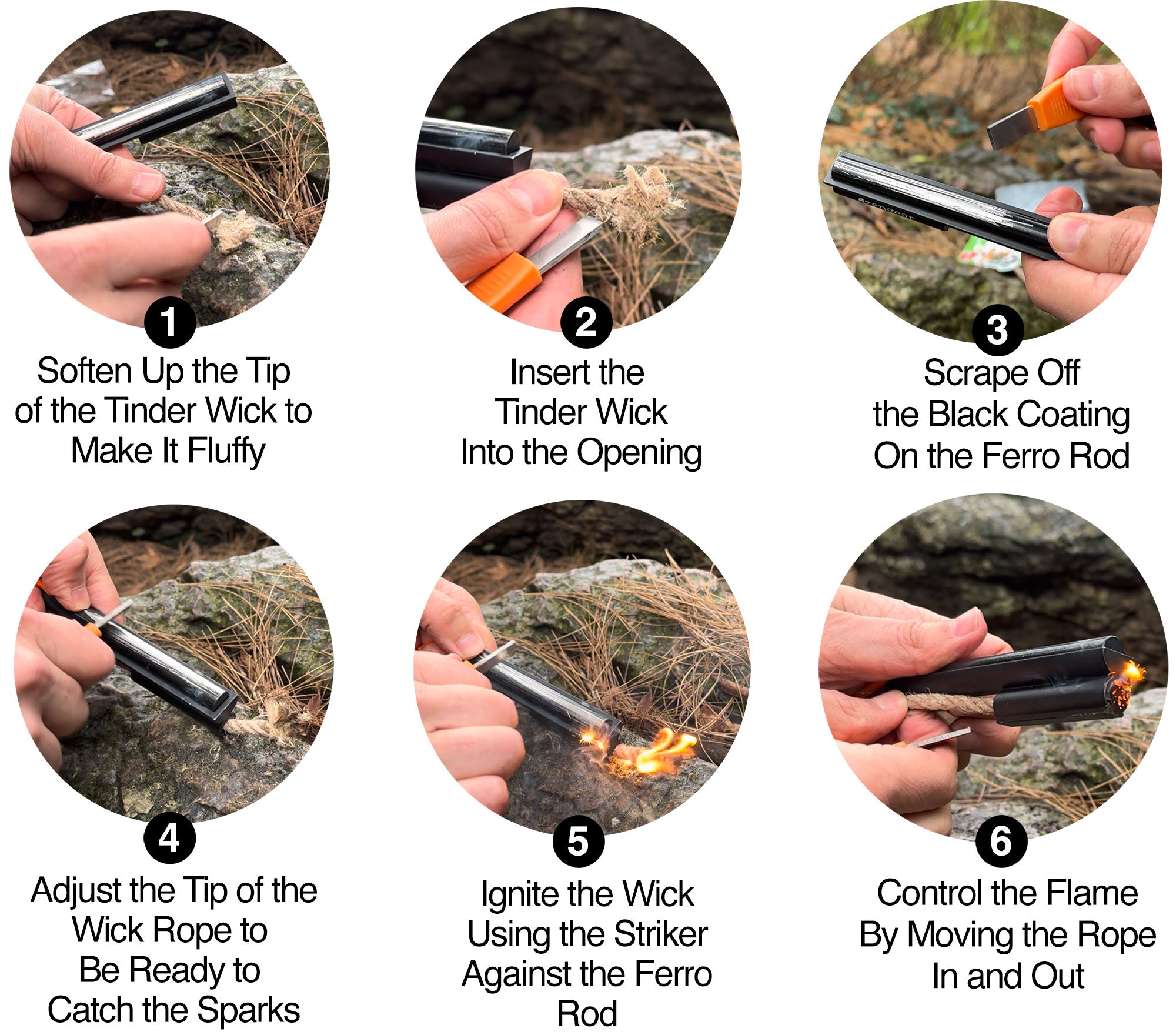
If you’re using a new ferro rod, scrape off any protective coating with the striker. Hold the rod close to the tinder, at a 45-degree angle.
3. Strike To Create Sparks
Press the striker firmly against the rod. Pull the rod back quickly, so sparks fly directly onto the tinder. Aim for the base of your tinder.
- Use short, strong strokes.
- Keep the rod steady and move the striker.
4. Ignite The Tinder
When the tinder catches a spark, gently blow on it to encourage the flame. Add more tinder if needed.
- Do not smother the flame.
- Be patient—sometimes it takes several strikes.
5. Add Kindling
Once the tinder is burning, place kindling over the flame. Use small sticks first. When they catch, slowly add larger sticks.
6. Build Up The Fire
As the fire grows, add fuel logs to keep it burning. Do not overload; fires need oxygen.
Example: Using A Magnesium Block
For magnesium blocks:
- Shave off a small pile (about a teaspoon) of magnesium onto your tinder.
- Strike the ferro rod to ignite the magnesium. It burns very hot and helps light damp tinder.
Example: Lighting A Firestarter Cube
Place the cube under your kindling and light it with matches, lighter, or a spark. The cube burns for several minutes, giving you time to build up the fire.
Common Mistakes And How To Avoid Them
Even experienced campers make mistakes. Here are the most frequent errors and how to prevent them:
- Poor Tinder Choice: Using damp or too large material. Solution: Use dry, fine tinder.
- Wrong Fire Structure: Piling logs too early. Solution: Start small, build gradually.
- Not Enough Oxygen: Smothering the flame. Solution: Leave gaps for air to flow.
- Bad Striking Technique: Holding the rod too far from tinder. Solution: Position close, aim sparks directly.
- Ignoring Safety: Not clearing the area. Solution: Always check surroundings.
Non-obvious insight: Many beginners forget to dry their fire starter after rain or river crossings. Wet rods and strikers may not spark well—always wipe them dry before use.
Safety Guidelines
Fire is powerful and must be handled responsibly. Follow these safety rules:
- Never leave fires unattended.
- Keep water or sand nearby to extinguish flames.
- Teach children fire safety before allowing them to use starters.
- Avoid building fires during high wind or drought conditions.
- Follow all local fire regulations.
Fire Starter Safety Tips
- Store fire starters away from children and pets.
- Do not use fire starters indoors (except in fireplaces or stoves).
- Carry backup fire starters—matches and lighters fail more often than you think.
- Extinguish all fires completely before leaving.
Advanced Techniques For Challenging Conditions
Sometimes you face rain, wind, or snow. Here’s how to succeed when conditions are tough.
Wet Weather
- Collect dry tinder from inside your backpack or under logs.
- Use magnesium shavings—they burn hot enough to dry wet tinder.
- Use firestarter cubes for extra burn time.
Windy Conditions
- Build a windbreak with rocks or your backpack.
- Light your fire on the sheltered side.
- Use a fire starter that produces large sparks (ferro rods are ideal).
Cold And Snow
- Clear snow to bare ground or build fire on a log platform.
- Keep fire starter and tinder inside your jacket for warmth.
- Use more tinder and kindling—cold slows ignition.
Practical Example
If your tinder is damp, mix it with cotton balls or use a commercial firestarter pad. Magnesium shavings can help dry and ignite wet material.
Non-obvious insight: In freezing temperatures, keep your fire starter in a pocket close to your body. Cold metal can make striking harder and slow reactions.
Comparing Fire Starters: Which One Is Right For You?
Choosing the best fire starter depends on your activity, skill level, and environment. Here’s a comparison for common situations:
| Situation | Recommended Fire Starter | Reason |
|---|---|---|
| Backpacking | Ferrocerium Rod | Durable, lightweight, works when wet |
| Family Camping | Firestarter Cubes & Matches | Easy for beginners, burns long |
| Survival/Emergency | Magnesium Block & Ferro Rod | Reliable, works in harsh conditions |
| Backyard Fire Pit | Lighter & Firestarter Pad | Convenient, quick ignition |
Beginner tip: Always carry two types of fire starters. If one fails, you have a backup. Many outdoor experts recommend a ferro rod plus waterproof matches or a lighter.
Tips For Success
Here are proven tips to make fire-starting easier:
- Practice at home before your trip.
- Test your fire starter in different conditions (rain, wind, cold).
- Learn to identify natural tinder (dried grass, bark, pine needles).
- Keep a small container of cotton balls or dryer lint in your kit.
- Use a fire starter to ignite a small fire, then scale up.

Credit: www.wikihow.com
Practical Uses For Fire Starters Beyond Camping
Fire starters are useful for more than outdoor adventures. Here are other situations where they can help:
- Emergency Preparedness: Keep one in your car or emergency kit.
- Backyard Cooking: Use to light grills or fire pits.
- Hiking Rest Stops: Warm up or cook food.
- Survival Training: Practice skills for unexpected situations.
Real-world Examples And Success Stories
Let’s look at some real-life situations:
- Hiker in the Rockies: Lost and facing cold rain, used a ferro rod and magnesium block to light a fire with pine needles and char cloth. Survived the night.
- Family camping trip: Parents taught children to use firestarter cubes and matches. Kids learned safety and fire-building skills, boosting confidence.
- Urban emergency: After a power outage, a homeowner used a fire starter to light candles and a small stove for warmth.
These examples show the value of skill and preparation. Practice pays off.
Credit: azengear.com
Maintenance And Storage
Take care of your fire starters, and they’ll take care of you.
Cleaning
- Wipe ferro rods and strikers with a dry cloth.
- Remove dirt or debris after each use.
Storage
- Store in a dry, cool place, away from moisture.
- Keep in a waterproof pouch during trips.
- Check regularly for damage or wear.
Lifespan
Most ferro rods last thousands of strikes. Magnesium blocks are good for hundreds of fires. Replace matches and lighters as needed.
Environmental Considerations
Fire can harm the environment if misused. Follow these guidelines:
- Use established fire rings when possible.
- Do not burn plastics, trash, or treated wood.
- Leave no trace—clean up all materials.
- Use minimal impact techniques (small fires, natural tinder).
Check local regulations before lighting fires. In droughts or fire bans, use camp stoves instead.
Fire Starter Myths
Some myths can mislead beginners. Let’s clear up a few:
- Myth: All fire starters work the same.
- Fact: Some require skill or specific tinder.
- Myth: Matches are always reliable.
- Fact: Matches can fail in rain or wind.
- Myth: You only need one fire starter.
- Fact: Always carry backups.
Choosing Quality Accessories
To maximize your fire starter’s effectiveness, consider these accessories:
- Waterproof tinder: Commercial pads or homemade cotton balls with petroleum jelly.
- Fireproof gloves: Protect hands when striking or handling hot materials.
- Fire starter pouch: Keeps tools organized and dry.
- Mini saw or knife: Useful for preparing tinder and kindling.
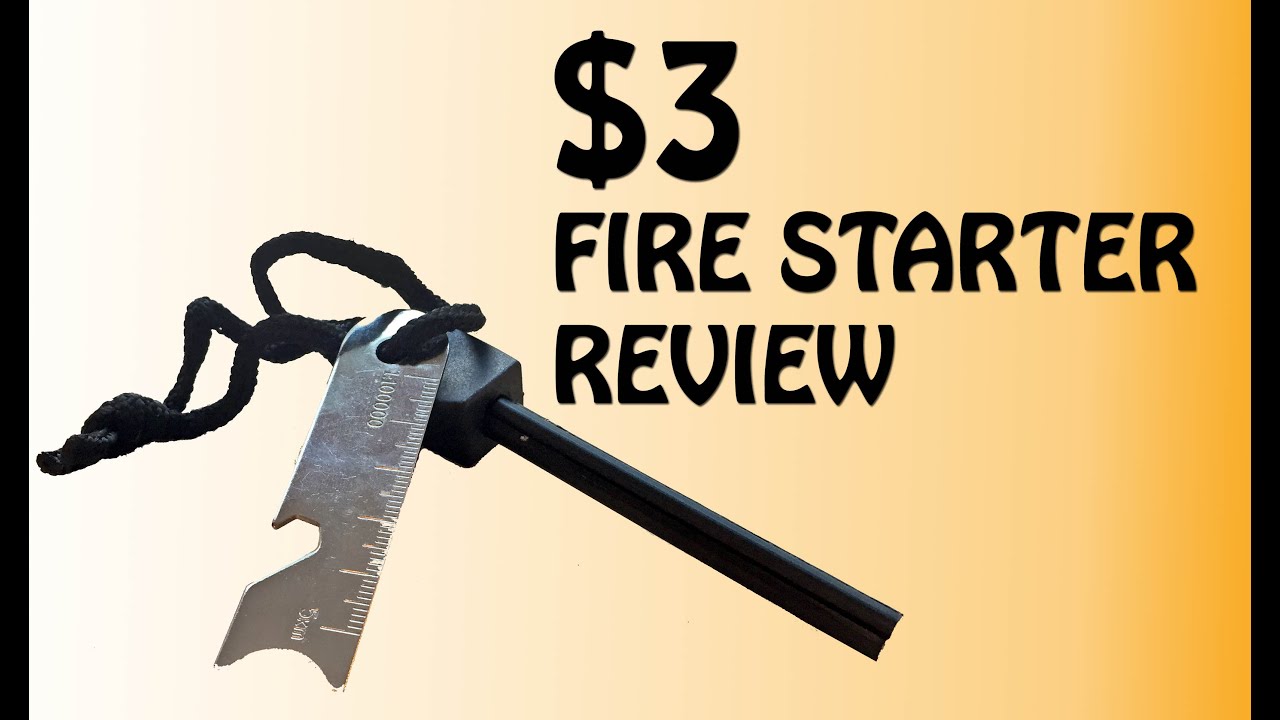
Expert tip: If you’re using a ferro rod, choose a striker made of high-carbon steel for more sparks.
Credit: www.youtube.com
Statistics And Data
Here are some numbers to illustrate fire starter performance:
- Ferrocerium rods: Over 90% success rate in wet conditions when used with dry tinder.
- Magnesium blocks: Burn at about 3,100°F (1,700°C)—hot enough to ignite damp tinder.
- Matches: Average outdoor reliability drops below 60% in rain or wind.
- Firestarter cubes: Burn for 5–10 minutes, offering a long ignition window.
These stats show why ferro rods and magnesium blocks are favorites among outdoor professionals.
Troubleshooting: When Things Go Wrong
Sometimes fires just won’t start. Here’s how to solve common issues:
Tinder Won’t Catch
- Check if tinder is dry enough.
- Add magnesium shavings or use firestarter cube.
Sparks Aren’t Reaching Tinder
- Hold rod closer to tinder.
- Adjust striker angle for more sparks.
Flame Dies Quickly
- Add more kindling, ensure airflow.
- Avoid smothering with big logs.
Fire Starter Not Working
- Clean rod and striker.
- Try a different striker or backup fire starter.
Practice Makes Perfect
Fire-starting is a skill, not just a tool. Practice regularly:
- Try at home, in the backyard, or during trips.
- Experiment with different materials and methods.
- Teach family or friends for safety and confidence.
Frequently Asked Questions
How Do I Choose The Best Fire Starter For Camping?
Choose based on your environment, skill level, and backup options. Ferrocerium rods are durable and reliable. Firestarter cubes and waterproof matches are easy for beginners. Always carry two types for safety.
Can I Use A Fire Starter In Wet Conditions?
Yes, but you need dry tinder. Use magnesium shavings or firestarter cubes to help. Collect dry materials from inside your gear or under logs. Practice in wet weather before your trip.
Are Fire Starters Safe For Children?
Fire starters can be safe if used under adult supervision. Teach children fire safety first. Avoid letting kids use fire starters alone. Start with easy-to-use types like firestarter cubes.
What Should I Do If My Fire Starter Won’t Spark?
Clean the rod and striker. Dry them if wet. Try a different angle or more force. If it still doesn’t work, use your backup fire starter. Practice makes it easier.
How Long Do Ferrocerium Rods And Magnesium Blocks Last?
Ferro rods can last for thousands of strikes (3,000–12,000). Magnesium blocks are good for hundreds of fires. Store them dry and clean for longer life.
Final Thoughts
Knowing how to use a fire starter is more than a survival trick—it’s a skill that brings warmth, safety, and confidence to any outdoor adventure. With the right tools, preparation, and practice, you can light fires even in tough conditions. Remember to carry backup fire starters, use the best tinder, and follow all safety guidelines. Mastering this skill opens up new possibilities for camping, hiking, and emergency preparedness. For more detailed techniques and official guidelines, check resources like National Park Service. Practice regularly, stay safe, and enjoy the comfort and utility of a well-built fire wherever your journey takes you.
