
Splitting Wood With a Hatchet: A Complete Guide for Beginners and Enthusiasts
Splitting wood is a classic outdoor skill. Whether you want to build a campfire, prepare firewood for your home, or simply enjoy working with your hands, learning how to split wood with a hatchet is a practical and rewarding experience.
Many people think splitting wood is only for lumberjacks or those with large axes, but the humble hatchet can be surprisingly effective for small to medium tasks. This guide will help you understand every aspect of splitting wood with a hatchet, from choosing the right tool to mastering safe techniques and troubleshooting common problems.
You will discover the best ways to split wood safely, efficiently, and with confidence—even if you are new to this skill. Along the way, you’ll learn why a hatchet is different from an axe, how to select the best wood, and how to avoid mistakes that beginners often make.
Real-world examples, practical advice, and clear explanations will help you build your skills and knowledge. By the end, you’ll have all the information you need to split wood like a pro.
Understanding The Hatchet: What Makes It Unique
The hatchet is a small, one-handed tool, sometimes confused with a hand axe. Unlike the larger axe, which is used for felling trees and splitting big logs, the hatchet is best suited for lighter tasks such as splitting small logs, kindling, and branches. Hatchets usually have a blade length of 3–5 inches and a handle length of 10–16 inches. This makes them portable, easy to use, and ideal for camping, hiking, or home use.
Hatchet Vs. Axe: Key Differences
A comparison helps clarify the unique role of a hatchet:
| Feature | Hatchet | Axe |
|---|---|---|
| Weight | 1–2 pounds | 3–8 pounds |
| Handle Length | 10–16 inches | 24–36 inches |
| Best Use | Kindling, small logs | Large logs, tree felling |
| Portability | Easy to carry | Bulky |
| Precision | High | Lower (for splitting) |
Beginners often overlook the fact that precision is much easier with a hatchet. You can control your strikes better, which is vital when splitting small wood or kindling. Also, many people underestimate the portability—a hatchet fits in most backpacks and can be used for many camp tasks.
Anatomy Of A Hatchet
Understanding the parts of a hatchet is helpful:
- Head: The metal part that does the cutting. Usually made of forged steel.
- Handle: Made from wood (like hickory), fiberglass, or plastic.
- Bit: The cutting edge. Some hatchets have a wide bit for easier splitting.
- Poll: The back of the head, sometimes used for hammering.
- Eye: The hole where the handle fits into the head.
A well-designed hatchet will have a comfortable grip, a sharp bit, and a durable handle. Choosing the right hatchet is your first step toward success.
Choosing The Right Hatchet For Splitting Wood
Selecting the right hatchet makes splitting wood safer and easier. Not all hatchets are equal. The wrong tool can tire you quickly or even cause injuries.
What To Look For
- Weight: For most splitting tasks, a hatchet weighing between 1 and 2 pounds is ideal. Too light, and you’ll need extra force; too heavy, and you risk losing control.
- Handle Material: Wood is traditional and absorbs shock well. Fiberglass is durable but sometimes slippery. Plastic handles are lightweight but can break under stress.
- Blade Shape: A wider bit (blade) is better for splitting. Narrow bits are good for chopping but can get stuck in wood.
- Grip: Look for a handle with a textured or rubberized grip to prevent slipping, especially when your hands are sweaty or wet.
Popular Hatchet Brands
Some brands stand out for quality and reliability:
- Estwing: Known for durable steel and comfortable grips.
- Gränsfors Bruk: Swedish company famous for handmade hatchets.
- Fiskars: Offers affordable, sturdy hatchets with fiberglass handles.
You don’t need to buy the most expensive tool. For beginners, a mid-priced hatchet from a reputable brand works well.
Comparing Handle Materials
To help you decide, here’s a quick comparison:
| Material | Shock Absorption | Durability | Grip |
|---|---|---|---|
| Wood | Excellent | Good (can crack) | Natural, textured |
| Fiberglass | Moderate | Very high | Smooth or rubberized |
| Plastic | Poor | Low (can break) | Varies |
Non-obvious Insight
Many beginners assume a heavier hatchet is always better, but a lighter, well-balanced hatchet often allows more accurate and safer splitting. If you’re splitting lots of kindling, control is more important than raw power.
Credit: www.youtube.com
Preparing Wood For Splitting
Before you start swinging your hatchet, you need to choose and prepare your wood. Not all wood splits easily, and poor preparation can waste your time and energy.
Types Of Wood: Softwood Vs Hardwood
- Softwoods (like pine, spruce, cedar) split easily and burn quickly. Great for kindling but not for long-lasting heat.
- Hardwoods (oak, maple, birch) are tougher to split but burn longer and hotter. Best for firewood.
If you’re splitting wood for campfires, softwood is usually enough. For home heating, hardwood is worth the extra effort.
Seasoned Vs Green Wood
- Seasoned wood has been dried for at least 6–12 months. It splits easily and burns better.
- Green wood is freshly cut and still moist. It’s harder to split and can dull your hatchet.
Always try to split seasoned wood. If you must split green wood, you’ll need extra effort and frequent sharpening.
Preparing Your Work Area
Set up your splitting area safely:
- Flat surface: Use a sturdy stump or block as your base. Avoid splitting directly on the ground—it damages your hatchet.
- Clear space: Remove debris, rocks, and other hazards from the area.
- Safety zone: Keep at least 6 feet of clear space around you. Make sure people and pets stay away.
Non-obvious Insight
Many people ignore the importance of the splitting surface. A solid stump not only protects your hatchet but also absorbs shock, reducing fatigue and preventing injuries.
Safety First: Essential Precautions
Splitting wood can be dangerous if you ignore safety. Hatchets are sharp and powerful, and accidents can happen quickly.
Personal Protective Equipment
- Gloves: Protect your hands from splinters and blisters.
- Safety glasses: Prevent eye injuries from flying wood chips.
- Boots: Wear sturdy, closed-toe boots to protect your feet.
- Long sleeves and pants: Shield your skin from splinters and accidental contact.
Safe Handling Practices
- Check your hatchet: Make sure the head is secure and the handle is undamaged.
- Grip firmly: Hold the hatchet with a comfortable, strong grip.
- Swing safely: Use controlled, measured swings—never wild or forceful.
- Position your body: Stand with feet shoulder-width apart, knees slightly bent. Keep the wood directly in front of you.
Common Safety Mistakes
- Splitting with others nearby: Always work alone or make sure others stay out of the danger zone.
- Using a damaged hatchet: Cracked handles or loose heads can break and cause injury.
- Ignoring fatigue: If you feel tired, stop. Most accidents happen when people are exhausted.
Non-obvious Insight
A surprising number of injuries occur from trying to pry a stuck hatchet out of wood. Instead, gently wiggle the hatchet free or tap the wood from the side. Never pull forcefully while standing over the blade.
Step-by-step Guide: Splitting Wood With A Hatchet
Now that you’ve chosen your hatchet, prepared your wood, and ensured safety, it’s time to start splitting. Follow these steps for best results.
Step 1: Place The Wood
Set your log or branch upright on the splitting stump. Make sure it’s stable and won’t roll or wobble. For kindling, you can lay the wood flat.
Step 2: Identify The Grain
Look for cracks or lines in the wood—these are the grain. Splitting along the grain is easier and safer. Avoid knots or twisted grain, which are much tougher.
Step 3: Position The Hatchet
Hold the hatchet with your dominant hand. Place the blade on the wood, aiming for a crack or straight part of the grain. If splitting kindling, aim for the edge rather than the center.
Step 4: Start With Gentle Taps
For small logs or kindling, start with gentle taps. This helps “set” the blade into the wood without bouncing or slipping. Once the hatchet is set, increase your force.
Step 5: Split With Controlled Force
Raise the hatchet above the wood (not over your head) and bring it down with controlled force. Use your whole arm and shoulder, not just your wrist. For stubborn wood, you may need several strikes.
Step 6: Separate The Pieces
Once the wood splits, move the pieces aside. If the hatchet gets stuck, tap the wood gently or wiggle the blade free. Repeat as needed for smaller pieces.
Step 7: Make Kindling
To make kindling, take smaller logs and split them into thin strips. Use the same steps, but with less force. Kindling should be finger-sized for easy burning.
Practical Example
Imagine you’re camping and need to start a fire. You find a seasoned birch log about 10 inches long and 4 inches thick. You place it upright on the stump, find a crack in the grain, and set your hatchet.
With gentle taps, you set the blade, then increase force until the log splits. You repeat the process, making smaller pieces for kindling.
Non-obvious Insight
If your hatchet keeps bouncing off the wood, check the grain. Splitting against the grain is much harder and can damage your tool. Always align your strikes with the natural lines in the wood.
Advanced Techniques And Tips
Once you’re comfortable with the basics, you can try more advanced methods to make splitting faster and easier.
The “batoning” Technique
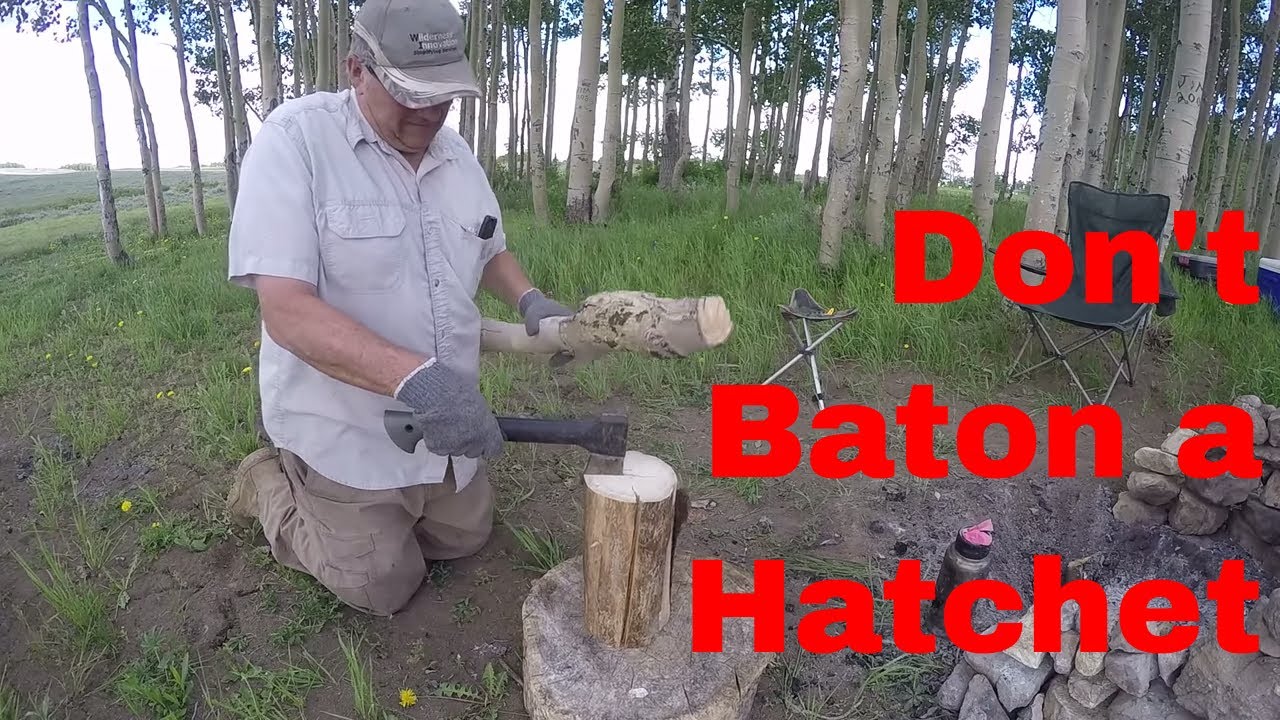
For tough wood, you can use batoning. Place the hatchet’s blade on the wood, then strike the back of the hatchet (the poll) with another piece of wood. This drives the blade deeper and helps split larger logs. It’s safer than swinging hard and works well for thick branches.
Splitting Large Logs
Hatchets are not ideal for big logs, but you can still split them:
- Split the log into halves or quarters with repeated strikes.
- Use the batoning method for stubborn sections.
- If the log is too thick, use a saw to cut it into manageable pieces before splitting.
Dealing With Knots And Tough Grain
Knots are hard spots where branches once grew. To split wood with knots:
- Aim for the weakest area near the knot.
- Use batoning or multiple strikes.
- Avoid trying to split directly through large knots.
Making Feather Sticks
A feather stick is a piece of wood shaved to create thin curls. These curls catch fire easily and help start a campfire. Use your hatchet to shave the edge of a stick, creating curls without cutting too deep.
Maintenance And Sharpening
A sharp hatchet is safer and more effective. After every splitting session:
- Clean the blade with a cloth.
- Sharpen the bit with a stone or file.
- Oil the blade to prevent rust.
Replace the handle if it shows cracks or wear.
Non-obvious Insight
Many people forget to check the handle regularly. Even tiny cracks can grow quickly, especially if you use batoning. Inspect your hatchet every time you use it.

Credit: paulkirtley.co.uk
Troubleshooting Common Problems
Splitting wood is not always easy. Problems can happen—here’s how to fix them.
Hatchet Stuck In Wood
If your hatchet gets stuck:
- Tap the wood gently from the side to loosen the blade.
- Wiggle the hatchet back and forth, not up and down.
- Avoid pulling forcefully, which can break the handle.
Wood Won’t Split
Some wood is tough, especially if it’s green or has knots.
- Try splitting from the edge instead of the center.
- Use batoning for extra force.
- Switch to a smaller piece or different wood.
Blade Dulls Quickly
Splitting dirty or green wood can dull your blade fast.
- Sharpen regularly.
- Avoid hitting rocks or metal.
- Use seasoned wood when possible.
Handle Slips Or Breaks
If your handle slips:
- Dry your hands and grip tightly.
- Use gloves with a textured surface.
- Replace the handle if it’s damaged.
Non-obvious Insight
Most beginners don’t realize that moisture can cause wood handles to swell or shrink, making the hatchet loose. Store your hatchet in a dry place and check the fit often.
Environmental And Ethical Considerations
Splitting wood is enjoyable, but it’s important to respect nature and use resources wisely.
Sustainable Wood Collection
- Collect only dead or fallen branches.
- Avoid cutting live trees unless necessary.
- Leave some wood for wildlife and other campers.
Minimizing Impact
- Use small areas for splitting and cleanup.
- Avoid disturbing plants and soil.
- Pack out all waste, including wood chips.
Firewood Etiquette
- Don’t take more wood than you need.
- Share resources in public campgrounds.
- Store firewood away from tents and buildings.
Non-obvious Insight
Many people forget that removing too much dead wood from an area can harm local ecosystems. Dead wood provides homes for insects, birds, and fungi. Take only what you need.

Credit: www.youtube.com
Comparing Hatchet Splitting To Other Methods
There are several ways to split wood. Here’s how hatchet splitting compares to other methods.
| Method | Best For | Pros | Cons |
|---|---|---|---|
| Hatchet | Small logs, kindling | Portable, precise, easy to use | Limited to small wood |
| Axe | Large logs | Powerful, fast for big wood | Heavy, less control |
| Maul | Hardwood, tough logs | Splits large wood quickly | Bulky, tiring |
| Mechanical Splitter | Bulk firewood | Very fast, little effort | Expensive, not portable |
Hatchets are perfect for portability and precision. If you need lots of firewood, a mechanical splitter or axe is better. For camping or small jobs, stick with a hatchet.
Real-world Statistics And Data
Wood splitting is popular in North America and Europe. Here are some statistics:
- Over 30 million US households use wood as a primary or secondary heat source.
- The average US home burns about 2–6 cords of wood per winter (one cord = 128 cubic feet).
- Hatchets are used by more than 70% of campers for firewood and kindling.
According to a survey by the National Firewood Association, most injuries during wood splitting happen due to improper tool use, lack of safety gear, or fatigue. This shows the importance of following safe practices and choosing the right hatchet.
Practical Tips For Beginners
If you’re new to splitting wood with a hatchet, these tips will help you avoid common mistakes and improve your technique.
- Start with softwood: It’s easier to split and less likely to damage your hatchet.
- Practice on small logs: Build your confidence before trying bigger wood.
- Sharpen your hatchet often: A sharp blade makes splitting safer and easier.
- Use a sturdy stump: Protect your hatchet and improve efficiency.
- Stay relaxed: Tension leads to mistakes. Keep your grip firm but not tight.
- Watch your surroundings: Safety first—never swing near others.
- Wear protective gear: Gloves, glasses, and boots can prevent injuries.
- Split along the grain: This saves energy and avoids damage.
- Take breaks: Don’t rush. Rest to avoid fatigue and accidents.
- Store your hatchet properly: Keep it dry, clean, and out of reach of children.
Building Skills And Confidence
Splitting wood is a skill you develop over time. The more you practice, the better you’ll get. Start with simple tasks like making kindling, then move to larger logs as your strength and accuracy improve.
Learning From Experience
Experienced wood splitters say that the key is patience and attention to detail. Watch your technique, keep your tools in good shape, and never ignore safety. Over time, you’ll learn how different woods split, how to handle tough spots, and how to work efficiently.
Joining Communities
If you want to learn more, join online forums or local groups. There are many resources, from YouTube tutorials to community classes. Sharing your experiences and asking questions helps you grow.
For more detailed information on wood splitting techniques, visit Wikipedia.
Frequently Asked Questions
How Do I Know If My Hatchet Is Sharp Enough?
A sharp hatchet should easily cut through paper or shave wood without much force. If it struggles or tears, it’s time to sharpen it. Regular maintenance keeps your hatchet safe and effective.
What Is The Best Type Of Wood For Beginners To Split?
Softwoods like pine or cedar are best for beginners. They split easily and don’t require much force. Avoid hardwoods until you gain confidence and strength.
Can I Split Wood Indoors?
It’s not recommended. Splitting wood creates flying chips and dust, which can damage floors and furniture. Always split wood outdoors or in a designated area with proper protection.
How Do I Fix A Loose Hatchet Head?
If your hatchet head is loose, soak the handle in water temporarily to swell the wood. For a permanent fix, use a wedge or replace the handle. Never use a loose hatchet—it’s unsafe.
Is It Okay To Use A Hatchet For Other Tasks, Like Chopping Meat Or Food?
Hatchets are designed for wood and outdoor tasks. Using them for food is not hygienic and can damage the blade. Stick to kitchen tools for food preparation.
Splitting wood with a hatchet is a satisfying skill that combines precision, strength, and outdoor enjoyment. With the right tool, proper preparation, and safe technique, you can master this classic craft. Take your time, learn from experience, and enjoy the process—every piece of wood split is a step toward confidence and self-reliance.
