
Camping with toddlers is an adventure filled with wonder, chaos, and lots of learning. It’s a unique experience that can build strong family memories and teach kids about nature from a young age. But if you want your trip to go smoothly, preparation is key.
Toddlers are unpredictable—what excites them one minute could upset them the next. Packing the right gear, planning meals, and thinking about safety can make all the difference.
This guide is created for parents who want practical advice, not just lists. Here, you’ll find a complete camping with toddlers checklist, essential tips, and examples from real families. Whether you’re a first-time camper or someone looking to refine your routine, you’ll walk away with confidence and clarity.
Understanding The Needs Of Toddlers While Camping
Before you start packing, it’s important to recognize toddlers’ unique needs outdoors. Unlike older children, toddlers require more supervision, comfort, and flexibility. They get tired quickly, are sensitive to temperature changes, and need routines even in new environments.
Key toddler needs:
- Safety: Constant adult supervision and safe play areas.
- Comfort: Warm clothing, familiar toys, and cozy sleeping setups.
- Nutrition: Healthy snacks and easy-to-prepare meals.
- Routine: Familiar bedtime rituals and consistent nap times.
- Entertainment: Age-appropriate activities and distractions.
Most parents overlook two things: toddlers’ need for familiar objects (like their own pillow or stuffed animal) and the importance of a backup plan for bad weather or illness. If you plan for these, you’ll avoid many common camping pitfalls.
Essential Camping With Toddlers Checklist
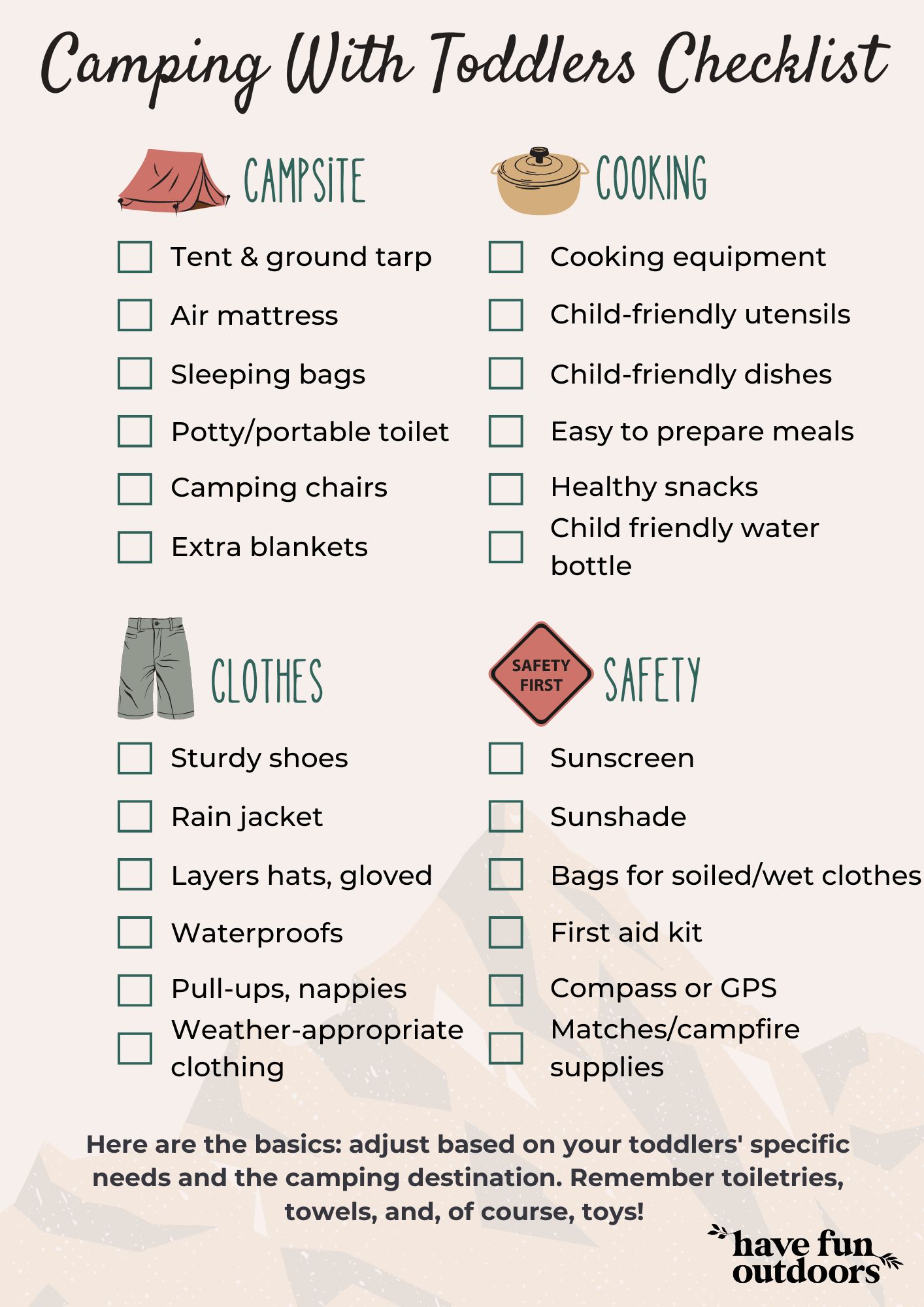
Below is a complete checklist, divided by category. Each item includes a short explanation for clarity.
Shelter And Sleeping Gear
- Family tent: Choose one with extra space for movement and gear. Look for easy setup and good ventilation.
- Ground tarp or footprint: Prevents moisture and keeps the tent clean.
- Sleeping bags: Get toddler-sized sleeping bags or use sleep sacks. Consider temperature rating—most families prefer 30°F bags for spring/fall.
- Sleeping pads: Provide insulation and comfort. Foam pads are safer for toddlers than inflatable ones.
- Portable crib or travel cot: Useful if your toddler isn’t ready for a sleeping bag. It creates a familiar sleep space.
- Blankets and pillows: Bring favorite items from home to help your child feel secure.
- Nightlight or lantern: Soft lighting helps with nighttime bathroom trips and comforts anxious toddlers.
Clothing And Personal Items
- Weather-appropriate clothing: Layering is best. Pack base layers, fleece, waterproof jackets, hats, and gloves.
- Extra outfits: Toddlers get dirty fast. Bring at least two changes per day.
- Sleepwear: Warm pajamas, sleep sacks, and socks.
- Rain gear: Rain boots, waterproof jacket, and pants.
- Sun protection: Wide-brimmed hats, sunglasses, and sunblock.
- Shoes: Closed-toe shoes for hiking, sandals for camp, and extra pairs in case of wet weather.
- Diapers or pull-ups: Bring more than you think you’ll need.
- Wipes: For cleaning hands, faces, and surfaces.
- Toiletries: Toothbrush, toothpaste, mild soap, towel, and hairbrush.
- Bug spray: Use child-safe formulas. Avoid DEET for young children.
Food And Drink Supplies
- Healthy snacks: Fruit, granola bars, crackers, cheese, and yogurt pouches.
- Easy meals: Pre-cooked pasta, sandwiches, and instant oatmeal.
- Water bottles: One for each family member. Bring extra for cooking and cleaning.
- Sippy cups: Familiar containers help toddlers drink more.
- Cooler: Keeps perishables fresh. Use ice packs or frozen water bottles.
- Portable high chair or booster: Makes mealtime easier and safer.
- Plates, bowls, utensils: BPA-free, toddler-friendly sets.
- Trash bags: For waste management and keeping campsites clean.
Health And Safety Items
- First aid kit: Include band-aids, antiseptic wipes, tweezers, child-safe medicine, and emergency contact info.
- Prescription medications: Bring enough for the trip, plus extras.
- Hand sanitizer: Essential for cleaning hands before meals.
- Thermometer: Useful for checking fevers or illness.
- Sunblock: Choose SPF 50+ and reapply regularly.
- Bug repellent: Apply before outdoor activities.
- Emergency whistle: Teach toddlers to use it if lost.
- Health insurance cards: Keep them in a waterproof pouch.
Entertainment And Activity Gear
- Favorite toys: A few familiar items for comfort.
- Books: Board books or waterproof versions.
- Coloring supplies: Crayons and coloring books.
- Outdoor toys: Balls, bubbles, and sand toys.
- Nature exploration tools: Binoculars, magnifying glass, bug catcher.
- Stroller or wagon: Helps with long walks and transporting gear.
- Baby carrier: Useful for hikes or rough terrain.
- Swim gear: Bathing suits, floaties, towels if near water.
- Rainy day kit: Small games, puzzles, and indoor activities.
Cleaning And Hygiene Gear
- Wet wipes: For hands, faces, and surfaces.
- Paper towels: Versatile and disposable.
- Camp soap: Biodegradable options are safest for nature.
- Dishwashing supplies: Sponge, dish soap, drying rack.
- Laundry bag: For dirty clothes.
- Potty gear: Portable potty or training seat, extra bags, and wipes.
Navigation And Communication
- Maps: Paper maps or downloaded offline maps.
- Compass: Basic navigation tool for teaching kids.
- Cell phone: Fully charged, with backup power bank.
- Walkie-talkies: Help communicate across the campsite.
- Contact info: Emergency numbers and campsite address.
Packing Smart: Tips For Organizing Your Checklist
Packing for toddlers means balancing between over-prepared and overwhelmed. Use clear bins or bags for each category—this helps you find items fast and keeps your tent tidy. Label each bag, and keep essentials within arm’s reach.
Packing tips:
- Pack outfits in ziplock bags—one bag per day.
- Keep health and safety items together in a bright pouch.
- Store snacks and food in a cooler or dry bag.
- Set up a “grab-and-go” bag for urgent needs (diapers, wipes, first aid).
A non-obvious insight: Always pack a backup outfit for yourself. Toddlers’ messes often end up on parents, and having clean clothes is essential for comfort.
Comparing Popular Camping Gear For Toddlers
Many parents struggle with choosing between different types of gear. Here’s a comparison of the most common options for sleeping, carrying, and feeding.
| Gear | Pros | Cons | Best For |
|---|---|---|---|
| Toddler Sleeping Bag | Comfortable, compact, easy to pack | May be too cold in some weather | Spring/Fall camping |
| Portable Crib | Familiar, safe, keeps toddlers contained | Bulky, takes up space | Younger toddlers or restless sleepers |
| Foam Sleeping Pad | Insulates from cold ground, soft | Can shift at night, not waterproof | Any season |
| Baby Carrier | Hands-free, supports naps on the go | Can get hot, limited for bigger kids | Hiking or rough terrain |
| Portable High Chair | Safe, keeps toddlers at table | Extra item to pack, may not fit all tables | Mealtime at campsite |
This comparison helps you decide which gear suits your family’s needs and space.

Credit: theorganizedmomlife.com
Planning Meals For Toddlers: What Works
Toddlers are picky eaters, especially when routines change. Keep meals simple, familiar, and quick. Avoid new foods during camping trips. Plan for three main meals and snacks between.
Sample meal ideas:
- Breakfast: Instant oatmeal with fruit, yogurt pouches
- Lunch: Cheese sandwiches, fruit slices, crackers
- Dinner: Pre-cooked pasta, beans, grilled veggies
Smart meal planning:
- Prep food at home, pack in containers
- Use shelf-stable snacks for emergencies
- Bring extra water for cooking and cleaning
Non-obvious tip: Always bring “comfort food” for your toddler. It helps during meltdowns or when appetite is low.
Safety First: Managing Risks At The Campsite
Camping with toddlers requires extra vigilance. Most accidents happen when supervision lapses for just a moment. Create clear boundaries and rules.
Essential safety steps:
- Set up a safe play area—use portable fences or rope boundaries.
- Inspect campsite for hazards: Sharp rocks, poison ivy, fire pits.
- Keep first aid kit accessible at all times.
- Teach toddlers basic safety: Not wandering, staying near adults, using emergency whistle.
Statistics: According to the CDC, falls are the leading cause of injury among toddlers. Campsites often have uneven ground, so keep shoes on and supervise closely.
Hidden risk: Many parents forget about water hazards. Even a shallow stream can be dangerous. Always supervise near water, and use life jackets for any water activity.
Managing Sleep: Creating Comfort Outdoors
Sleep is often the biggest challenge for toddlers while camping. They may struggle with new noises, darkness, or temperature changes.
Sleep strategies:
- Stick to familiar bedtime routines: Stories, songs, cuddles.
- Use portable cribs or favorite blankets for comfort.
- Bring a battery-powered nightlight to reduce anxiety.
- Dress toddlers in layered sleepwear to adjust for temperature.
Practical insight: Set up the tent early, and let your toddler explore before bedtime. This reduces fear and helps them settle down.
Handling Weather Challenges
Weather can change quickly outdoors. Toddlers are sensitive to both heat and cold, so plan for all possibilities.
Cold weather tips:
- Dress in layers, including hats and mittens.
- Use insulated sleeping pads and bags.
- Keep extra blankets in the tent.
Hot weather tips:
- Shade the tent with a tarp or natural cover.
- Use breathable clothing, hats, and sunscreen.
- Keep water bottles filled, offer drinks frequently.
Rainy weather tips:
- Pack rain gear for everyone.
- Set up a dry play area—use tarps or canopies.
- Bring indoor activities to keep toddlers busy.
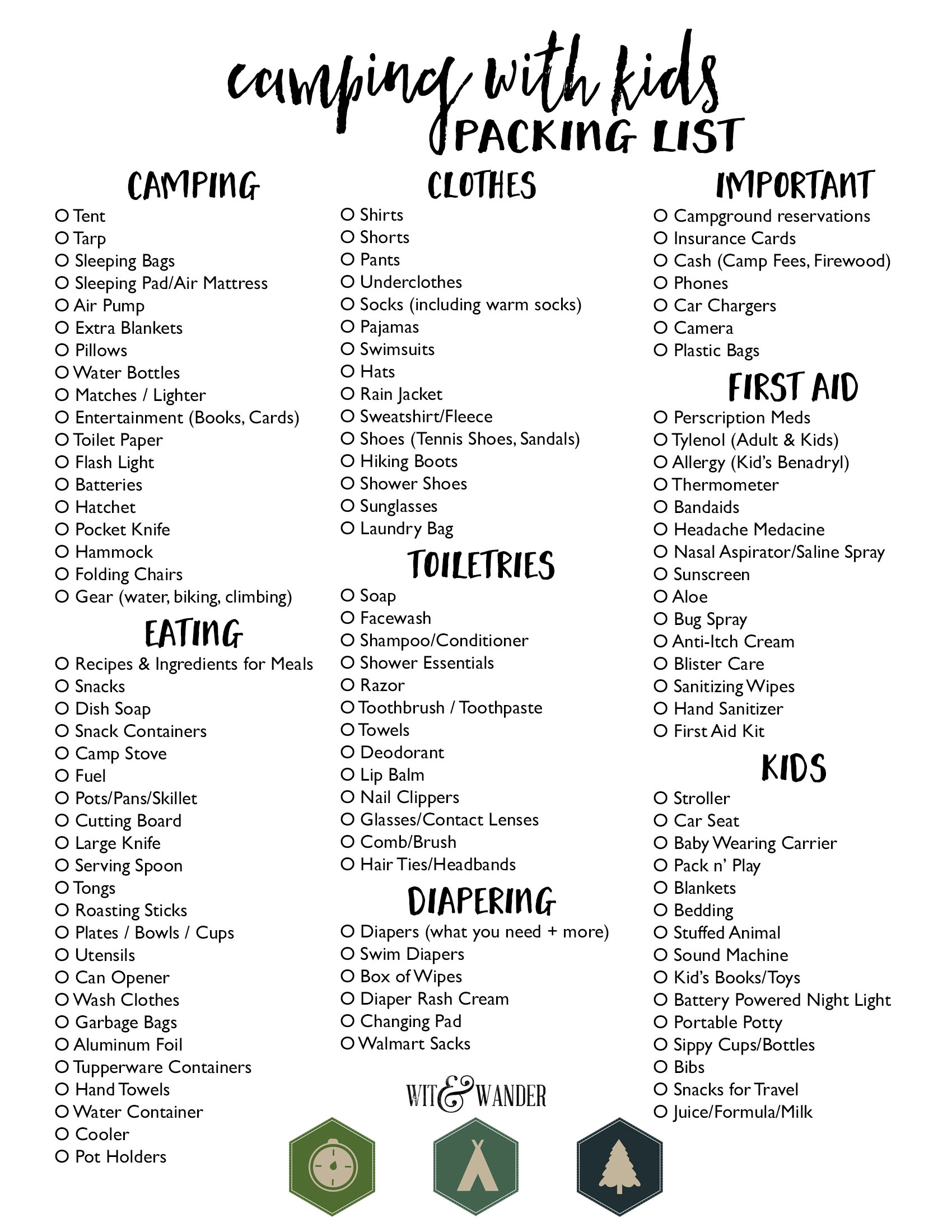
Example: One family reported their toddler enjoyed camping in the rain only after they brought waterproof boots and a big umbrella. Small adjustments can make a big difference.
Credit: ourhandcraftedlife.com
Creating A Toddler-friendly Campsite
Your campsite should be safe, comfortable, and fun. Choose a site near restrooms, flat ground, and away from hazards. Set up a play area with toys and activities.
Tips for a toddler-friendly site:
- Pick a spot with shade and soft ground.
- Set boundaries with ropes or flags.
- Keep food and trash out of reach.
- Place tent near other families for extra support.
Non-obvious idea: Invite another family with kids. Toddlers enjoy group play and parents can share supervision.
Keeping Toddlers Engaged: Activities That Work
Toddlers need stimulation, but too much can overwhelm them. Focus on simple, nature-based activities.
Outdoor activities:
- Nature walks: Collect leaves, rocks, or flowers.
- Scavenger hunts: Find simple objects like pinecones.
- Water play: Supervised splashing in shallow streams.
- Storytime: Read books in the tent or under a tree.
Indoor/rainy day activities:
- Coloring, puzzles, stacking toys.
- Singing songs, dancing, storytelling.
Data point: Studies show nature play improves toddlers’ mood and sleep quality. Keep activities flexible—if your toddler loses interest, switch gears quickly.
Credit: www.havefunoutdoors.co.uk
Dealing With Common Camping Challenges
Even with the best preparation, things can go wrong. Here’s how to handle the most frequent issues.
Tantrums: Stay calm, offer comfort, and distract with a favorite toy or snack.
Boredom: Rotate activities, involve toddlers in simple chores (like carrying sticks), and invite other children.
Mess: Accept that camping is messy. Keep cleaning supplies handy and change clothes often.
Sleep disruptions: Stick to routines, and accept that sleep may be less than usual. Rest during the day if needed.
Hidden challenge: Many parents forget to plan for illness. Bring fever reducers, thermometer, and know the nearest medical facility.
Evaluating Campgrounds: What To Look For
Not all campgrounds are toddler-friendly. Choose sites with amenities and safety in mind.
Look for:
- Clean bathrooms and running water
- Flat, grassy tent sites
- Playgrounds or open space for kids
- Short distance to parking lot
- Quiet hours enforced
Avoid:
- Sites near cliffs, fast-moving water, or dense forests
- Campgrounds with lots of adult-only groups
- Areas with frequent wildlife encounters
Comparison table of amenities:
| Campground Feature | Family-Friendly | Less Suitable |
|---|---|---|
| Restrooms | Clean, well-stocked, close to site | Dirty, far from tent |
| Play Area | Safe, age-appropriate equipment | No play area or unsafe equipment |
| Site Location | Flat, shaded, near parking | Rocky, exposed, far from parking |
| Noise Level | Quiet hours enforced | Loud, frequent parties |
| Wildlife Presence | Occasional, safe viewing | Frequent, unsafe encounters |
Choosing the right campground can transform your trip from stressful to enjoyable.
Preparing For Emergencies
Emergencies are rare, but knowing what to do can save lives. Make a plan with your family and review it before you leave.
Steps:
- Know the nearest hospital or urgent care.
- Keep emergency contacts and health info handy.
- Teach toddlers to stay put if lost and blow their whistle.
- Pack extra food, water, and clothes for unexpected delays.
Insight: Practice “what if” scenarios with your child. For example, “What do you do if you can’t see mommy?” It helps toddlers remember safety steps.
Real-life Example: Family Camping Experience
Sarah and Mark, parents of two toddlers, camped at Yellowstone. They packed familiar toys, extra clothes, and set up a safe play area. When rain hit, they used coloring books and puzzles inside the tent. Their kids slept well thanks to portable cribs and favorite blankets. The biggest challenge was keeping shoes dry—so they packed extra pairs. Their advice: “Plan for mess, expect surprises, and keep routines as much as possible.”
Quick Reference: Packing Checklist Table
For easy reference, here’s a condensed checklist in table form.
| Item Category | Essential Items |
|---|---|
| Shelter & Sleeping | Tent, tarp, sleeping bags, pads, portable crib, blankets, nightlight |
| Clothing | Layered outfits, rain gear, shoes, pajamas, sun hat, diapers |
| Food & Drink | Snacks, meals, water bottles, sippy cups, cooler, high chair, utensils |
| Health & Safety | First aid kit, medicines, hand sanitizer, thermometer, sunblock, bug spray |
| Entertainment | Toys, books, coloring, balls, nature tools, stroller, swim gear |
| Hygiene | Wet wipes, towels, camp soap, dishwashing supplies, laundry bag, potty |
| Navigation | Maps, compass, cell phone, walkie-talkies, contact info |
Frequently Asked Questions
How Do I Keep My Toddler Safe At The Campsite?
Supervise your child at all times. Set up clear boundaries using ropes or portable fences. Inspect the area for hazards, especially near water or fire pits. Teach your toddler basic safety rules, like staying near adults and blowing an emergency whistle if lost.
What’s The Best Sleeping Setup For Toddlers While Camping?
Most families use a portable crib or toddler sleeping bag with a foam sleeping pad. Bring familiar blankets and a nightlight to ease anxiety. Dress your child in layered pajamas to adjust for temperature changes.
How Do I Handle Meals For Picky Eaters While Camping?
Stick to familiar foods and simple meals. Prep snacks and meals at home, and bring shelf-stable options. Avoid introducing new foods during the trip. Use a portable high chair or booster for safe, comfortable mealtime.
How Can I Entertain My Toddler During Camping Trips?
Focus on nature-based activities like scavenger hunts, nature walks, and water play. Bring favorite toys, books, and coloring supplies. Pack a rainy-day kit with indoor games and puzzles.
What Should I Do If My Toddler Gets Sick While Camping?
Bring a thermometer, fever reducers, and your child’s prescription medications. Know the nearest medical facility, and keep health insurance cards handy. Monitor your child closely, and seek help if symptoms worsen. For more detailed advice, see the CDC’s parenting essentials.
Camping with toddlers is challenging, but with thoughtful planning, it can be a joyful, rewarding experience. Use this checklist and advice to prepare for your adventure, and remember that flexibility and patience are your best tools. With the right gear, meals, and mindset, your family will create lasting memories in the great outdoors.
