
Kayak camping is an adventure that blends paddling and camping into one. You travel by kayak, carrying everything you need, and camp in wild places that are often unreachable by car. This activity is growing fast, especially among people who love nature and want to escape city life. But kayak camping is not simple. You must pack carefully, stay safe, and be ready for changing weather. Many beginners make mistakes like packing too much, forgetting important gear, or not knowing how to store food. A smart kayak camping checklist makes your trip smoother, safer, and more enjoyable.
This guide gives you a complete, practical checklist for kayak camping. It covers gear, clothing, food, safety, and tips based on real experience. You’ll find tables comparing gear, advice about what really matters, and answers to common questions. Whether you are new or experienced, these steps help you avoid problems and enjoy the adventure.
Essential Kayak Camping Gear
Packing for kayak camping is different than backpacking or car camping. Space is limited, and everything must stay dry. Gear choice can affect your comfort, safety, and even survival.
Kayak
Your kayak is your main tool. Choose a touring kayak or sea kayak if you plan to travel long distances. These kayaks are longer and have more storage space. For rivers or short trips, a recreational kayak may be enough, but storage is limited.
Paddle
A lightweight paddle reduces fatigue. Carbon fiber paddles are the lightest but cost more. Aluminum paddles are heavier but cheaper. Make sure your paddle is the right length for your height and kayak width.
Life Jacket (pfd)
Always wear a personal flotation device (PFD). Choose one made for paddling. It should fit snugly but allow movement. Look for pockets for snacks or tools.
Dry Bags
Keeping your gear dry is critical. Use dry bags of different sizes. Bright colors help you find them quickly. Put sleeping gear and clothes in separate bags.
Tent Or Shelter
Pick a lightweight tent or bivy sack. It should pack small and resist rain and wind. Some kayak campers use hammocks if trees are available.
Sleeping Bag And Pad
A compact sleeping bag rated for your expected temperatures is vital. Use a sleeping pad for comfort and insulation. Inflatable pads save space.
Cooking Gear
You need a camp stove (propane or alcohol), a small pot, utensils, and a lighter or waterproof matches. Choose compact cookware that nests together.
Water Filtration
Bring a water filter or purification tablets. Rivers and lakes may have bacteria or parasites. Never rely on untreated water.
Headlamp Or Flashlight
A headlamp keeps your hands free. Always bring spare batteries. LED headlamps last longer.
First Aid Kit
Pack a first aid kit with bandages, antiseptic, pain relief, and any personal medicine. Know how to use everything in the kit.
Navigation Tools
Bring a map, compass, and GPS if possible. Phone apps help, but batteries run out. Waterproof map cases protect your paper maps.
Repair Kit
Include duct tape, zip ties, a multi-tool, and kayak repair patches. A broken kayak or paddle can end your trip.
Emergency Supplies
Carry a whistle, signal mirror, and extra food. Consider a satellite messenger if paddling in remote areas.
Gear Comparison Table
Here is a quick comparison of essential kayak camping gear:
| Item | Recommended Type | Weight (Approx) | Packability |
|---|---|---|---|
| Kayak | Touring/Sea | 45-60 lbs | High |
| Paddle | Carbon Fiber | 1.5-2 lbs | Excellent |
| Dry Bags | Multiple Sizes | Varies | Excellent |
| Tent | Ultralight | 2-4 lbs | Good |
| Sleeping Bag | Down, 3-season | 1.5-3 lbs | Excellent |
| Headlamp | LED | 4-6 oz | Excellent |
Clothing For Kayak Camping
Choosing the right clothes is important for comfort and safety. Weather can change quickly, and you may get wet often. Packing layers and quick-drying materials is key.
Paddling Clothes
Wear synthetic or wool clothing. Avoid cotton—it stays wet and gets cold. For warm weather, use a rash guard and shorts. In cold conditions, wear a wet suit or dry suit.
Camp Clothes
Bring a set of clothes for camp, separate from your paddling outfit. Include long underwear, a warm fleece, and rain gear.
Footwear
Water shoes or sandals are good for paddling. For camp, pack lightweight hiking shoes or boots. Avoid flip-flops—they offer little protection.
Hat And Gloves
A wide-brimmed hat protects from sun. In cold weather, bring a beanie. Paddling gloves prevent blisters and keep hands warm.
Clothing Packing Tips
- Always pack extra socks.
- Use dry bags for camp clothes.
- Plan for at least one change of clothes for every two days.
Clothing Comparison Table
Here’s a quick comparison of clothing options:
| Item | Material | Best Use | Dry Time |
|---|---|---|---|
| Paddling Shirt | Synthetic | Warm Weather | Fast |
| Wet Suit | Neoprene | Cold Water | Medium |
| Camp Fleece | Polyester | Cool Evenings | Fast |
| Rain Jacket | Nylon | Rain | Fast |
| Water Shoes | Rubber/Synthetic | Paddling/Portage | Fast |

Credit: www.reddit.com
Food And Cooking Checklist
Food planning for kayak camping is not just about calories. You must balance nutrition, weight, and packability. Some campers make the mistake of packing bulky cans or heavy fresh food.
Food Types
Pack dehydrated meals, energy bars, nuts, and dried fruit. These foods are lightweight and need little preparation. For short trips, you can bring fresh fruit and bread.
Cooking Equipment
- Small camp stove (propane or alcohol)
- One pot or pan
- Spoon and fork
- Lighter and waterproof matches
- Mug or cup
Water And Storage
Carry at least 2 liters of water per day. Use water filters or purification tablets for refilling. Store food in bear-proof containers if camping where wildlife is common.
Packing And Preparation Tips
- Pre-pack meal portions in zip bags.
- Remove extra packaging to save space.
- Use a mesh bag to hang food away from animals.
Sample Meal Plan
Here’s a sample meal plan for a two-day kayak camping trip:
- Breakfast: Instant oatmeal, dried fruit, coffee
- Lunch: Tortilla with peanut butter, trail mix
- Dinner: Dehydrated chili, crackers
- Snacks: Energy bars, nuts, jerky
Cooking Mistakes To Avoid
- Never cook inside your tent—fire risk and condensation.
- Don’t rely on campfires—rain or wind may stop you.
- Avoid packing glass or cans—they are heavy and hard to pack.
Safety And Emergency Gear
Safety is more than just wearing a life jacket. You must prepare for accidents, bad weather, and getting lost.
First Aid And Medical
Bring a first aid kit with items for cuts, burns, insect bites, and allergies. If you need special medication, pack extra and store in a waterproof bag.
Navigation And Communication
- Map and compass
- GPS device
- Satellite messenger (for remote trips)
- Waterproof phone case
Signaling And Rescue
- Whistle (attach to PFD)
- Signal mirror
- Emergency blanket
Weather And Environmental Hazards
Check weather forecasts before leaving. Bring rain gear and extra warm layers. Watch for wildlife, especially in bear country.
Safety Gear Table
Here’s a comparison of key safety gear:
| Item | Purpose | Waterproof | Recommended Brand |
|---|---|---|---|
| First Aid Kit | Medical Emergencies | Yes | Adventure Medical Kits |
| Whistle | Signaling | Yes | Fox 40 |
| Emergency Blanket | Warmth/Signal | Yes | Space Blanket |
| Satellite Messenger | Remote Communication | Yes | Garmin inReach |
| Waterproof Map Case | Protect Maps | Yes | SealLine |
Credit: www.thecrazyoutdoormama.com
Packing And Storage Strategies
Packing your kayak is like solving a puzzle. Space is tight, and weight must be balanced. Poor packing can lead to capsizing or losing gear.
Dry Bags And Compartments
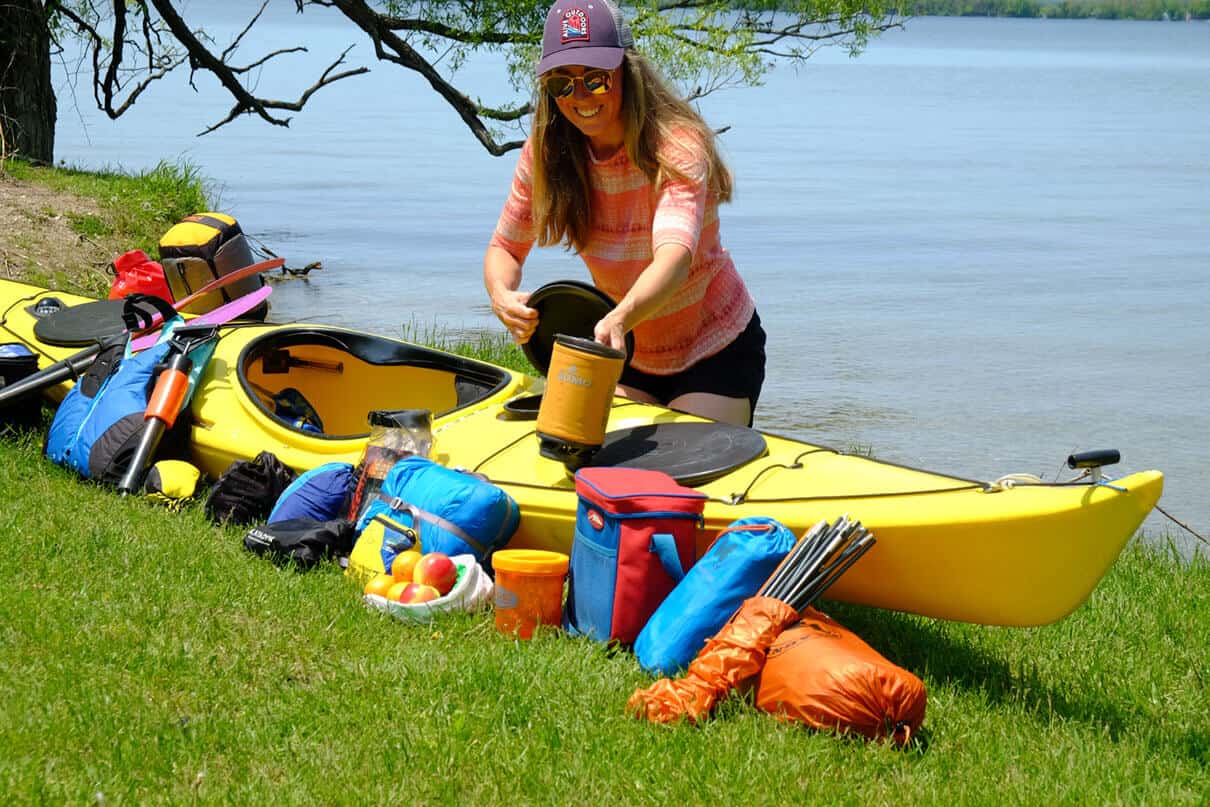
Use dry bags for clothes, food, and electronics. Pack heavier items in the center and bottom of the kayak. Lighter gear goes at the ends.
Balance And Accessibility
Keep the weight even from front to back. Place items you need during the day (snacks, water, map) near the cockpit or top of bags.
Packing Steps
- Lay out all gear before packing.
- Use small dry bags for easy access.
- Check that nothing blocks the hatch.
- Secure loose items with bungee cords.
Packing Mistakes Beginners Make
- Packing gear too loosely—can shift during paddling.
- Overloading kayak—makes steering hard.
- Forgetting to check for leaks—water can ruin gear.
Packing Tips
- Use compression sacks for sleeping bags.
- Label dry bags for quick access.
- Practice loading and unloading before your trip.
Environmental Responsibility
Kayak camping is about respecting nature. Leave no trace is more than a slogan—it’s a duty.
Leave No Trace Principles
- Pack out all trash, even small items.
- Camp on durable surfaces.
- Use established fire rings or stoves.
- Wash dishes away from water sources.
Wildlife Protection
Store food away from animals. Never feed wildlife. Use bear-proof containers when needed.
Water Protection
Avoid using soap in rivers or lakes. Even “biodegradable” soap can harm ecosystems.
Human Waste
Pack out toilet paper and hygiene products. Use portable toilets if required by local rules.
Credit: paddlingmag.com
Useful Tips For Beginners
Even with a checklist, beginners often miss small but important details. Here are some tips that many guides overlook:
- Practice paddling with a loaded kayak before your trip. The boat handles differently.
- Test your dry bags by dunking them in water at home.
- Bring a small towel for drying hands and gear. It’s simple, but makes life easier.
- Keep a logbook or journal. It helps track route, weather, and problems.
- Pack a small tarp. It can be used as shelter, ground cover, or gear organizer.
- Charge all devices fully before leaving. Solar chargers help on longer trips.
- Double-check local regulations. Some areas require special permits or bear-proof storage.
- Learn basic knots. They help secure gear and set up camp.
- Use color-coded bags for quick sorting.
- Bring a backup paddle if space allows. A broken paddle can end your trip.
- Don’t forget insect repellent and sunscreen.
- Know how to identify poison ivy and other hazards.
- Always check tide charts if paddling coastal areas.
- Plan entry and exit points. Some spots may have steep banks or rocks.
- Pack a small book or cards for downtime at camp.
Common Mistakes And How To Avoid Them
Many kayak campers make mistakes that can ruin their trip or cause danger. Here are the most frequent issues and how to prevent them:
- Overpacking: Packing too much gear makes the kayak unstable and hard to paddle. Stick to essentials.
- Ignoring Weather: Not checking the forecast can lead to paddling in dangerous conditions.
- Poor Food Planning: Bringing heavy or perishable food causes spoilage and waste.
- Inadequate Safety Gear: Skipping first aid or signaling tools puts you at risk.
- Not Practicing Packing: Loading the kayak wrong can lead to capsizing.
- Skipping Dry Bags: Water ruins gear and food. Always use waterproof storage.
- Forgetting Permits: Many areas require permits or have rules about fires and camping.
- Underestimating Distance: Paddling farther than planned leads to fatigue and late camp setup.
- Not Preparing for Wildlife: Failing to secure food attracts animals and can be dangerous.
- Leaving Trash: Always pack out everything, including micro-trash like wrappers and twist ties.
Planning Your Route And Campsites
Route planning is key to a safe and enjoyable trip. You must consider distance, water conditions, and campsite options.
Research
Study maps and trip reports. Look for calm water and easy entry/exit points. Avoid areas with strong currents or tides unless you are experienced.
Campsite Selection
Choose sites that are legal, safe, and have shelter from wind. Look for flat ground and distance from water (flood risk).
Timing
Plan for daylight arrivals. Setting up camp in the dark is difficult and risky.
Example Route Plan
For a two-day trip:
- Day 1: Paddle 8 miles, camp on riverbank
- Day 2: Paddle 7 miles, exit at public ramp
Always have backup campsites in case your main spot is full or unusable.
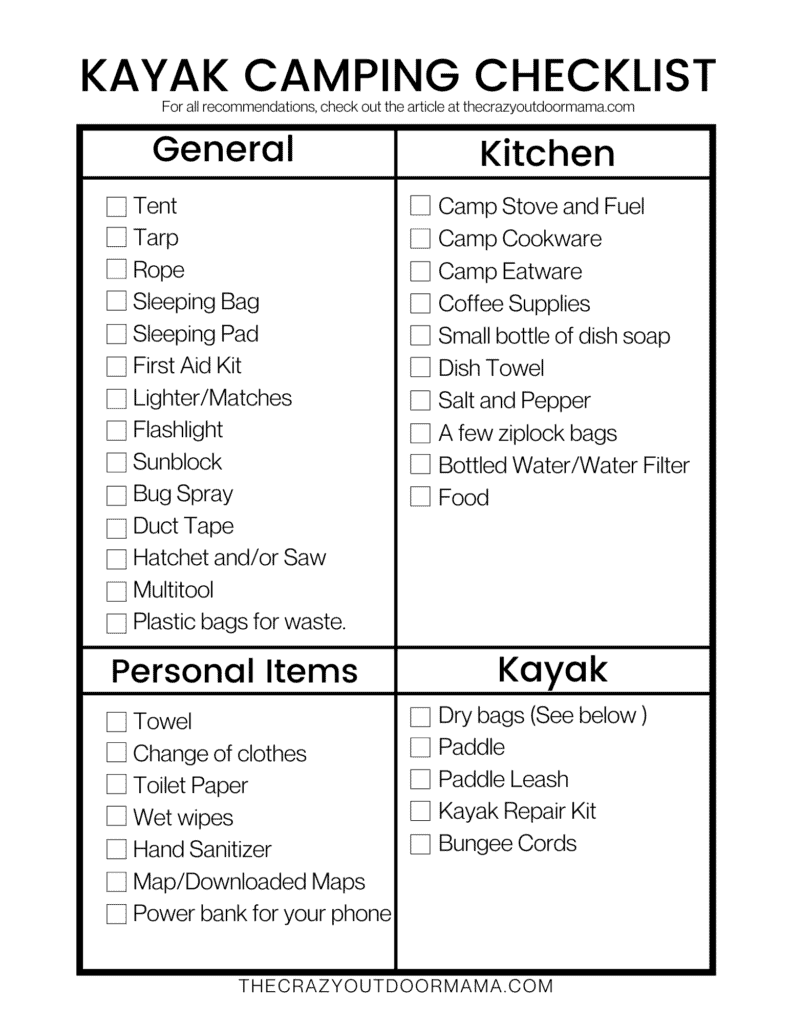
Kayak Camping Checklist
Here is a detailed checklist for kayak camping. Use this to pack and double-check before leaving home.
Essential Gear
- Kayak (touring or sea)
- Paddle (plus backup if possible)
- PFD (life jacket)
- Spray skirt (if needed)
- Dry bags (various sizes)
- Tent or shelter
- Sleeping bag (rated for season)
- Sleeping pad
- Camp stove and fuel
- Cooking pot and utensils
- Water bottles (at least 2 liters)
- Water filter or purification tablets
- Headlamp/flashlight (spare batteries)
- First aid kit
- Map, compass, GPS
- Repair kit (duct tape, multi-tool)
- Whistle, signal mirror
- Emergency blanket
- Satellite messenger (optional)
Clothing
- Paddling shirt and shorts (synthetic)
- Wet suit or dry suit (cold water)
- Camp clothes (long underwear, fleece)
- Rain jacket and pants
- Water shoes or sandals
- Camp shoes/boots
- Hat (sun and warm)
- Gloves (paddling and warm)
- Extra socks and underwear
Food And Cooking
- Dehydrated meals
- Energy bars/snacks
- Trail mix/nuts
- Fresh fruit (short trip)
- Coffee/tea
- Zip bags for packing
- Bear-proof food container (if needed)
- Mug/cup
Safety
- First aid kit
- Insect repellent
- Sunscreen
- Waterproof phone case
- Emergency contacts
- Permit/paperwork
Packing And Storage
- Compression sacks
- Bungee cords/straps
- Tarp/ground cover
- Color-coded dry bags
Environmental
- Trash bags
- Soap (biodegradable)
- Portable toilet or bags
- Small towel
Optional Extras
- Solar charger
- Book/cards
- Journal/logbook
- Camera
- Fishing gear
Frequently Asked Questions
What Is The Best Kayak For Camping Trips?
The best kayak for camping is usually a touring kayak or sea kayak. These models are longer and offer more storage space. They handle open water well and are stable with heavy loads. For short river trips, a recreational kayak can work, but storage is limited.
How Do I Keep My Gear Dry In A Kayak?
Use dry bags for all gear, especially clothes, food, and electronics. Pack them tightly and check for leaks before your trip. Place dry bags in kayak compartments and secure them with bungee cords. If you expect rain, double-bag important items.
How Much Food And Water Should I Bring?
Plan for at least 2,500 calories per day and 2 liters of water per day per person. Bring lightweight, high-energy foods like dehydrated meals, nuts, and bars. Always have water filtration or purification methods. Adjust amounts for longer trips or hot weather.
What Safety Gear Is Required For Kayak Camping?
At minimum, bring a life jacket (PFD), first aid kit, navigation tools (map, compass, GPS), whistle, signal mirror, and emergency blanket. For remote trips, consider a satellite messenger. Always check local rules for required gear.
Are There Any Rules Or Permits Needed For Kayak Camping?
Yes, many areas require permits for camping or paddling. Some sites have rules about fires, wildlife, or waste disposal. Always check local regulations before your trip. Permits help protect nature and ensure safe camping.
Kayak camping blends adventure and solitude in nature. Packing carefully and planning ahead gives you freedom and safety. Use this checklist and guide, and you’ll avoid common mistakes, respect the environment, and enjoy every moment on the water. For more in-depth gear reviews and safety tips, visit National Park Service. With the right preparation, your kayak camping trip can be unforgettable.
