
Camping offers a unique way to experience nature, unwind, and create lasting memories. But not all camping trips are the same. The place you choose to set up your tent or park your RV can change your whole experience. From wild forests to busy RV parks, each campsite and campground type has its own feel, rules, and amenities.
If you’re planning a camping trip, understanding the different options can help you pick the best spot for your needs.
This guide covers the main types of campsites and campgrounds, including their features, pros and cons, and tips for choosing the right one. Whether you’re a solo backpacker, a family with kids, or someone who loves creature comforts, you’ll find a camping style that suits you. We’ll also look at some real examples, data, and comparisons so you can make confident choices.
Primitive And Backcountry Campsites
Primitive campsites, also called backcountry sites, are for campers who want to get away from crowds and experience nature in its raw form. These spots are often found in national parks, forests, and wilderness areas.
Features
- No running water, electricity, or bathrooms
- Usually far from roads and towns
- Natural surroundings, often with amazing views
- May require hiking or paddling to reach
Primitive sites are sometimes marked with a simple sign or a fire ring, but many are not marked at all. You may camp under the stars with nothing but trees, rocks, or lakes nearby. For navigation, you’ll often need a map, compass, or GPS since cell service is usually weak or missing.
Who Should Choose
These sites are ideal for experienced campers who enjoy hiking, solitude, and self-reliance. If you love adventure and don’t mind roughing it, primitive campsites offer unmatched peace and privacy.
Primitive camping is also perfect for people who want to practice bushcraft skills, birdwatch, or photograph wildlife without distractions. If you want to escape technology and city noise, this is the best option.
Pros
- Quiet, natural environment
- Often free or very cheap
- Great for wildlife viewing
Primitive sites let you see the stars clearly and wake up to the sounds of nature. You might spot deer, owls, or even rare animals. Many sites are far enough from civilization that you feel completely alone.
Cons
- No facilities—must pack in and out everything
- Safety risks (wild animals, weather, injuries)
- Limited access; not suitable for all ages
You’ll need to manage your own water purification, food storage, and waste disposal. Weather can change quickly, and you must be ready for rain, cold, or heat without shelter nearby. Injuries or getting lost can be serious risks, so always tell someone your plans.
Example
The Boundary Waters Canoe Area in Minnesota has hundreds of primitive sites only accessible by canoe. Campers must bring all supplies and follow strict leave-no-trace rules. Many sites are on small islands where you may not see another person for days.
Developed Campgrounds
Developed campgrounds are more common and offer basic amenities. These are often managed by national parks, state parks, or private companies.
Features
- Toilets, running water, and sometimes showers
- Picnic tables, fire rings, and trash bins
- Marked campsites, often with gravel or dirt pads
- Parking near or at each site
Some developed campgrounds also offer small camp stores, visitor centers, or ranger programs where you can learn about local plants and animals. Some have accessibility features like paved paths or wheelchair-friendly bathrooms.
Types
- National Park Campgrounds: Managed by the federal government, these campgrounds are found in scenic areas and often book up fast during peak seasons.
- State Park Campgrounds: Run by state agencies, they are similar but sometimes less crowded or cheaper.
- City/County Parks: These are smaller, local campgrounds that may have playgrounds and sports facilities.
- Private Campgrounds: Operated by businesses, often with more amenities and activities.
Private campgrounds may offer activities like mini-golf, fishing ponds, or movie nights. National and state parks focus more on the natural setting and may have stricter rules about noise and fires.
Pros
- Facilities make camping easier for families and beginners
- Safe and well-maintained
- Social atmosphere; easy to meet other campers
Developed campgrounds are a good choice for those who want a balance of comfort and nature. You can cook on a grill, use a flush toilet, and still enjoy the outdoors. Many campgrounds have camp hosts who can answer questions or help in emergencies.
Cons
- Can be crowded and noisy
- Fees are higher than primitive sites
- Rules and regulations (quiet hours, fire bans)
During busy weekends, popular campgrounds can feel packed, and noise travels easily between sites. Some sites are close together, so privacy may be limited.
Example
Yosemite National Park has 13 campgrounds, many with toilets and drinking water. Some sites fill up months in advance, so reservations are crucial. Each site comes with a bear-proof food locker, which is required to keep wildlife safe.
Credit: wildernesstimes.com
Rv Parks And Campgrounds
RV parks cater to campers traveling in recreational vehicles (RVs). These parks offer the hookups and space needed for large vehicles.
Features
- Electrical, water, and sewer hookups
- Wide roads and parking pads
- Laundry facilities, Wi-Fi, and cable TV in some places
- Sometimes pools, playgrounds, and dog parks
Many RV parks have clubhouses where you can join events like potlucks or bingo nights. Some offer propane refills, convenience stores, or even fitness centers. It’s common to see long-term RVers who stay for months and decorate their sites.
Comparison Table: Rv Parks Vs Developed Campgrounds
| Feature | RV Park | Developed Campground |
|---|---|---|
| Hookups | Full (electric, water, sewer) | Usually none or partial |
| Site Size | Large, paved pads | Smaller, mixed surfaces |
| Facilities | Showers, laundry, Wi-Fi | Basic toilets, water |
| Atmosphere | Urban/suburban, busy | Natural, quieter |
| Cost | $30–$80/night | $10–$40/night |
Who Should Choose
RV parks are best for travelers who want comfort and convenience. Families, retirees, and full-time RVers often prefer these parks.
RV camping is also helpful for people with mobility issues, as you can bring your own bathroom and kitchen. If you travel with pets, RV parks often have dog runs and pet washing stations.
Pros
- All the comforts of home
- Easy access for big vehicles
- Social community for RV travelers
RV parks let you travel across the country without giving up hot showers, internet, or TV. You can meet other travelers and join group activities.
Cons
- Less “outdoor” feel
- Can be expensive
- Rules about RV age/size
Some RV parks restrict older vehicles or require them to be in good condition. Spaces may feel like parking lots, with little natural beauty.
Example
KOA (Kampgrounds of America) operates hundreds of RV parks across the US, with playgrounds, pools, and organized activities. Some KOAs even offer tent sites and cabins for non-RV travelers.
Glamping Sites
Glamping, or glamorous camping, is for people who want nature without sacrificing comfort. Glamping sites offer luxury tents, cabins, yurts, or treehouses.
Features
- Beds, linens, and sometimes private bathrooms
- Electricity, heating, and air conditioning
- Meals or kitchens provided
- Unique settings like safari tents, domes, or vintage trailers
Some glamping sites include extras like hot tubs, outdoor showers, or even spa services. You might sleep in a treehouse with a view or a canvas tent with a chandelier.
Data Table: Glamping Vs Traditional Camping
| Aspect | Glamping | Traditional Camping |
|---|---|---|
| Comfort | High—beds, climate control | Low—sleeping bags, weather exposure |
| Facilities | Private bathrooms, kitchens | Shared or none |
| Cost | $80–$400/night | $10–$50/night |
| Activities | Guided, curated | DIY, self-guided |
| Target Audience | Couples, families, luxury travelers | Outdoor enthusiasts, budget campers |
Who Should Choose
Glamping is ideal for those who want a special experience, don’t like roughing it, or are celebrating an occasion.
It’s also great for people with limited mobility or young children, since you don’t need to set up gear or cook over a fire. If you want a romantic getaway or a unique vacation, glamping is a good fit.
Pros
- High comfort level
- Unique locations and designs
- Good for non-campers
Glamping can feel like staying at a boutique hotel, but in the middle of a forest or by a lake.
Cons
- Expensive
- Less privacy—often grouped together
- Not always pet-friendly
Some glamping resorts are set up like small villages, so you’ll have neighbors close by.
Example
Under Canvas operates glamping resorts near national parks like Yellowstone and Zion, with luxury tents and on-site activities. Each tent has real beds and wood stoves, and some include private bathrooms.
Group Campsites
Group campsites are designed for large gatherings like family reunions, clubs, or school trips.
Features
- Large, reserved spaces for 10–100 people
- Multiple picnic tables and fire pits
- Private bathrooms or porta-potties
- Often in developed campgrounds
Some group sites include covered pavilions, sports fields, or special parking for buses or trailers. Group areas are usually separated from regular sites for more privacy.
Who Should Choose
If you’re planning a trip with many people, group sites make organizing easier. They’re popular with scouts, youth groups, and big families.
These sites are also useful for workshops, outdoor education, or church retreats. Everyone can camp together and share meals or games.
Pros
- Space for everyone
- Less stress about finding nearby sites
- Group pricing may save money
Large groups can enjoy campfires, group games, and shared cooking areas.
Cons
- Must book in advance
- Rules about noise and alcohol
- Sometimes limited to certain dates
Some parks limit group site use to weekends or require a minimum number of campers.
Example
Joshua Tree National Park has group sites that can hold up to 50 people, with special parking and facilities. These are popular for stargazing and group hikes.
Walk-in And Hike-in Campsites
Walk-in and hike-in campsites offer a middle ground between primitive and developed camping. These sites are not accessible by car—you must walk or hike a short distance.
Features
- Usually 0.1–2 miles from parking
- Less crowded than car-accessible sites
- Basic amenities (pit toilets, water)
- Scenic locations
Some hike-in sites are near lakes, rivers, or scenic viewpoints. You may have a bear box for food or a simple shelter. Walk-in sites are sometimes used by cyclists or paddlers, too.
Who Should Choose
Ideal for campers who want more privacy and a bit of adventure without going deep into the wilderness.
If you want a quiet site but don’t want to hike for hours, these are a good compromise. They’re also good for learning backpacking skills with less risk.
Pros
- Quieter, more natural feel
- Good for small groups and couples
- Often cheaper
Since fewer people are willing to carry gear, these sites are less crowded and can feel more remote.
Cons
- Need to carry gear
- Not suitable for young children or people with mobility issues
- Limited facilities
You may need to filter water from a stream or carry out all your trash.
Example
The Appalachian Trail has hike-in shelters and tent pads for long-distance hikers. You must carry all your gear and follow leave-no-trace rules. Many sites are spaced a day’s hike apart.
Dispersed Camping
Dispersed camping means camping outside official campgrounds, often on public lands managed by the Bureau of Land Management (BLM) or US Forest Service.
Features
- Free or low-cost
- No amenities—pack everything
- Large areas; choose your own spot
- Usually allowed for up to 14 days
You can camp in forests, deserts, or mountains, often with no other campers in sight. Dispersed camping is allowed in many national forests, but always check local maps and signs.
Who Should Choose
This is for self-sufficient campers who want freedom and space. Popular with van-lifers, off-roaders, and people avoiding crowds.
If you enjoy boondocking (camping in an RV without hookups), you’ll find many free spots on BLM land.
Pros
- Total privacy
- Flexible location
- No reservations needed
You can stay near rivers, cliffs, or open fields and move whenever you like.
Cons
- No facilities or garbage service
- Environmental impact if not careful
- Sometimes hard to find good spots
You must follow special rules about where to camp, and popular sites can get trashed if visitors don’t respect nature.
Example
The BLM lands in Arizona allow dispersed camping, attracting thousands of snowbirds each winter. Some spots even have online maps or community boards to help campers find the best locations.
Specialty Campsites
Some campsites offer unique experiences or cater to specific interests.
Types
- Horse Camps: Sites with corrals and trails for riders.
- Boat-In Campsites: Only accessible by watercraft.
- Bike-In Campsites: Designed for cyclists on long journeys.
- Winter Campsites: Open for snow camping, often with warming huts.
- Pet-Friendly Campsites: Allow dogs or other animals, with special features.
You might also find astronomy campsites with observatories, or surf campsites right on the beach.
Features
- Extra amenities (water troughs, bike racks)
- Specialized rules and reservations
- Located near trails, lakes, or ski areas
Specialty sites often require advanced planning, and some need special permits. They can be a way to combine camping with your favorite hobby.
Example
Lake Tahoe’s boat-in campsites require a kayak or boat to reach and offer stunning lake views. Horse camps in California’s state parks have hitching posts and manure bins.
Credit: beavermeadowcampground.com
Urban And Suburban Campgrounds
Urban campgrounds are located within or near cities. They offer easy access to urban attractions while providing a place to sleep outdoors.
Features
- Close to public transportation, restaurants, and museums
- Often small and crowded
- Security and fencing
- Limited outdoor space
Urban campgrounds may be next to highways, airports, or even inside city parks. Some offer shuttle buses to tourist attractions.
Who Should Choose
These are great for travelers exploring cities or passing through. Some RV parks are also urban, offering easy access for road trippers.
If you want to attend a festival, sports event, or city tour, urban campgrounds can be very convenient.
Pros
- Convenient location
- Good for sightseeing
- Often open year-round
You can combine outdoor living with trips to theaters, shops, or monuments.
Cons
- Less privacy and nature
- Higher prices
- Rules about noise and behavior
Expect less space and more city sounds. You may need earplugs to sleep.
Example
Cherry Hill Park in Maryland is just outside Washington, DC, with shuttle buses to the city and full amenities. It’s popular with RV travelers who want to visit the nation’s capital.
Long-term And Seasonal Campgrounds
Long-term campgrounds allow campers to stay for weeks or months. Seasonal campgrounds are open only part of the year.
Features
- Monthly or seasonal rates
- Storage for gear and vehicles
- Community activities
- Often RV-focused
Some long-term parks have gardening plots, mail service, or organized tours. Seasonal sites may be in beach or mountain areas that close for winter.
Who Should Choose
Full-time RVers, snowbirds, and vacationers who want a home base often pick these sites.
If you want to escape cold weather or spend a summer by the lake, a seasonal site can feel like a second home.
Pros
- Stable location
- Community of regulars
- Can save money with longer stays
You may make lasting friendships with neighbors who return each year.
Cons
- Less travel flexibility
- Some places limit stay duration
- Not always in scenic areas
Check for restrictions on how long you can stay, or rules about keeping your site tidy.
Example
Sun RV Resorts has seasonal parks in Florida for winter visitors. Many guests decorate their sites with lights or garden ornaments.
Choosing The Right Campsite Or Campground
Picking the best place to camp depends on your needs, budget, and interests. Consider these factors:
- Group Size: Solo, couple, family, or large group? Some sites cater to groups; others are best for individuals.
- Amenities Needed: Do you need toilets, showers, or electricity? Primitive sites offer less, while RV parks and glamping provide more.
- Accessibility: Car, RV, bike, boat, or hiking? Make sure you can reach the site easily.
- Budget: Prices range from free (dispersed) to $400+ per night (glamping).
- Activities: Are you hiking, fishing, boating, riding horses, or sightseeing? Choose a site close to your main activity.
- Season and Weather: Some campgrounds close in winter or during storms. Check dates and conditions before booking.
- Rules and Reservations: Some sites require reservations, others are first-come, first-served. Know the rules before you go.
Accessibility is often overlooked. For example, some campgrounds are far from grocery stores or gas stations, which can be a problem if you forget supplies. Also, think about how much setup and takedown you want—RV and glamping sites require less work than tent camping.
Comparison Table: Campsite Types And Suitability
| Type | Best For | Facilities | Cost Range |
|---|---|---|---|
| Primitive/Backcountry | Adventurers, hikers | None | Free–$15/night |
| Developed Campground | Families, beginners | Toilets, water | $10–$40/night |
| RV Park | RV owners | Full hookups | $30–$80/night |
| Glamping | Luxury travelers | Luxury amenities | $80–$400/night |
| Group Site | Large groups | Multiple facilities | $40–$200/night |
| Dispersed | Solo, off-grid campers | None | Free–$10/night |
Hidden Insights And Common Mistakes
Many beginners think all campgrounds are the same, but this is a big mistake. Here are some insights that most new campers miss:
- Sites Fill Up Quickly: Popular campgrounds often book out months in advance. Always check reservation policies and book early if possible.
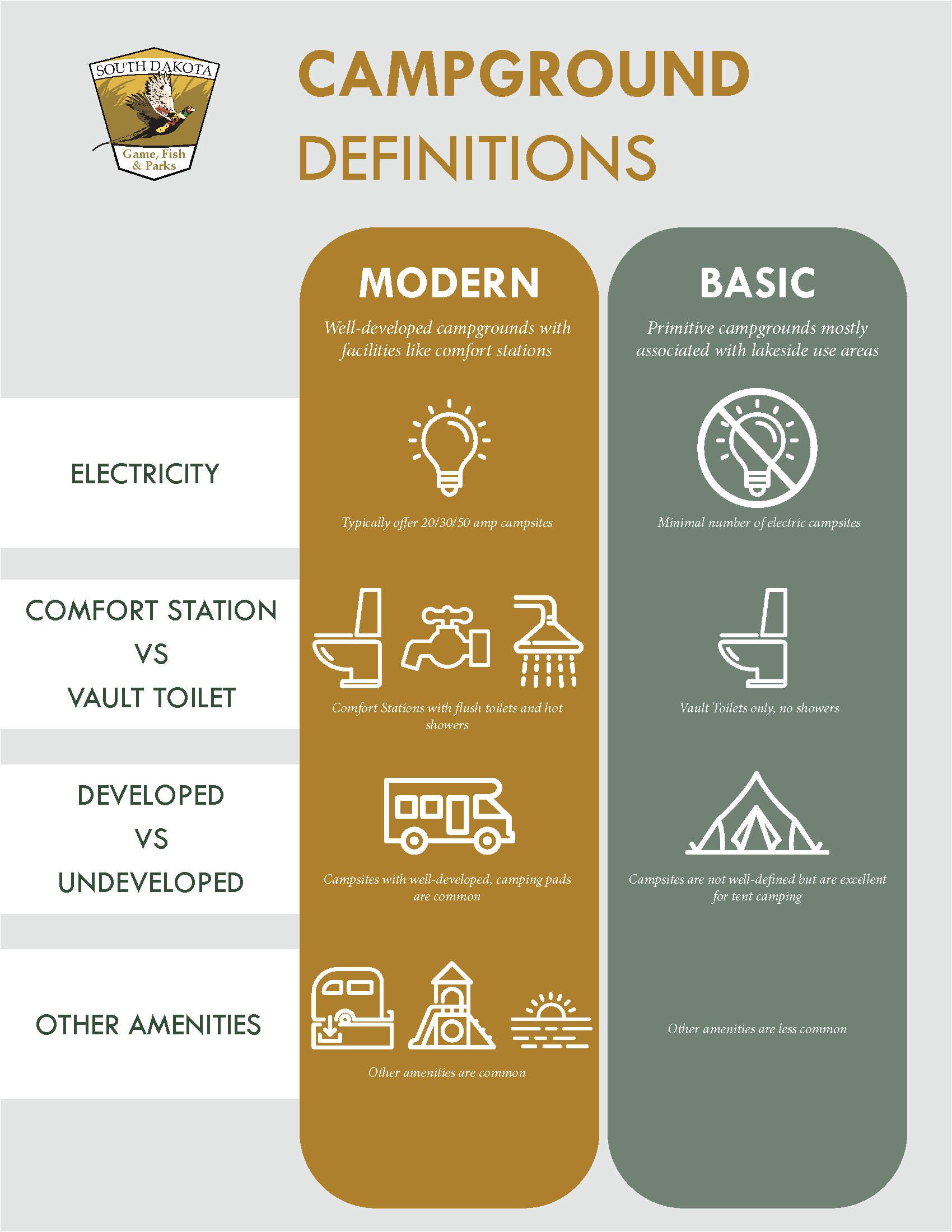
- Facility Quality Varies: Even within developed campgrounds, amenities can differ. Some have flush toilets, others only pit toilets. Read reviews and check official websites for details.
- Check Local Rules: Campfires, pets, and alcohol rules are different everywhere. Not following them can get you fined or kicked out.
- Know Your Gear: If you plan to camp in primitive or hike-in sites, test your gear at home first. Many beginners struggle with tents, stoves, or water filters when they’re far from help.
- Environmental Impact: Dispersed camping can damage nature if you’re not careful. Always follow leave-no-trace principles—pack out trash, avoid digging, and camp away from water sources.
Another common mistake is not reading recent reviews. Sometimes, campgrounds change rules, raise prices, or close facilities without notice. Also, don’t assume you’ll have cell service—download maps and emergency contacts in advance.
Credit: gfp.sd.gov
Tips For A Successful Camping Trip
- Make a Checklist: Write down everything you need—from tent to food to first aid. Don’t rely on memory.
- Arrive Early: Getting to your site early helps you choose the best spot and avoid crowds.
- Weather Awareness: Always check the forecast and prepare for rain, wind, or heat.
- Respect Quiet Hours: Most campgrounds have rules to keep things peaceful. Follow them for a better experience.
- Explore Beyond Your Site: Some of the best memories come from trails, lakes, and nearby attractions.
Bring extra batteries or a backup power source. Always have a small repair kit for tents, RVs, or bikes. A headlamp, extra snacks, and emergency contacts can make a big difference if plans change.
If you’re new to camping, start with short trips in developed campgrounds before trying primitive or dispersed sites. This helps you learn what works for you without too much risk.
Frequently Asked Questions
What Is The Difference Between A Campsite And A Campground?
A campsite is a single spot where you set up your tent or RV. A campground is a collection of campsites managed together, often with shared amenities like bathrooms and picnic areas.
How Do I Find Free Or Cheap Campsites?
Search for dispersed camping on public lands like BLM or national forests. Websites like Recreation.gov list low-cost and free sites. Always check local rules and conditions.
Can I Camp Anywhere In A National Park?
No. Most national parks have designated campgrounds and strict rules. Some allow backcountry camping with permits, but you must follow park guidelines and often hike to your site.
What Should I Look For In A Family-friendly Campground?
Look for developed campgrounds with toilets, showers, playgrounds, and activities. Check safety features, proximity to water, and site size. Reviews can help you pick the best spot for kids.
Are Pets Allowed At All Campsites And Campgrounds?
Not always. Some campgrounds and glamping sites have restrictions. Check for pet-friendly campsites and review rules about leashes, waste, and areas where pets are banned.
Camping can be as simple or as luxurious as you want it to be. By understanding the different types of campsites and campgrounds, you can match your trip to your needs, avoid common mistakes, and create memories that last a lifetime.
Whether you’re seeking adventure or relaxation, there’s a perfect site waiting for you.
