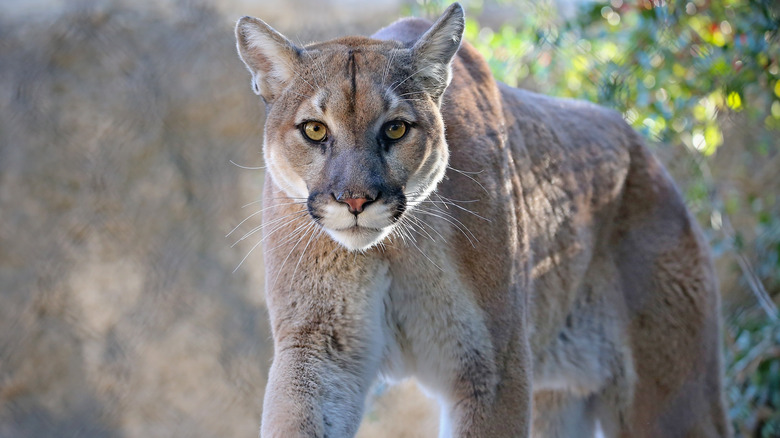
Seeing a cougar while camping is a rare and intense experience. These powerful cats, sometimes called mountain lions or pumas, live across North and South America. Most people will never see one in the wild. However, if you spend time in cougar country, it’s smart to know what to do.
Your knowledge could make the difference between a safe memory and a dangerous incident.
Cougars are shy and avoid humans, but close encounters can happen—especially in remote or less-traveled areas. Campers often worry about bears, but cougars deserve equal respect and caution. Being prepared is not just about fear; it’s about enjoying nature safely.
In this guide, you’ll learn practical steps for handling a cougar sighting, how to prevent attracting them, and what to do if a cougar acts aggressively.
Understanding Cougar Behavior
Cougars are the largest wild cats in North America after jaguars. They are solitary hunters and mostly active during dawn and dusk. Adult males can weigh up to 150 pounds, while females are a bit smaller. Knowing how cougars behave can help you respond correctly if you see one.
Cougars usually stay hidden and watch from a distance. They hunt deer, elk, and smaller animals. Attacks on humans are very rare—fewer than 30 fatal attacks have been reported in North America in the past 120 years. When cougars see people, they often slip away silently.
But if they feel cornered or are protecting kittens, their behavior can change quickly.
Key insight: Young cougars, recently independent from their mothers, are more likely to approach campsites out of curiosity or hunger. These encounters are unpredictable, so always treat any sighting with caution.
Immediate Steps: What To Do If You See A Cougar
If you suddenly see a cougar, your actions matter. Stay calm and follow these steps:
1. Stop And Stay Calm
Do not run. Running can trigger the cougar’s instinct to chase. Take a deep breath and hold your ground.
2. Make Yourself Look Big
Stand tall, raise your arms, and open your jacket if you’re wearing one. If you’re with others, group together to look larger.
3. Maintain Eye Contact
Stare directly at the cougar. Predators often attack if they think you’re weak or distracted.
4. Speak Firmly
Use a strong, confident voice. Yell things like, “Go away!” or “I’m not prey!” This shows you are not afraid.
5. Pick Up Children And Pets
If kids or small pets are with you, lift them up immediately. This prevents them from running or making sudden movements.
6. Slowly Back Away
Move back slowly, never turning your back. Keep facing the cougar and continue making noise.
Here’s a quick comparison of what to do versus what to avoid:
| Do | Don’t |
|---|---|
| Stand tall and make noise | Run or turn your back |
| Maintain eye contact | Look away or crouch down |
| Back away slowly | Approach the cougar |
Non-obvious tip: If you’re carrying a hiking stick or trekking poles, wave them above your head to appear even larger.

Signs Of Aggressive Cougar Behavior
Not every cougar sighting is dangerous. Sometimes, the animal is just passing through. But certain signs mean you should be extra cautious:
- The cougar is crouching low, ears back, tail twitching.
- It hisses, growls, or bares its teeth.
- It follows you or circles around.
- It does not move away, even when you shout or look big.
If you see any of these behaviors, the cougar may be considering you as prey or defending its territory.
What To Do If A Cougar Approaches
If the cougar starts moving toward you, escalate your actions:
- Shout louder and wave your arms or objects.
- Throw rocks, sticks, or anything handy, aiming near (not at) the cougar at first.
- If it keeps coming, aim to hit the animal. The goal is to drive it off, not harm it.
- Use bear spray if you have it—studies show it is effective against cougars within 15–20 feet.
Important: Never “play dead.” Cougars will not lose interest if you pretend to be lifeless.
If A Cougar Attacks
Though rare, attacks do happen. If a cougar lunges at you:
- Fight back with everything you have. Use rocks, sticks, backpacks, or your fists.
- Target sensitive areas: Eyes, nose, and face.
- Stay standing if possible. People who remain upright often survive attacks better.
- Do not give up. Most cougars will retreat if they meet strong resistance.
Here’s a look at survival statistics from past attacks:
| Response | Likelihood of Survival |
|---|---|
| Fought back aggressively | Over 75% |
| Tried to run or play dead | Much lower |
Surprising insight: Children and smaller adults are at higher risk, but adults who fight back often scare off the animal.
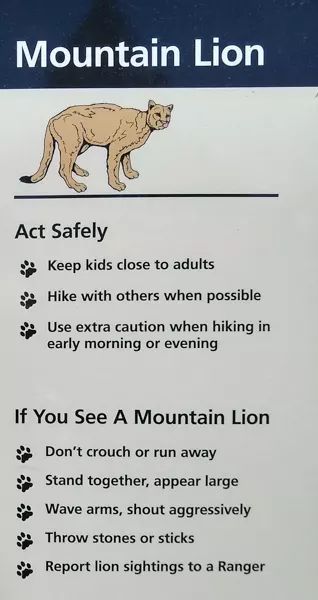
Preventing Cougar Encounters While Camping
The best way to stay safe is to avoid attracting cougars in the first place. Here’s how:
1. Choose Campsites Carefully
Camp away from animal trails, thick brush, and water sources, which cougars use for hunting.
2. Store Food Properly
Use bear-proof containers or hang food at least 10 feet off the ground and 4 feet from tree trunks. Never keep food in your tent.
3. Keep A Clean Camp
Pick up all trash, scraps, and dishes right after eating. Even toothpaste and soap can attract wildlife.
4. Supervise Children And Pets
Keep kids and pets close by, especially at dawn and dusk when cougars hunt. Don’t let them wander alone.
5. Avoid Hiking Alone
Groups are much safer—attacks on groups are extremely rare.
6. Use Lights At Night
A bright flashlight or headlamp can scare off wildlife, including cougars.
Here’s a quick comparison of safe vs. risky campsite practices:
| Safe Practice | Risky Practice |
|---|---|
| Hanging food away from camp | Storing food in tent |
| Cleaning up all scraps | Leaving trash out overnight |
| Camping in open areas | Camping near dense brush |
Tip: Some scented items, like deodorant or sunscreen, can also attract cougars. Store these with your food.
What To Do After A Cougar Sighting
If you see a cougar near your campsite, don’t ignore it. Take these steps:
- Alert other campers and park staff right away.
- Avoid hiking or letting children play in the area for at least 24 hours.
- If you’re in a national or state park, report the sighting to a ranger. They track cougar movements for public safety.
- Move your campsite if possible, especially if the cougar showed interest or acted aggressively.
Little-known fact: Sometimes, cougars will return to the same area if they found food (even scraps). That’s why moving camp after a sighting is smart.
How To Prepare Before Your Trip
Preparation makes a big difference. Before you head into cougar country:
- Research the area. Check with park rangers or websites for recent cougar activity.
- Carry bear spray and know how to use it. Practice removing the safety clip quickly.
- Pack a whistle or air horn—loud noises can scare cougars.
- Teach children what to do if they see a cougar.
- Review emergency contacts and the fastest route to help.
Advanced tip: Download offline maps or GPS apps. If you need to call for help, cell service may be weak in remote areas.
Teaching Kids And Campers About Cougars
Children are naturally curious. Teach them these simple rules:
- Never run or scream if they see a big cat.
- Stay close to adults at all times.
- Make noise while hiking, especially in brushy or wooded areas.
- Report any animal sighting to an adult right away.
Practice “what if” scenarios with your group. This builds confidence and prevents panic.
Common Myths About Cougars
Many people misunderstand cougars. Let’s clear up some myths:
- “Cougars always attack people.”
False. Attacks are extremely rare.
- “Playing dead works with cougars.”
False. This only works (sometimes) with grizzly bears.
- “Cougars only live in mountains.”
False. They can be found in forests, deserts, and even near cities.
- “If you don’t see a cougar, you’re safe.”
False. Cougars are experts at hiding. Always stay alert.
For more facts on cougars and their behavior, visit the National Wildlife Federation.
Frequently Asked Questions
What Should I Do If A Cougar Is Watching Me But Not Approaching?
Stay calm and follow the basic steps: look big, speak firmly, and back away slowly. Do not run. Most cougars are just curious and will leave on their own.
Is Bear Spray Effective Against Cougars?
Yes. Bear spray works well on cougars if used correctly. Aim for the animal’s face if it charges. Practice using it before your trip.
How Can I Tell The Difference Between A Cougar And A Bobcat?
Cougars are much larger (up to 8 feet long with tail), have a long, thick tail, and a uniform tan color. Bobcats are smaller, have short tails, and spotted coats.
What Time Of Day Are Cougars Most Active?
Cougars hunt at dawn and dusk, but they can be active any time. Stay alert during early morning and evening hours.
Are There Any Signs That Cougars Are Nearby?
Look for large paw prints, fresh scat, or scratched logs and trees. Deer remains hidden near trails can also mean a cougar is in the area.
If you’re prepared and alert, camping in cougar country can be safe and memorable. Stay calm, follow these steps, and enjoy the wild responsibly.