
Are you trying to lose fat but unsure whether walking or running is the better choice? You might think running burns more calories, but what if walking could be just as effective—or even better—for your body?
Choosing the right exercise can make a big difference in your results and how you feel along the way. Keep reading to discover which option fits your lifestyle, helps you burn fat efficiently, and keeps you motivated to reach your goals faster.
This could change the way you think about fat loss forever.
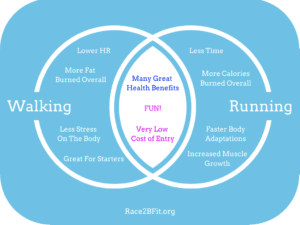
Credit: www.race2bfit.org
Benefits Of Walking For Fat Loss
Walking is a simple and effective way to lose fat. It burns calories steadily and helps improve overall health. Many people find walking easier to start and keep doing than running. The benefits of walking for fat loss go beyond just burning calories. It supports your body in a gentle, sustainable way.
Low Impact And Joint Friendly
Walking puts less stress on your joints than running. It is gentle on knees, hips, and ankles. This makes walking a safe choice for people of all ages. Those with joint pain or injuries can still walk without much discomfort. It lowers the risk of injury while helping burn fat.
Sustainable Long-term Exercise
Walking can be done every day without much strain. It fits easily into daily routines, like walking to work or in the park. Because it feels easier, people stick with it longer. Consistency is key for fat loss, and walking supports that well.
Boosting Metabolism Gradually
Walking raises your metabolism slowly but steadily. This means your body burns more calories even after you stop. It helps keep your metabolism active without overworking your body. Over time, this gradual boost aids in losing fat and keeping it off.
Advantages Of Running For Fat Loss
Running burns more calories than many other activities. It helps you lose fat faster. It also improves your heart and lung health. Running makes your body burn calories even after you stop. These benefits make running a strong choice for fat loss.
High Calorie Burn
Running burns a lot of calories in a short time. Your body works hard to keep up the pace. This uses more energy than walking. The faster you run, the more calories you burn. This helps reduce fat quickly.
Improved Cardiovascular Health
Running strengthens your heart and lungs. A healthy heart pumps blood better. This improves your endurance and energy. Better cardiovascular health supports more fat loss. It helps your body use fat as fuel.
Afterburn Effect Explained
After running, your body keeps burning calories. This is called the afterburn effect. It happens because your body repairs and recovers. The effect can last for hours. This means more fat loss even at rest.
Calorie Comparison Between Walking And Running
Understanding calories burned during walking and running helps choose the best exercise for fat loss. Both activities burn calories but at different rates. This section breaks down calorie burning to help you decide.
Calories Burned Per Minute
Running burns more calories per minute than walking. On average, running burns about 10 to 16 calories each minute. Walking burns around 3 to 7 calories per minute. The faster the pace, the higher the calorie burn. Running at a steady pace uses more energy quickly.
Effect Of Intensity And Duration
Intensity affects calorie burn a lot. Running is higher intensity than walking. Longer exercise time increases total calories burned. Walking for a longer time can burn as many calories as short running sessions. Combining intensity and duration shapes fat loss results.
Role Of Body Weight
Body weight changes calorie burn rates. Heavier people burn more calories doing the same activity. For example, a 180-pound person burns more calories than a 130-pound person walking or running. Body weight influences energy use and fat loss potential.
Impact On Muscle And Metabolism
Muscle use and metabolism play key roles in fat loss. Exercises that engage muscles more can boost metabolism. This helps burn calories even after exercise. Both walking and running affect muscles and metabolism differently. Understanding these differences can guide your fat loss plan.
Muscle Engagement In Walking
Walking mainly works the leg muscles. Your calves, thighs, and hips get steady movement. This activity is low impact and gentle on joints. Muscles get toned but not heavily stressed. Walking uses muscles in a consistent, moderate way. It builds endurance more than strength.
Muscle Engagement In Running
Running activates more muscles at higher intensity. It works calves, thighs, hips, and core strongly. The fast pace causes muscles to contract harder. This builds strength and muscle tone quickly. Running also challenges stabilizing muscles for balance. It creates more muscle fatigue, boosting recovery needs.
Metabolic Rate Differences
Running raises metabolism more than walking. It burns more calories per minute during exercise. After running, the body uses energy to recover. This keeps metabolism elevated longer post-workout. Walking increases metabolism but in a milder way. It supports steady fat loss through consistent activity.
Suitability For Different Fitness Levels
Walking and running both help burn fat. Each suits different fitness levels. Choosing the right one prevents injury and keeps you motivated. This section explains who benefits most from walking or running.
Fat loss depends on consistency and effort. The easier option for beginners is often walking. Advanced exercisers may find running more effective. Safety matters for all levels.
Beginners And Walking
Walking is gentle on the body. It builds fitness without strain. Beginners gain stamina with low injury risk. Walking helps improve heart health and burn calories. It boosts confidence before trying harder workouts. Start slow and increase time gradually. This keeps motivation high and body safe.
Intermediate And Advanced Runners
Running burns more calories in less time. It suits those with better fitness and strength. Intervals or steady runs improve endurance and fat loss. Advanced runners push their limits safely. They recover faster and handle higher impact. Proper training plans help avoid burnout. Running challenges the body for faster results.
Injury Risks And Prevention
Running has a higher risk of injury than walking. Common issues include shin splints and knee pain. Proper shoes and warm-ups reduce these risks. Walking lowers joint stress and muscle strain. Both need good technique and rest days. Listen to your body to prevent problems. Injury prevention keeps your fat loss journey steady.
Combining Walking And Running For Best Results
Combining walking and running creates a powerful fat loss strategy. Walking burns calories gently, perfect for recovery and long sessions. Running raises your heart rate fast, boosting calorie burn in less time. Together, they keep workouts varied and prevent boredom. This mix helps you stay active without injury. It fits many fitness levels and goals.
Interval Training Benefits
Interval training mixes walking and running in short bursts. It speeds up metabolism and burns more fat. Your body works hard during running and recovers while walking. This balance pushes your limits safely. Intervals improve heart health and stamina too. You burn calories even after the workout ends. This method saves time and keeps workouts exciting.
Balancing Intensity And Recovery
Switching between running and walking controls workout intensity. Running raises your heart rate quickly. Walking lowers it and helps muscles recover. This balance stops overtraining and reduces injury risk. Recovery boosts energy for the next running burst. It also prevents burnout and keeps motivation high. Your body adapts better with proper rest.
Creating A Fat Loss Routine
Start with a warm-up walk for five to ten minutes. Then, run for one to two minutes at a steady pace. Walk for two to three minutes to recover. Repeat this cycle five to ten times. End with a cool-down walk to relax muscles. Adjust running and walking times based on your fitness. Consistency is key for steady fat loss. Aim for three to five sessions per week.
Additional Tips For Maximizing Fat Loss
Maximizing fat loss takes more than just walking or running. Small changes in daily habits can boost your results. Focus on key areas beyond exercise to see better progress. Here are some simple tips to help you lose fat faster and keep it off.
Nutrition And Hydration
Eating the right foods supports your fat loss goals. Choose whole foods like fruits, vegetables, lean proteins, and whole grains. Avoid sugary drinks and processed snacks. Drink plenty of water to stay hydrated. Water helps control hunger and improves your energy.
Consistency And Patience
Fat loss happens over time. Exercise and healthy eating need to be regular. Stick to your routine even if results are slow. Small steps add up to big changes. Trust the process and keep going every day.
Tracking Progress
Keep a record of your workouts and meals. Note changes in weight, clothes fit, or energy levels. Tracking helps you see what works and what does not. Use simple tools like a journal or an app. Adjust your plan based on progress data.
:max_bytes(150000):strip_icc()/walking-vs-running-for-weight-loss-3973819-0922-eed4ecf84ccd4f1ca9d72d6d9f302f18.jpg)
Credit: www.verywellfit.com

Credit: fitbod.me
Frequently Asked Questions
Is Walking Or Running Better For Fat Loss?
Running burns more calories per minute than walking, aiding faster fat loss. However, walking is easier to sustain daily, promoting consistent fat loss over time.
How Many Calories Does Walking Burn Compared To Running?
Walking burns about 200-300 calories per hour, while running burns 600-900 calories per hour. The exact amount depends on speed, weight, and intensity.
Can Walking Alone Help Me Lose Belly Fat?
Yes, walking boosts metabolism and burns calories, reducing belly fat gradually. Combine it with a healthy diet for effective fat loss results.
Is Running More Effective For Long-term Weight Loss?
Running offers higher calorie burn, making it effective for weight loss. But it may cause injury if done excessively, so balance with other activities.
Conclusion
Both walking and running help burn fat effectively. Running burns more calories in less time. Walking is easier and gentler on joints. Consistency matters more than speed or distance. Choose the activity you enjoy and can keep. Small daily efforts lead to big results.
Combine exercise with healthy eating for best fat loss. Stick with your routine and stay patient. Your body will change with time and effort. Fat loss is a journey, not a race.
