
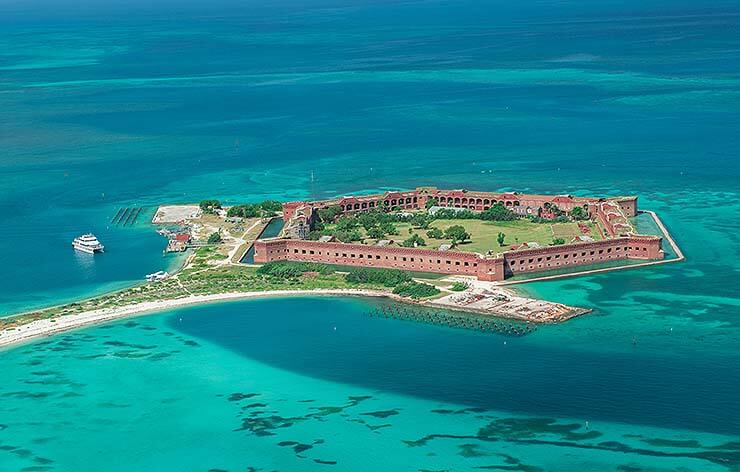
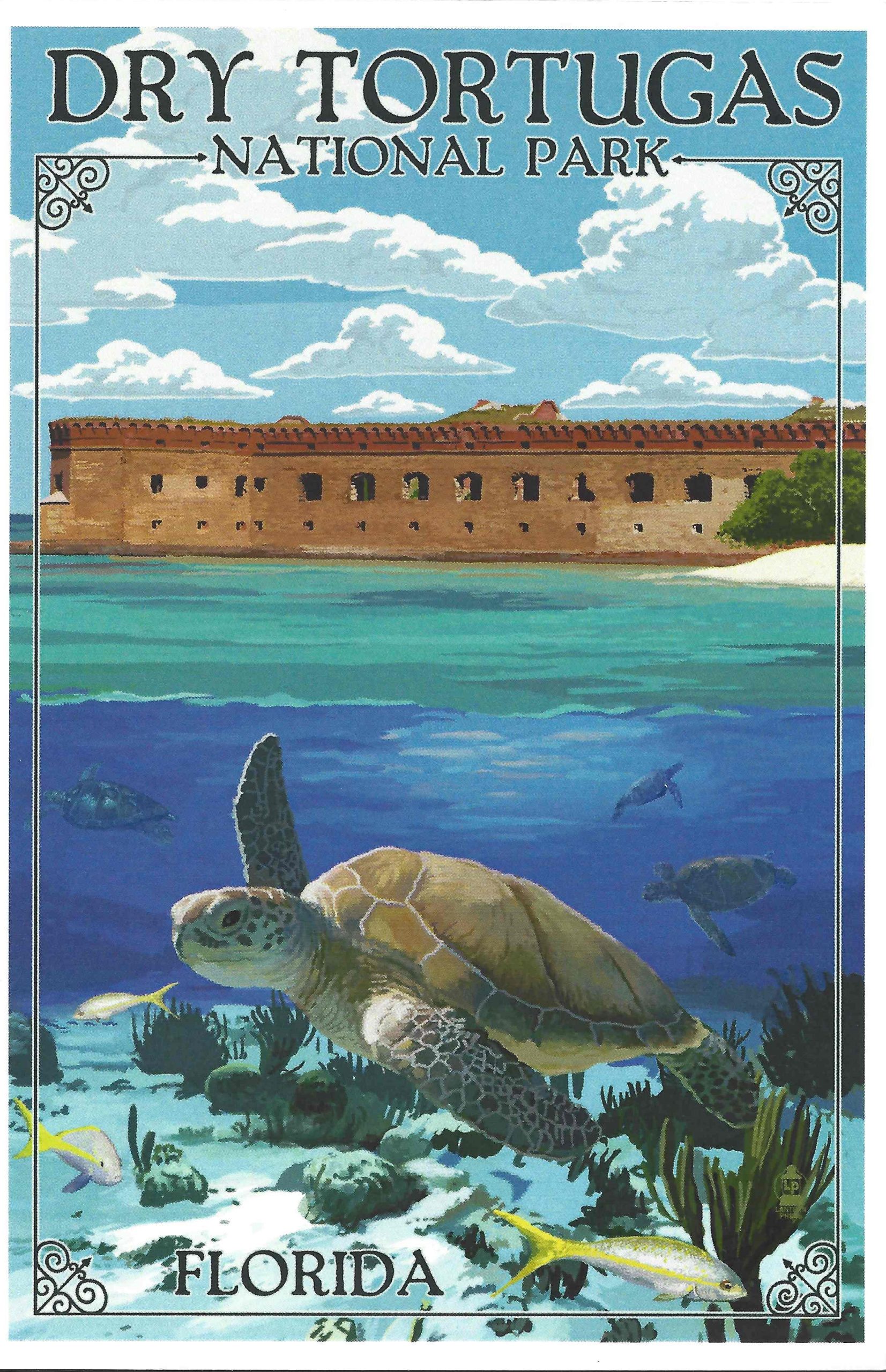
The Dry Tortugas is a unique national park located 70 miles west of Key West, Florida. Known for its crystal-clear waters, remote location, and fascinating history, the park covers 100 square miles of open sea and small islands. Most visitors are drawn by its underwater beauty, marine life, and the iconic Fort Jefferson. If you’re looking for an adventure away from crowds, Dry Tortugas offers experiences you won’t find anywhere else in the United States.
Getting To Dry Tortugas
Reaching the park is an adventure itself. There are no roads or bridges. Most people arrive by ferry, seaplane, or private boat. The ferry from Key West takes about 2 hours and is the most common way to visit. Seaplane trips are quicker and offer stunning aerial views, but they cost more. Remember, there are no shops or restaurants in the park, so bring all food, water, and gear you’ll need.
Top Things To Do In Dry Tortugas
1. Tour Fort Jefferson
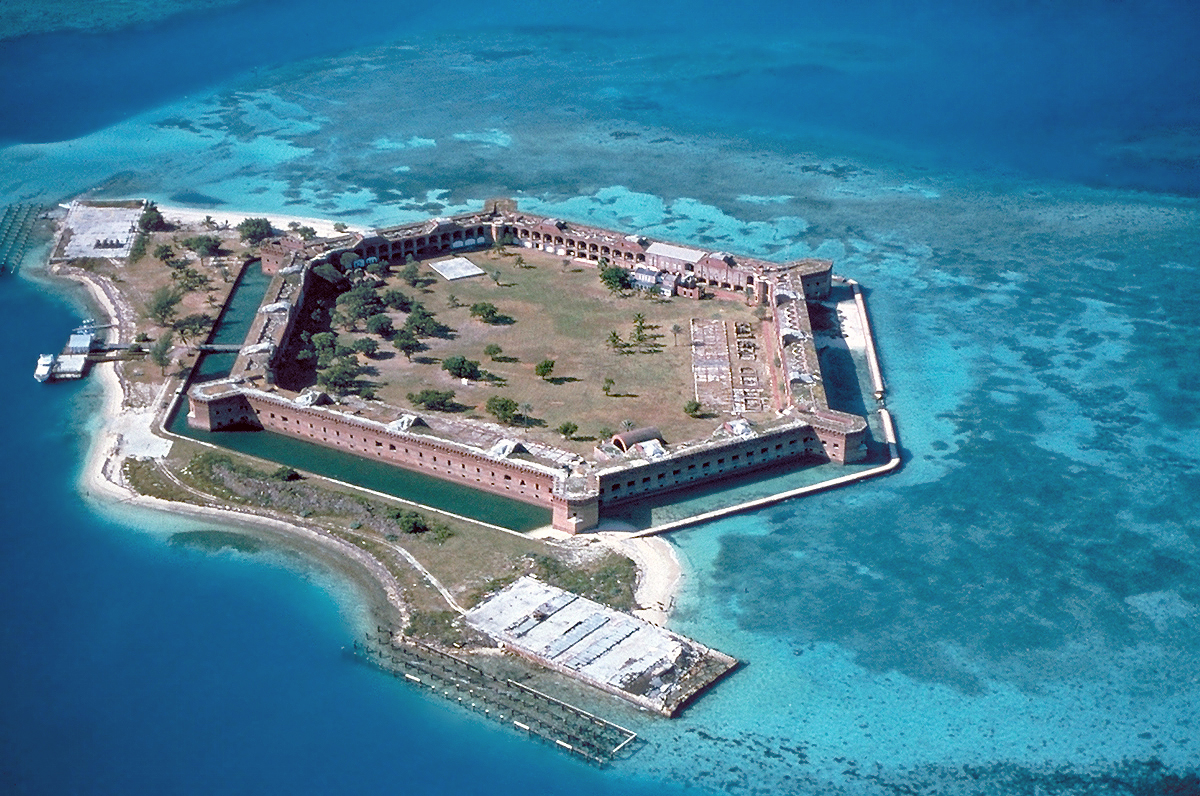
The main island, Garden Key, is home to Fort Jefferson, one of the largest brick forts in the Americas. Built in the 1800s, this fort played a key role in coastal defense. You can walk the massive walls, explore the dark corridors, and learn about the fort’s history. Ranger-led tours are available, and they share stories about the fort’s construction, military life, and even Civil War prisoners.
2. Snorkeling And Swimming
The waters around Dry Tortugas are famous for their clear visibility and vibrant marine life. Popular snorkeling spots include:
- The moat wall around Fort Jefferson, where you’ll see colorful fish and coral
- The South Swim Beach, great for beginners
- The North Swim Beach, less crowded with calm waters
You might spot sea turtles, nurse sharks, and schools of tropical fish. The coral reefs here are among the healthiest in the Florida Keys.
3. Bird Watching
Dry Tortugas is a hotspot for birdwatchers, especially during spring migration. Over 300 bird species have been recorded. Look for sooty terns, brown noddies, and magnificent frigatebirds nesting on nearby Bush Key. Bring binoculars for the best views.
4. Camping
For a real adventure, consider overnight camping on Garden Key. There are only 10 campsites, so reservations are essential. Camping lets you enjoy the park’s quiet evenings, stargazing with almost no light pollution. Facilities are basic—just picnic tables and composting toilets—but waking up with the sun over the Gulf is unforgettable.
5. Kayaking And Paddleboarding
The park’s calm, shallow waters are perfect for kayaking or paddleboarding. You can paddle around Garden Key, explore the moat, or visit nearby islands like Bush Key (when open). Bring your own gear; there are no rentals on the islands.
6. Fishing
Fishing is allowed in certain areas of the park. Bring your own tackle and follow park rules to protect the fragile reef. Common catches include snapper, grouper, and barracuda. Spearfishing and lobstering are not allowed.
7. Visiting Loggerhead Key And The Lighthouse
Loggerhead Key is the largest island in the park. It’s home to a historic lighthouse built in 1858. While there are no ferries to Loggerhead Key, experienced kayakers often make the 3-mile trip from Garden Key. The beaches here are untouched, and the reefs are teeming with life.
Credit: www.drytortugas.com
Key Attractions Compared
To help plan your visit, here’s a quick look at the main attractions and what makes each one unique.
| Attraction | Main Highlight | Best for |
|---|---|---|
| Fort Jefferson | Historic fort tours | History lovers |
| Snorkeling Beaches | Vibrant reefs, clear water | Snorkelers/swimmers |
| Birdwatching Areas | Rare nesting birds | Bird enthusiasts |
| Camping Sites | Stargazing, solitude | Outdoor adventurers |
| Loggerhead Key | Lighthouse, remote beaches | Experienced kayakers |
Essential Tips For Visitors
- Bring all supplies: There’s no fresh water, food, or shade available.
- Protect yourself from the sun: Use reef-safe sunscreen, hats, and cover-ups.
- Check the weather: Storms can quickly change plans, especially for campers.
- Respect wildlife: Do not feed birds or disturb turtles.
- Plan ahead: Tours, ferries, and campsites fill up months in advance.
Many first-timers forget how remote the park is. Make a checklist and double-check before you leave Key West.
Credit: floridanationalparksassociation.org
Interesting Facts About Dry Tortugas
- The park gets its name from the Spanish word “tortugas” (turtles) and “dry” because there’s no fresh water.
- Fort Jefferson has over 16 million bricks, making it one of the largest masonry structures in the Americas.
- The waters are part of the third largest coral reef system in the world.
- The park was once used as a prison during the Civil War.
- Loggerhead Key’s lighthouse is still active and helps guide ships safely.
Park Fees And Facilities
Admission to Dry Tortugas National Park is $15 per person, valid for seven days. Ferry and seaplane tickets include this fee. There are very basic facilities:
| Facility | Available? | Notes |
|---|---|---|
| Restrooms | Yes | Composting toilets only |
| Drinking water | No | Bring your own supply |
| Shops/Food | No | No stores or restaurants |
| Trash collection | No | Pack out all trash |
| Cell service | No | Very limited to none |
Credit: en.wikipedia.org
Conservation Efforts
Dry Tortugas is more than a beautiful place; it’s a critical sanctuary for coral, fish, and seabirds. The park’s remote location helps protect fragile habitats. Visitors play a key role by following rules, not touching wildlife, and using eco-friendly products. Overfishing and pollution are threats, but strong regulations help preserve this rare ecosystem. For more on conservation, see the National Park Service.
Frequently Asked Questions
How Do I Get To Dry Tortugas National Park?
You can reach the park by ferry, seaplane, or private boat from Key West. The ferry is the most popular option and takes about 2 hours each way.
What Should I Bring For A Day Trip?
Bring water, food, sun protection, snorkeling gear, and a camera. There are no shops, so you must be self-sufficient.
Can I Camp In The Park?
Yes, camping is allowed on Garden Key with a permit. Spaces are limited, and you must bring all supplies, including water.
Is The Snorkeling Safe For Beginners?
Yes, the snorkeling beaches have calm, shallow water. Life jackets are available, but always stay aware of currents and weather.
When Is The Best Time To Visit?
The best time is November to April, when the weather is cooler and there are fewer storms. Spring is excellent for birdwatching.
Dry Tortugas National Park offers a rare mix of natural beauty, history, and adventure. Whether you come for the snorkeling, birdwatching, or to explore Fort Jefferson, you’ll leave with memories of one of America’s most untouched places. Plan well, respect the park’s rules, and enjoy this remote paradise.
