
Flying With Camping Gear: Practical Guide For Travelers
Traveling by plane with camping gear can feel tricky. Many campers worry about what is allowed, what fits in bags, and how to pack everything safely. The rules can change depending on the airline, the country, and the type of camping equipment.
But with good planning, you can enjoy the freedom of the outdoors without any airport stress. This article covers everything you need to know—from packing tents and stoves to handling airport security—so you can fly with your camping gear smoothly and confidently.
Understanding Airline Regulations For Camping Gear
Airlines and airports have strict rules to keep everyone safe. These rules affect what camping items you can bring, where you can pack them (checked or carry-on), and how you must prepare them.
Common Restrictions
Most airlines allow tents, sleeping bags, and camping clothes in checked luggage. However, some items are banned or need special handling:
- Camping stoves: Allowed if empty and clean. No fuel can remain.
- Fuel canisters: Almost always banned, even if empty.
- Knives and tools: Must go in checked luggage. Folding knives are usually okay, but some regions ban all blades.
- Aerosol bug sprays: Often restricted. Check the label and airline rules.
- Fire starters: Matches and lighters have limits; usually, only one small lighter is allowed in carry-on.
How Airlines Differ
Airlines vary in their rules. For example, U.S. airlines follow TSA guidelines, while European carriers use local security rules. Always check your airline’s website before you pack.
Here’s a quick comparison of common camping items across three major airlines:
| Item | Allowed in Carry-on | Allowed in Checked | Special Notes |
|---|---|---|---|
| Tent | No | Yes | Remove stakes |
| Sleeping Bag | Yes | Yes | Can compress for carry-on |
| Camping Stove | No | Yes | Must be empty/clean |
| Fuel Canister | No | No | Banned everywhere |
| Knife | No | Yes | Check blade length |
Tip: Print your airline’s camping gear policy and carry it when you travel. If security questions your equipment, you can show the rules.
Security Screening
Airport security may open your bag to check camping gear. Clean your stove and remove any fuel smell. Put sharp items in a sheath or wrap them to prevent injury.
Non-obvious insight: Some security agents are not familiar with camping gear. If you explain calmly and show documentation, you’re more likely to pass without hassle.
Packing Camping Gear For Air Travel
Packing your camping gear for a flight is different from packing for a car or hiking trip. You need to consider weight, size, and security checks.
Choosing The Right Bags
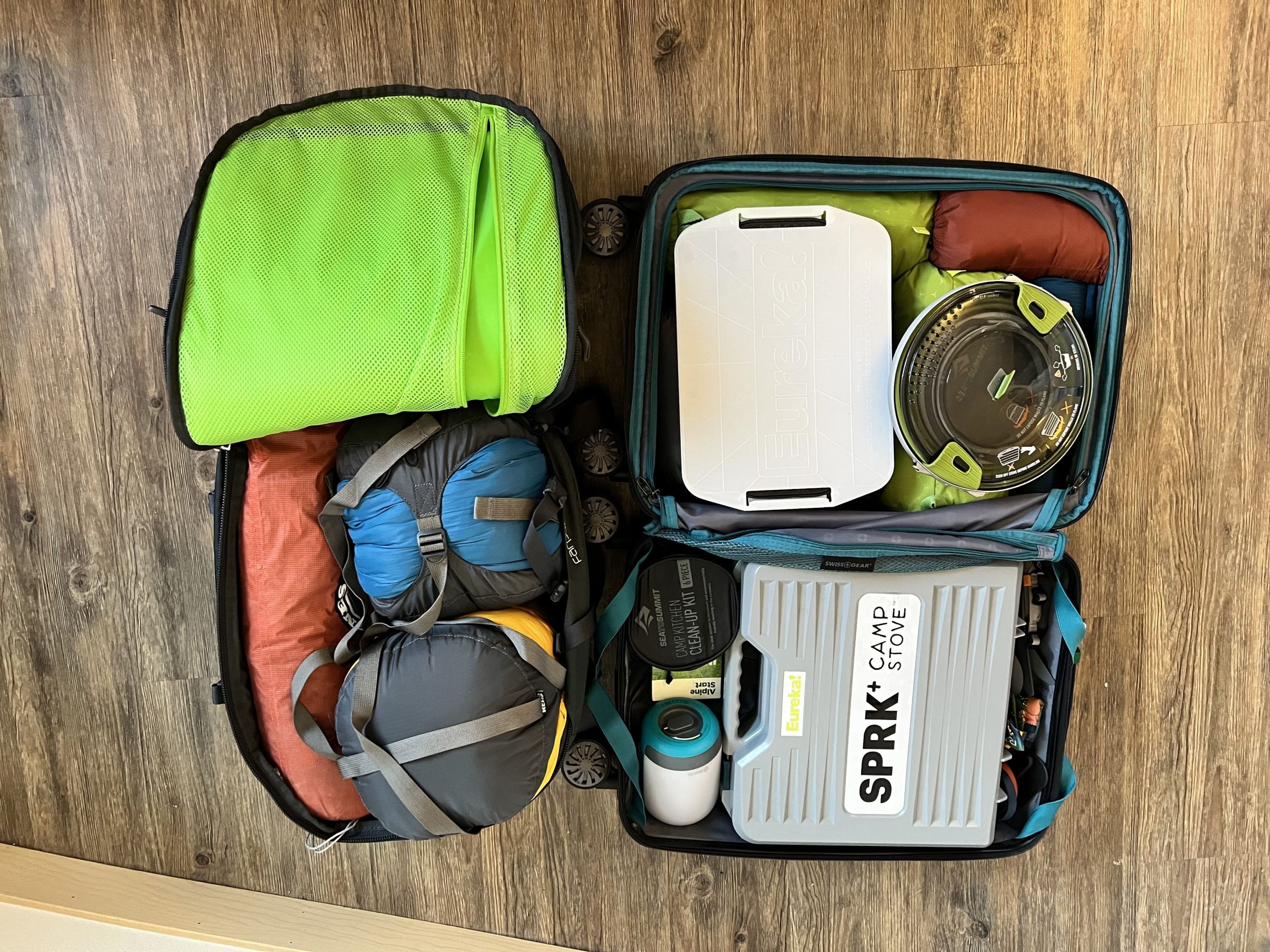
Use strong, durable bags. A duffel bag or hard-shell suitcase is best for checked items. Backpacks can work, but make sure they fit airline size limits.
If you need to carry fragile items (like a stove), use padding. Clothing, sleeping bags, or bubble wrap can protect them.
Organizing Gear
Keep gear organized so security can inspect it easily. Pack sharp objects, stoves, and tent stakes at the top of your bag.
Pro tip: Put camping gear in clear plastic bags inside your main luggage. It makes inspection faster and keeps things clean.
Weight And Size Limits
Most airlines allow checked bags up to 50 lbs (23 kg) and a maximum size of 62 linear inches (length + width + height). Oversized or overweight bags cost extra. Weigh your bags at home before leaving.
What To Pack In Carry-on
For carry-on, bring only items you need during the flight or that are allowed. Examples:
- Sleeping bag
- Camp clothing
- Maps and guidebooks
- Small flashlight (no lithium batteries unless allowed)
Avoid packing knives, tent poles, or stoves in carry-on—they will be confiscated.
Packing Checklist
Here’s a basic packing list for a camping flight:
- Tent (without stakes in carry-on)
- Sleeping bag
- Camping stove (clean, empty)
- Camping clothes
- Headlamp or flashlight
- Portable water filter (check airline rules)
- Knife or multitool (checked only)
- Food (sealed packages)
- First aid kit
Important: Always check your destination’s rules. Some countries ban certain gear like pepper spray or specific knives.

Credit: www.roamtheouterspace.com
Dealing With Banned Or Restricted Items
Some camping items just can’t fly. Knowing what’s banned saves time and money.
Commonly Banned Items
- Fuel canisters: These are almost always banned, even if empty. Buy fuel at your destination.
- Bear spray: Usually forbidden, even in checked luggage.
- Large axes or machetes: Many airlines ban these. Smaller tools may be allowed.
- Aerosol cans: Bug spray, sunscreen, and deodorants must follow liquid rules (under 3.4 oz for carry-on).
What To Do Instead
If an item is banned:
- Rent or buy it at your destination.
- Ship it ahead using ground transport if allowed.
- Contact local camping stores for availability.
Non-obvious insight: In popular camping regions, gear rental is common and often cheaper than paying for extra luggage.
Handling Camping Stoves And Fuel
Camping stoves are allowed on planes, but only if they are empty and clean. Fuel is almost always banned.
Cleaning Your Stove
Before flying:
- Empty all fuel from the stove.
- Let it air out for several hours to remove smell.
- Wipe down the stove with a dry cloth.
- Pack it in a clear bag.
If your stove smells like fuel, security may confiscate it.
Finding Fuel At Your Destination
Most airports near popular camping spots have outdoor stores nearby. Check online for store hours and types of fuel available.
Pro tip: Email or call stores ahead to confirm they have the fuel you need. Some regions only sell certain types (propane, butane, white gas).
Choosing Lightweight And Compact Camping Gear
Airline luggage space is tight. Choosing ultralight camping gear helps you fit more in your bags and stay under weight limits.
Ultralight Gear Examples
- Backpacking tents: Often under 3 lbs and pack small.
- Down sleeping bags: Compress to a small size and weigh less.
- Titanium cookware: Light and strong.
- Collapsible utensils: Save space.
Comparing Weight And Size
Let’s look at a comparison of traditional vs. ultralight gear:
| Gear Item | Traditional Weight | Ultralight Weight | Size Packed |
|---|---|---|---|
| Tent | 7 lbs | 2.8 lbs | Small stuff sack |
| Sleeping Bag | 4 lbs | 1.6 lbs | Compression bag |
| Cookware Set | 2 lbs | 0.8 lbs | Nesting pots |
Tip: Ultralight gear costs more, but saves money on baggage fees and makes travel easier.
Packing For Different Trip Types
- Car camping: You can bring heavier gear if you rent a car at your destination.
- Backpacking: Choose the lightest gear possible.
- Family camping: Try to share gear (one stove, one tent) to reduce bag count.
International Travel With Camping Gear
Flying to another country adds extra challenges. Customs rules, security checks, and language barriers can make things confusing.
Customs Rules
Some countries ban specific camping items:
- Knives: Blade length limits change by country.
- Pepper spray: Often banned.
- Drones: Some countries require permits.
Check your destination’s customs website before you pack.
Language Barriers
When explaining your gear at security, simple English and clear gestures help. For example, say, “This is a clean camping stove. No fuel inside. ”
Import Taxes
Some countries charge import taxes for new camping gear. If your gear looks brand-new, customs may ask for proof of purchase.
Non-obvious insight: Used gear is less likely to attract extra taxes. Remove price tags and keep receipts.
Credit: www.mystboutiquehotel.com
Renting Or Buying Camping Gear At Your Destination
Sometimes it’s easier to rent or buy gear locally than carry everything on the plane.
Advantages Of Renting
- No airline restrictions
- No baggage fees
- Access to local gear suited to the environment
Where To Rent
Most national parks and tourist towns have outdoor equipment rental shops. Ask about prices, gear quality, and availability.
Buying Gear
If you plan to camp often at your destination, buying gear can save money. Look for used gear stores or local outdoor shops.
Renting Vs. Flying With Gear
Here’s a comparison of the cost and convenience:
| Factor | Flying With Gear | Renting Locally |
|---|---|---|
| Cost | Baggage fees ($30–$100) | Rental fees ($10–$40/day) |
| Convenience | Must pack, clean, and carry | Pick up at destination |
| Quality | Your own gear | Varies; may be worn |
| Risk | Lost bags or confiscation | Gear availability |
Tips For Smooth Airport Experience
Flying with camping gear can be simple with good preparation. Here are practical tips:
- Arrive early: Security checks for camping gear take time.
- Label everything: Put your name and contact info on bags and gear.
- Keep paperwork: Bring receipts for expensive gear and print airline rules.
- Check-in online: Saves time and helps avoid last-minute surprises.
- Pack smart: Separate banned items and double-check before you leave.
- Use tracking tags: Attach electronic tags to your checked bags for easy location.
Non-obvious insight: If your gear is lost, airlines usually pay a fixed amount per bag. Take photos of packed gear for insurance claims.
Common Mistakes When Flying With Camping Gear
Travelers often make mistakes that cost time and money. Here’s what to avoid:
- Packing fuel canisters or items with fuel smell.
- Putting knives or sharp tools in carry-on.
- Exceeding bag weight or size limits.
- Forgetting to check destination rules.
- Not cleaning stoves properly.
- Packing too much gear for the trip type.
- Not labeling expensive items.
Helpful tip: Make a packing checklist and review it twice before leaving.
Case Studies: Real Travelers’ Experiences
Example 1: Backpacker Flying To Alaska
Anna planned a week-long trip in Alaska. She packed a backpacking tent, sleeping bag, and empty stove. At the airport, security stopped her because her stove smelled faintly of fuel. Anna explained and showed a printed TSA rule, but the stove was still confiscated. She rented a stove at her destination for $15/day.
Lesson: Clean stoves thoroughly and air them out for at least 24 hours.
Example 2: Family Camping In Spain
The Robinson family flew from New York to Madrid for a camping holiday. They packed gear in two duffel bags. At Madrid airport, customs checked their multitool and asked about blade length. The multitool was allowed since the blade was under 3 inches.
Lesson: Check blade rules for your destination.
Example 3: Solo Hiker In New Zealand
James flew to New Zealand with only carry-on luggage. He packed an ultralight sleeping bag, camp clothes, and headlamp. He rented a tent and stove in Queenstown. His trip was easy, and he avoided all baggage fees.
Lesson: Renting gear locally can be stress-free and cost-effective.

Credit: www.youtube.com
How To Ship Camping Gear Ahead
If you need to bring bulky or banned items, shipping them ahead can be helpful.
Steps To Ship Gear
- Choose a reliable shipping company.
- Pack gear securely in a sturdy box.
- Insure expensive items.
- Ship to your hotel or campsite.
- Track your package online.
Pro tip: Shipping takes time—send gear at least one week before your trip.
Shipping Costs
Shipping gear can cost $40–$150 depending on size, weight, and distance. Compare this to airline baggage fees before deciding.
Preparing For Different Weather And Camping Conditions
Your camping gear must match your destination’s climate. Research the weather and pack accordingly.
Cold Weather
- Bring warm sleeping bags (rated for low temperatures)
- Pack thermal clothing
- Use insulated pads
Hot Weather
- Choose lightweight tents
- Bring breathable clothing
- Pack extra water containers
Rainy Weather
- Waterproof your gear using dry bags
- Pack a rain fly for your tent
- Bring quick-drying clothes
Non-obvious insight: Airports in rainy regions may inspect for mud or dirt on gear to prevent spreading pests.
Insurance For Camping Gear
Travel insurance can protect your gear from loss or theft.
What Travel Insurance Covers
- Lost baggage
- Stolen gear
- Damaged items
Tip: Keep receipts and photos of your gear for claims.
Choosing The Right Policy
Look for policies that cover outdoor equipment and have high payout limits.
Environmental Concerns And Responsible Camping
Flying with camping gear makes it easier to explore remote places. But always camp responsibly.
Leave No Trace
Follow Leave No Trace principles:
- Pack out all trash
- Use established campsites
- Respect wildlife
Avoid Spreading Pests
Clean boots, tents, and gear to prevent carrying pests or seeds between regions.
Helpful tip: Some countries require cleaning proof for gear to protect local habitats.
Flying With Kids’ Camping Gear
Traveling with children adds extra challenges. Kids’ gear is often smaller but must follow the same rules.
Packing Kids’ Gear
- Use small backpacks for kids
- Pack familiar items (favorite sleeping bag, toy)
- Double-check for banned items
Entertainment For Flights
Bring books, games, and snacks to keep kids happy during the journey.
Flying With Pets And Camping Gear
If you camp with a pet, you need to plan extra carefully.
Rules For Pet Travel
- Airlines require health certificates
- Pets must fly in approved carriers
- Pack pet food and supplies in checked luggage
Pet Camping Gear
- Portable water bowls
- Lightweight pet tent or sleeping pad
- Leash and identification tags
Budgeting For Camping Flights
Flying with camping gear can get expensive. Plan your budget before you book.
Typical Costs
- Baggage fees: $30–$100 per bag
- Rental fees at destination: $10–$40/day per item
- Shipping gear: $40–$150
- Insurance: $20–$50
Pro tip: Compare costs for flying, renting, and shipping to choose the best option.
Useful Resources For Flying With Camping Gear
- Airline websites: Check baggage and gear rules
- Outdoor gear rental shops: Find local rental options
- Customs websites: Review import rules for your destination
- Travel forums: Read real experiences
For official travel rules, see the TSA’s What Can I Bring? guide.
Frequently Asked Questions
What Camping Gear Can I Bring In My Carry-on?
You can bring sleeping bags, camp clothing, and small flashlights in your carry-on. Knives, stoves, tent poles, and fuel must go in checked luggage or are banned.
Can I Bring A Camping Stove On A Plane?
Yes, but it must be empty and clean. Remove all fuel and wipe the stove. Fuel canisters are banned.
How Do I Pack A Tent For Air Travel?
Remove tent stakes and pack the tent in your checked bag. Use a stuff sack and put stakes and poles in a separate pouch for easy inspection.
Is It Better To Rent Camping Gear At My Destination?
Renting is often easier and avoids airline restrictions. It can be cheaper if you only camp for a few days. Check local rental shops for availability and prices.
What Should I Do If My Camping Gear Is Lost During Travel?
Report lost baggage immediately at the airport. Use travel insurance if you have it. Take photos of your gear before you leave for easier claims.
Flying with camping gear takes extra preparation, but it opens up amazing adventures. With careful packing, knowledge of airline rules, and smart choices, you can enjoy the wild wherever you go. Whether you rent gear locally or bring your own, your camping trip starts with a smooth flight and peace of mind.
