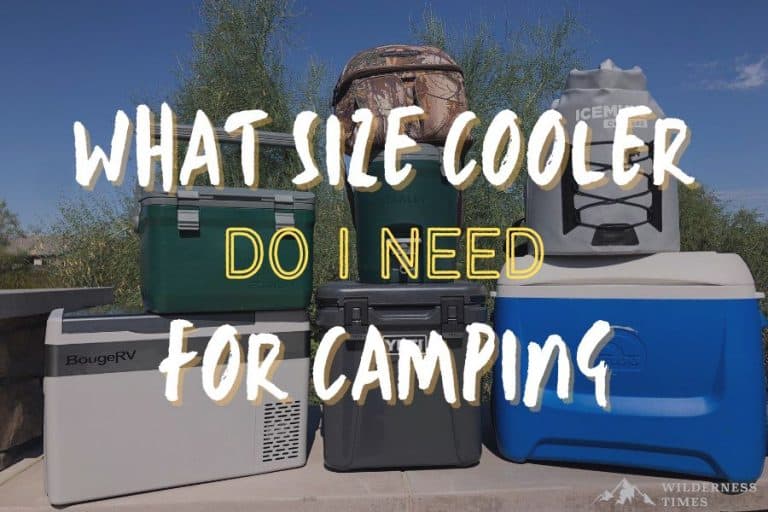
Camping is a break from the normal routine—a chance to enjoy nature, breathe fresh air, and share good times with friends or family. But, as every camper learns quickly, keeping your food and drinks fresh is a real challenge. The right cooler can make the difference between crisp salads and spoiled milk, cold drinks or warm disappointment. Still, with so many sizes and options out there, figuring out what size cooler you need for camping is not always simple.
Some campers guess and hope for the best. Others end up with a cooler that’s too small, wasting time running to the store, or too big, making packing and carrying a headache. If you’ve ever asked yourself, “How big should my camping cooler be?
”—you’re not alone.
Let’s dive deep into the factors that matter, real-world examples, and some smart tips so you’ll always have the right size cooler for every camping adventure.
Why Cooler Size Matters For Camping
Choosing the right cooler size is about more than just comfort. It affects your food safety, meal planning, and even your group’s mood during the trip.
Food safety comes first. A cooler that’s too full can’t hold enough ice, and warm spots can cause food to spoil. On the other hand, too much empty space means the cooler won’t stay cold for long.
Space and weight also play a role. A giant cooler might hold everything, but it’s heavy and takes up valuable car or tent space. Smaller coolers are easier to carry but might force you to skip favorite foods.
Practicality is key. You need enough room for food, drinks, and ice—but not so much that you’re hauling unnecessary bulk.
Understanding Cooler Capacity: Quarts, Liters, And What They Mean
Coolers are usually measured in quarts (in the U.S.) or liters. But what does that mean in real life?
- 1 quart = 0.95 liters (almost 1 liter)
- 4 quarts = 1 gallon
Manufacturers list cooler size by total interior volume. But remember: not all of that is usable, since ice and food both take space.
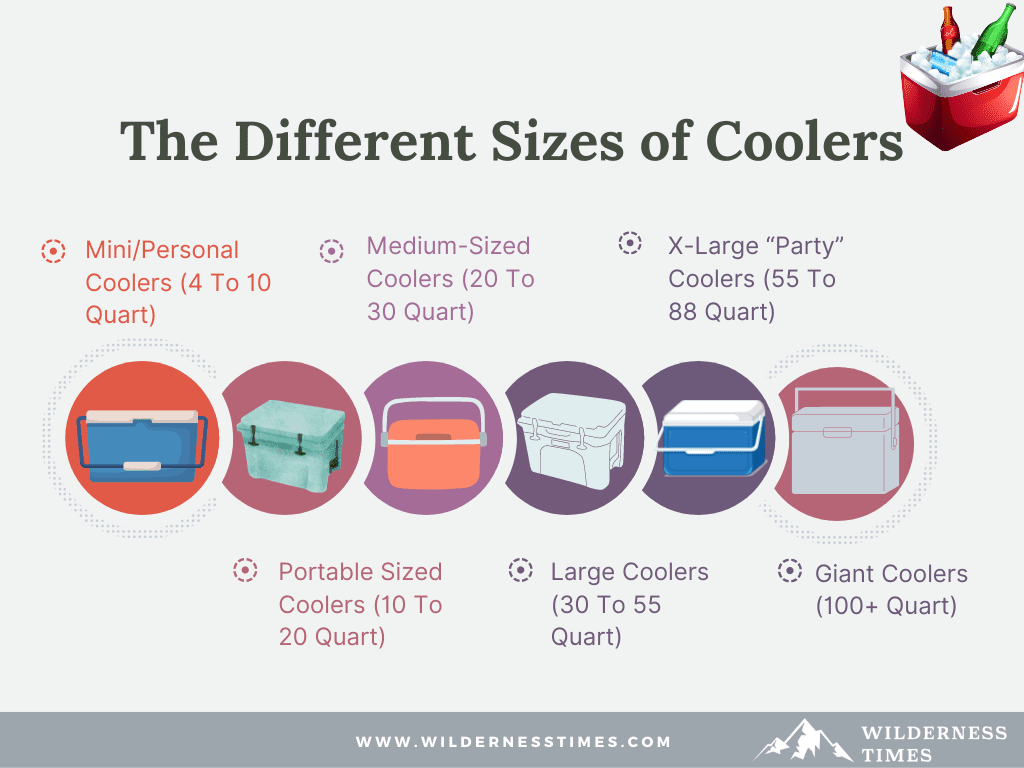
Here’s a quick look at what different cooler sizes mean for camping:
| Cooler Size (Quarts) | Approx. Liters | Common Use | Fits (General Guide) |
|---|---|---|---|
| 10-20 qt | 9-19 L | Day trip, solo | 6-18 cans + ice |
| 25-35 qt | 24-33 L | Weekend, 1-2 people | 24-36 cans + ice |
| 40-50 qt | 38-47 L | 2-3 days, small group | 48-72 cans + ice |
| 60-70 qt | 57-66 L | Family or group, 3+ days | 90-110 cans + ice |
| 100+ qt | 95+ L | Large group, long trips | 150+ cans + ice |
Non-obvious insight: The “can count” is based on empty cans stacked, not cans plus food plus ice. Real usage space is less if you bring bulky food or large bottles.
Key Factors That Decide Cooler Size
1. Trip Length
The longer you camp, the more food and ice you’ll need. For a 1-2 night trip, a smaller cooler may work. For 3+ nights, you’ll need more space for both supplies and enough ice to keep things cold.
2. Group Size
A solo camper or couple can get by with a 25-35 qt cooler. For families or groups of 4 or more, look at 50-70 qt models. Larger groups or longer trips may require 100 qt or even multiple coolers.
3. Food And Drink Habits
Are you packing fresh food, or mostly cans and dry snacks? Fresh meat, dairy, and vegetables take more space and need more ice than cans of soda or beer. If you love to cook at camp, plan for more capacity.
Example: A family who wants eggs, meat, and milk needs a bigger cooler than a group that’s fine with peanut butter sandwiches and trail mix.
4. Ice-to-food Ratio
A common mistake is filling the cooler with food and little ice. For best results, aim for 2 parts ice to 1 part food by volume. If your cooler is 50 quarts, plan for about 33 quarts of ice and 17 quarts of food.
Pro tip: Pre-chill your cooler and food before packing. This reduces how much ice you need and keeps things colder longer.
5. Cooler Type And Insulation
Not all coolers hold cold equally. High-end rotomolded coolers (like Yeti or RTIC) keep ice longer and use space better than basic foam models. If you have a premium cooler, you might get away with a slightly smaller size, since you need less ice for the same cooling.
6. Car Space And Carrying Needs
A huge cooler is great—until you try to fit it in your car. Make sure the cooler fits with your other gear and is light enough to move.
Non-obvious insight: For remote sites, two medium coolers (easier to carry) are often better than one giant one.
Common Cooler Sizes And Their Ideal Uses
Let’s break down what different cooler sizes are best for, with real-life examples and practical advice.
10-20 Quart Coolers
Best for: Solo trips, day hikes, or keeping drinks cold.
- Fits lunch, a few drinks, and a small amount of ice.
- Great for keeping in your car for road snacks.
- Not enough for overnight trips with meals.
25-35 Quart Coolers
Best for: 1-2 people, 1-2 nights.
- Holds drinks, sandwiches, and some fresh food.
- Light enough to carry easily.
- For 2+ nights, you’ll need to restock ice or food.
40-50 Quart Coolers
Best for: Small families, 2-3 people, 2-3 nights.
- Holds enough for meals and drinks.
- Enough ice capacity for a weekend.
- Can get heavy when full.
60-70 Quart Coolers
Best for: Families or small groups, 3+ nights.
- Room for meat, dairy, veggies, plus drinks.
- Holds ice for long weekends.
- Bulky; check if it fits your car trunk.
100+ Quart Coolers
Best for: Large groups, week-long trips, or base camps.
- Needed if you have 6+ people or extended trips.
- Can hold large amounts of food and ice.
- Very heavy—consider two people to lift.
How To Estimate The Right Cooler Size For Your Trip
Let’s walk through a real-world planning example.
Example: 2 Adults, 2 Kids, 3-day Trip
- 3 breakfasts, 3 lunches, 3 dinners
- 12 bottles of water, 6 sodas, 2 cartons milk, 1 pack eggs, 2 packs hot dogs, fresh veggies, snacks
Estimate:
- Food and drink volume: ~30 quarts
- Ice needed (2: 1 ratio): ~60 quarts
- Total: 90 quarts
But, packing smarter (pre-chilling, compact food, frozen water bottles) can reduce ice needs. A 60-70 quart cooler is usually enough for this group and length.
Tip: Pack some drinks in a separate small cooler to avoid opening the main cooler often (which lets cold escape).
The Impact Of Cooler Type On Size Choice
There are two main types of coolers for camping:
- Standard coolers (basic, cheaper, thinner walls)
- Premium rotomolded coolers (thicker insulation, expensive, hold cold longer)
| Cooler Type | Ice Retention (Approx.) | Weight (Empty) | Usable Space | Price Range |
|---|---|---|---|---|
| Standard | 1-2 days | Light | More | $20-80 |
| Premium Rotomolded | 4-7 days | Heavy | Less (thick walls) | $150-400 |
Non-obvious insight: Premium coolers’ thick insulation means they have less interior space than their outside size suggests. For example, a 65-quart rotomolded cooler might be the same outside size as a 90-quart standard cooler.

Credit: blog.campingworld.com
How To Pack A Cooler Efficiently
No matter what size cooler you choose, smart packing makes a big difference.
- Pre-chill your cooler. Put ice in for a few hours before loading food.
- Freeze water bottles or juice boxes. They keep food cold and become cold drinks later.
- Pack in layers. Put raw meat at the bottom, then dairy, then produce. Drinks go on top or in a separate cooler.
- Fill all space. Air warms up fast. Fill gaps with ice, frozen packs, or even crumpled paper towels.
- Limit opening. Every time you open the cooler, cold escapes. Plan meals so you only open it a few times a day.
Coolers For Special Needs: Fishing, Hunting, And Base Camp
If you’re camping for fishing or hunting, or setting up a base camp for a week, you need to adjust your cooler size.
- Fishing: Plan extra space for fresh catches. Bring a separate fish cooler if possible.
- Hunting: Game meat needs large, clean, cold storage. Many hunters use 100+ quart coolers.
- Base camps: For trips of 5-7 days, multiple coolers (one for drinks, one for food, one for ice) help keep everything fresh.
Credit: wildernesstimes.com
Mistakes Campers Make When Choosing Cooler Size
1. Underestimating Ice Needs
Many campers fill their cooler with food and leave only a small space for ice. Without enough ice, even a great cooler fails.
2. Overpacking Food
Bringing too much food “just in case” can crowd the cooler. Plan meals carefully and bring only what you’ll eat.
3. Ignoring Group Habits
If your group drinks lots of cold beverages, factor this in. A family who wants cold drinks all day needs more space than a group who drinks mostly water.
4. Overlooking Car Size
Some coolers won’t fit in smaller car trunks when packed with other gear. Measure before you buy.
5. Forgetting About Weight
A full 70-quart cooler can weigh over 100 pounds. If you need to carry it far, think about two smaller coolers instead.
When Two Coolers Are Better Than One
Splitting food and drinks into two coolers is a smart move for trips longer than two days or for groups of four or more. Why?
- You open the drink cooler more often, but the food cooler stays cold.
- Easier to organize meals and snacks.
- If one cooler fails (leaks, lid left open), you don’t lose everything.
Pro tip: For a family, a 50-quart food cooler plus a 30-quart drink cooler covers most weekend trips.
Credit: wildernesstimes.com
How Cooler Size Affects Ice Retention
A bigger cooler generally keeps ice longer, but only if it’s mostly full. More ice mass takes longer to melt. However, a too-large cooler that’s half empty loses cold faster.
Ideal: Choose a cooler that you can fill at least 2/3 full with food and ice.
Quick Reference: Cooler Size Guide For Camping Groups
Here’s a cheat sheet for common group sizes and trip lengths.
| Group Size | Trip Length | Recommended Cooler Size | Notes |
|---|---|---|---|
| 1 Person | 1-2 days | 20-25 qt | Packs light; minimal ice |
| 2 People | 2-3 days | 35-45 qt | Compact, manageable |
| Family (4) | 2-3 days | 50-70 qt | Add extra for drinks |
| Group (6+) | 3-5 days | 100+ qt or 2 coolers | Split food and drinks |
Do You Really Need The Biggest Cooler?
Bigger isn’t always better. Large coolers cost more, take up more space, and are harder to move. The sweet spot for most campers is a cooler just big enough for your food, drinks, and 2/3 ice, with minimal empty space.
Non-obvious insight: For weekend camping, buying more ice at a local store is often easier than carrying a huge cooler.
Alternatives: Soft Coolers And Cooler Bags
For short trips, soft coolers or cooler bags are light, easy to carry, and packable. They don’t keep cold as long but are perfect for:
- Day hikes
- Picnics
- Kids’ snacks
For longer trips, use a hard cooler for main storage and a soft cooler for lunch or day trips from camp.
Keeping Things Cold Longer: Tips Beyond Size
Even the best cooler needs help to keep food fresh:
- Use block ice (lasts longer than cubes).
- Freeze meats and water bottles before packing.
- Keep your cooler in the shade at camp.
- Open as little as possible.
- Cover the cooler with a wet towel—evaporation cools!
- Drain melted water only if it’s dirty; otherwise, cold water helps keep food cold.
How To Measure Your Cooler’s Real Capacity
Manufacturers sometimes exaggerate. To check your cooler’s real-world capacity:
- Fill it with 1-liter bottles (or quart containers) to see actual space.
- Try a test pack at home with your real camping food and ice.
Remember, tall bottles (like 2-liter sodas or milk jugs) may not fit upright in some coolers.
How To Choose: Step-by-step Decision Guide
- List your meals and drinks for the whole trip.
- Estimate volume (e.g., one 12-pack of cans = 1 gallon; a loaf of bread = 1 quart).
- Double your food volume to allow for enough ice.
- Consider car space and carrying distance.
- Choose a cooler that fits your needs plus a little extra for flexibility.
If you’re still unsure, check camping forums or manufacturer guides, or visit REI’s Cooler Buying Guide for more advice.
Frequently Asked Questions
How Much Ice Should I Put In My Camping Cooler?
Aim for a 2:1 ice-to-food ratio by volume. That means if you have 10 quarts of food, use about 20 quarts of ice. More ice keeps food cold longer and prevents warm spots.
Can I Use Two Smaller Coolers Instead Of One Large One?
Yes, using two coolers is often better, especially for groups or longer trips. Keep drinks separate from perishable food to reduce how often you open the main cooler, saving cold.
How Do I Pack A Cooler To Maximize Space?
Pre-chill the cooler, use block ice or frozen bottles, pack food in layers (meat at the bottom), and fill all empty space with ice or towels. Open the cooler as little as possible.
What Size Cooler Do I Need For A Family Of 4 For A Weekend?
A 50-70 quart cooler is usually enough for a family of four for 2-3 days, including food, drinks, and enough ice. Bring a separate small cooler for drinks if you want extra space.
Do High-end Coolers Really Keep Ice Longer?
Yes, premium rotomolded coolers can keep ice for 4-7 days (sometimes longer), while standard coolers usually last 1-2 days. However, their thick walls mean less interior space for the same outside size.
Camping is about enjoying the outdoors, not worrying about spoiled food or warm drinks. By choosing the right size cooler for your camping trip, thinking through your needs, and using a few smart packing tricks, you’ll keep your group happy and your food safe—so you can focus on making memories in the wild.
