
Wildfires move fast and surprise many people. One moment, the sky is clear. The next, smoke fills the air and sirens sound. If you live in an area at risk for wildfires, being ready is more than a good idea—it’s necessary. Having a clear wildfire evacuation checklist can save your life, protect your family, and help you make quick decisions when every minute counts. This guide will walk you through everything you need to know, from preparing your home to grabbing the right items before you leave. You’ll find practical advice, expert tips, and even some lesser-known steps that most beginners forget. Whether you’re new to wildfire zones or you’ve experienced evacuations before, this checklist will help you stay safe and feel confident.
Understanding Wildfire Risk And Evacuation
Wildfires are becoming more common, especially in the western United States. In 2023, the U.S. saw nearly 70,000 wildfires, burning over 7.6 million acres. Many of these fires forced thousands to evacuate with little warning. Knowing your wildfire risk and understanding evacuation alerts is the first step to being prepared.
Wildfire Risk Factors
Your risk depends on several things:
- Geography: Areas with dry forests, grasslands, or brush are more vulnerable.
- Weather: Heat waves, droughts, and windy conditions increase fire danger.
- Community Layout: Homes surrounded by trees or brush are at higher risk.
Some people assume wildfires only happen in remote places. But suburbs and cities near wild areas can also be threatened. For example, the 2018 Camp Fire in California destroyed parts of Paradise, a town with over 26,000 people.
Types Of Evacuation Alerts
Authorities use different levels to warn residents:
- Evacuation Warning: Be ready to leave. Gather supplies and prepare your home.
- Evacuation Order: Leave immediately. The fire is close and danger is high.
- Shelter-in-Place: Stay put, often used if roads are blocked or unsafe.
Don’t wait for an order if conditions look dangerous—sometimes fire moves faster than officials can warn.
Pre-evacuation Preparation
Before a wildfire threatens your area, there are steps you can take to reduce risk and make evacuation easier.
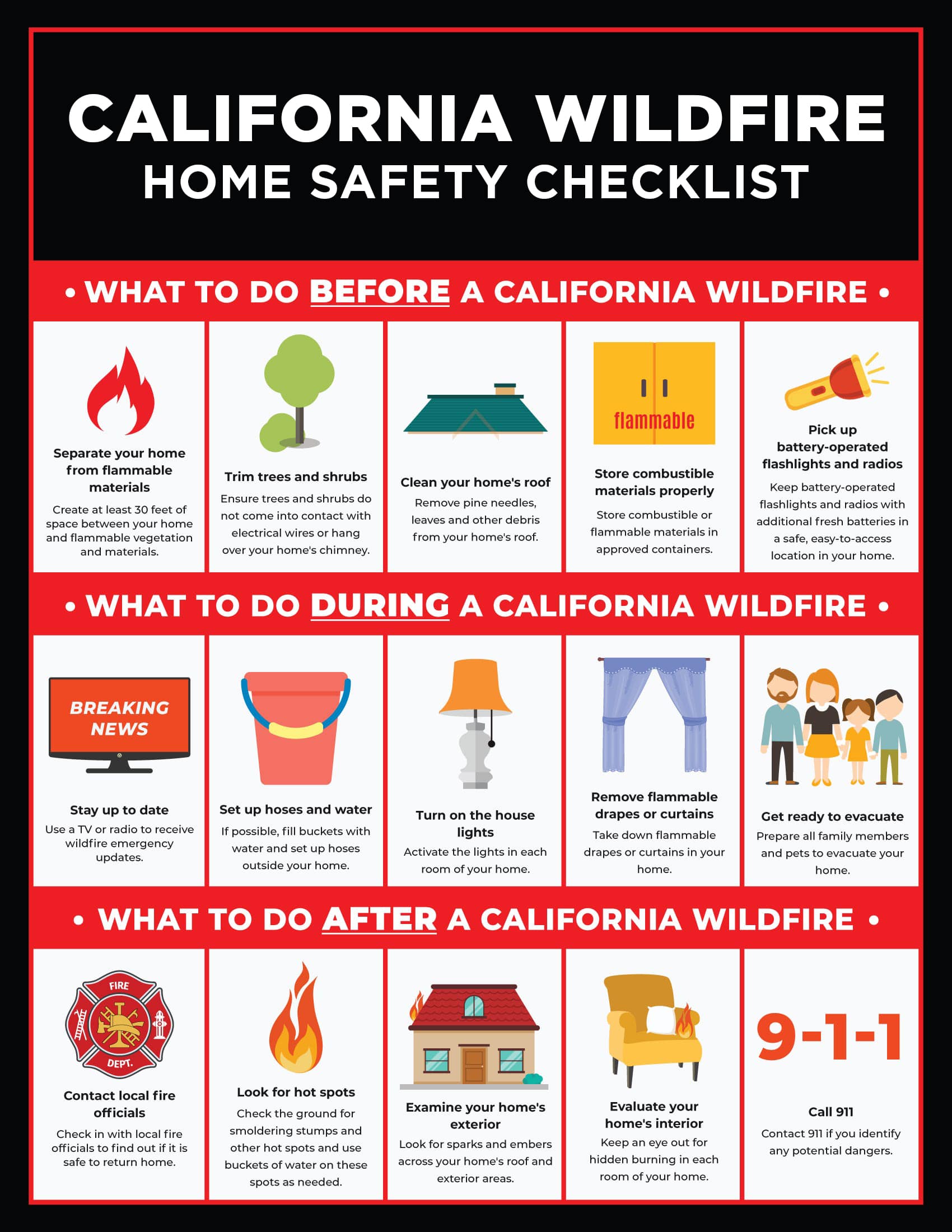
Creating A Defensible Space
A defensible space is the area around your home cleared of flammable materials. This helps firefighters protect your property and slows fire spread.
- Clear dry leaves, pine needles, and branches at least 30 feet from your house.
- Trim trees so branches don’t hang over the roof.
- Move firewood and propane tanks away from the building.
- Keep grass short and watered.
Many homeowners forget to clean gutters or trim shrubs near windows—two spots where embers often ignite homes.
Home Preparation Checklist
- Install smoke alarms and test them monthly.
- Use fire-resistant materials for roofs and siding.
- Seal vents and eaves with fine mesh screens (to block embers).
- Prepare a garden hose, sprinkler, and shovel.
- Make sure your address is visible for emergency crews.
Insurance claims after wildfires can be delayed if you don’t have clear photos of your property. Take pictures of each room and store them in the cloud or on a USB drive.
Family Emergency Plan
Every family should have a wildfire plan:
- Choose two meeting places: One nearby, one farther away.
- Know escape routes from your neighborhood.
- Assign roles (who grabs pets, who packs bags).
- Practice your plan twice a year.
Don’t rely only on cell phones—fires can disrupt service. Write down important numbers and keep a copy in each car.
Wildfire Evacuation Checklist
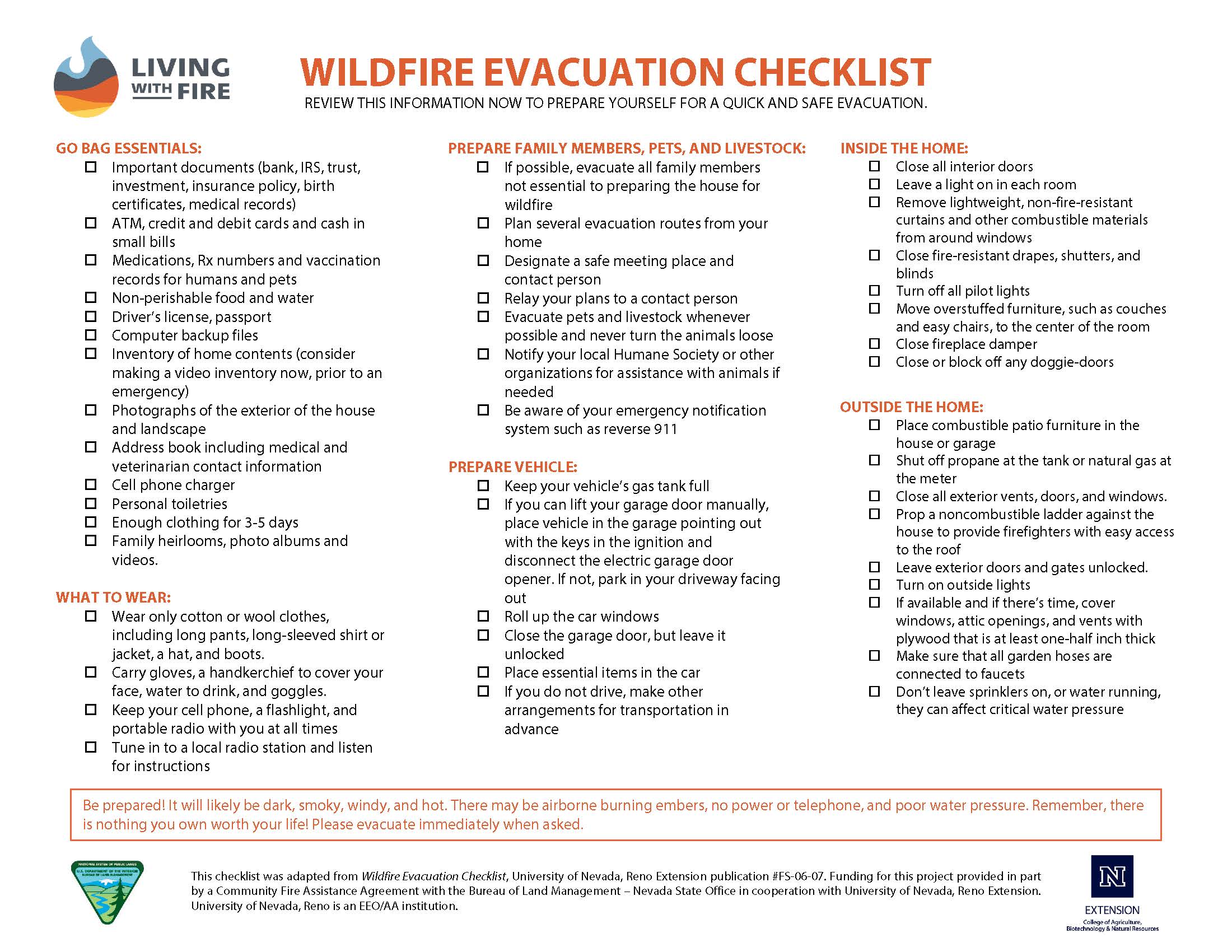
When an evacuation warning is issued, you need to act quickly. Here’s a detailed checklist to follow:
Essential Documents
- Identification (driver’s license, passport)
- Insurance papers (home, auto, health)
- Medical records and prescriptions
- Birth certificates and legal documents
- List of emergency contacts
Store these in a waterproof folder. Many people forget to include copies of pet vaccination records—important if you need to stay at shelters.
Personal Items
- Wallet with cash and credit cards
- Cell phone and charger (portable battery if possible)
- Keys (home, car, safe deposit box)
- Glasses or contact lenses
- Family photos (digital or small prints)
Safety And Health Supplies
- N95 masks (for smoke protection)
- First aid kit (include extra medications)
- Hand sanitizer and disinfecting wipes
- Water bottles (at least one gallon per person)
- Non-perishable snacks (energy bars, nuts, dried fruit)
- Flashlight and batteries
Many people pack only basic masks—N95 masks filter smoke particles much better and are crucial for lung safety.
Clothing And Comfort Items
- Sturdy shoes (closed-toe, comfortable for walking)
- Change of clothes (layers for changing weather)
- Hat and sunglasses
- Warm blanket or sleeping bag
- Rain poncho
Don’t forget pet supplies: leash, carrier, food, and a favorite toy. Stress can make pets harder to handle, so familiar items help.
Tools And Electronics
- Battery-powered radio (for updates if cell service fails)
- Extra batteries or power bank
- Multi-tool or Swiss Army knife
- Copies of important files on USB drive
A portable radio is vital—phone networks often overload or go down during disasters.
Evacuation Route And Transportation
- Map of area (paper, not just digital)
- Full tank of gas (fill up at first warning)
- Car emergency kit (jumper cables, tire repair, water)
- Spare tire and jack
Many people rely on GPS, but wildfires can close roads and routes change quickly. Paper maps show alternate paths and are always ready.
Wildfire Evacuation Checklist Summary
Here’s a summary in a quick-reference table:
| Category | Items | Why Important |
|---|---|---|
| Documents | ID, insurance, medical, contacts | Needed for access, claims, shelter |
| Personal | Wallet, phone, keys, glasses, photos | Daily essentials, proof, comfort |
| Safety/Health | N95 masks, first aid, sanitizer, water, snacks, flashlight | Protects health, sustains energy, provides light |
| Clothing | Shoes, clothes, hat, blanket, poncho | Comfort and protection |
| Tools/Electronics | Radio, batteries, multi-tool, USB drive | Communication, repairs, important files |
| Transportation | Map, gas, car kit, spare tire | Safe evacuation, alternate routes |
| Pets | Leash, carrier, food, vaccination papers | Pet safety, shelter access |
Before You Leave: Last-minute Home Steps
If you have time before leaving, protect your home as much as possible.
Home Safety Actions
- Shut all windows and doors (leave them unlocked for firefighters).
- Remove curtains and move furniture away from windows.
- Turn off gas and propane at the main valve.
- Leave exterior lights on (helps firefighters see your home).
- Place ladders outside for roof access.
Most people forget to unlock doors—firefighters need to get in quickly and won’t waste time breaking locks.
Protecting Your Property
- Move patio furniture, trash cans, and other items inside or away from the house.
- Close garage doors but disconnect automatic openers (in case power fails).
- Fill buckets with water and leave around the yard.
If you have a pool, leave a note for firefighters about its location—they can use this water to fight the fire.
Evacuating With Children, Elderly, And People With Disabilities
Evacuation can be harder for families with special needs. Plan ahead for these situations:
Children
- Pack comfort items (favorite toy, blanket).
- Bring extra snacks and drinks.
- Explain the situation in simple words to avoid panic.
Elderly
- Make a list of medications and doses.
- Prepare mobility aids (walker, wheelchair).
- Assign someone to help and check-in regularly.
People With Disabilities
- List special medical needs.
- Pack adaptive equipment.
- Notify neighbors about your plan so they can assist.
Many families overlook the need for extra time—leave early if you have vulnerable members.
Pet Evacuation Checklist
Pets need their own supplies and planning.
- Leash, harness, and carrier
- Food and water (3-day supply)
- Bowls for eating/drinking
- Pet medications and medical records
- Waste bags or litter box
- Favorite toy or blanket
If you have more than one pet, keep their items separate to reduce stress. Some shelters don’t allow pets, so research nearby animal-friendly locations in advance.
Wildfire Evacuation: What To Expect At Shelters
Shelters can be crowded and stressful, but they offer safety and resources.
Shelter Conditions
- Sleeping mats or cots
- Basic meals and water
- First aid and medical support
- Charging stations for phones
- Separate areas for pets (sometimes outside main shelter)
Registration And Rules
You’ll need ID and may fill out forms. Shelters track who is there for safety and health reasons. Don’t expect privacy—most are open spaces.
Shelters often partner with groups like the Red Cross. If you need special food or medical help, tell staff right away.
Communicating During Wildfire Evacuation
Staying informed is key. Communication can break down during disasters, so have backup plans.
Sources Of Information
- Local news and radio updates
- Emergency alert apps (like FEMA or Red Cross)
- Social media (but double-check for rumors)
- Neighborhood watch or community groups
Emergency Contacts
Make a list of contacts:
- Family
- Friends
- Medical providers
- Insurance agents
Share your evacuation plan with at least one person outside the danger zone.
Comparison Of Communication Methods
Here’s a quick look at the strengths and weaknesses of common methods:
| Method | Strengths | Weaknesses |
|---|---|---|
| Cell Phone | Fast, easy, portable | Network may fail, battery drains |
| Radio | Works without cell signal, reliable | Limited to news, no personal communication |
| Social Media | Wide reach, real-time updates | Rumors, misinformation possible |
| Paper Map | Always available, shows routes | No live updates, must be updated |
Credit: www.tahoelivingwithfire.com
Returning Home After Wildfire Evacuation
Once authorities say it’s safe, you may return home. But dangers can remain.
Checking Your Property
- Watch for hot spots, embers, or damaged structures.
- Smell for gas leaks or check utility lines.
- Wear gloves and masks when cleaning debris.
Don’t turn on electricity or gas until officials confirm it’s safe. Many homes look fine from outside but have hidden damage.
Insurance And Recovery
- Take new photos for insurance claims.
- Contact your agent as soon as possible.
- Keep receipts for cleanup and repairs.
Recovery can take weeks or months. If you need mental health support, reach out—many people feel stress or grief after a disaster.
Common Mistakes During Wildfire Evacuation
Avoid these errors that many people make:
- Waiting too long to leave: Fires move faster than you think.
- Packing too much: Only take essentials. Heavy bags slow you down.
- Relying on one evacuation route: Roads may close. Know alternatives.
- Forgetting pet supplies: Pets need their own items and records.
- Not checking fuel: Always keep your car’s gas tank at least half full during fire season.
- Ignoring local alerts: Watch for changing conditions and follow instructions.
- Failing to update your emergency plan: Practice and review it regularly.
Many beginners also overlook the importance of staying calm—panic can cause mistakes.
Credit: surefirecpr.com
Wildfire Preparedness: Data And Trends
Wildfires are increasing due to climate change and population growth in risky areas.
- In California, 2020 saw over 4 million acres burned—double the previous record.
- FEMA reports that 60% of Americans are not prepared for disasters.
- Early evacuation reduces injury and death rates by up to 40% (according to research).
Most people think wildfires only happen in summer, but dry conditions can lead to fires at any time.
Comparison: Wildfire Vs Other Disaster Evacuations
Understanding how wildfire evacuation compares to other disasters helps you prepare better.
| Disaster Type | Warning Time | Evacuation Challenges | Unique Risks |
|---|---|---|---|
| Wildfire | Minutes to hours | Smoke, road closures, fast spread | Air quality, unpredictable movement |
| Flood | Hours to days | Water, blocked routes, slow evacuation | Contaminated water, property loss |
| Hurricane | Days | Mass evacuations, heavy traffic | Wind, flooding, power loss |
| Tornado | Minutes | Rapid movement, limited warning | Structural damage, debris |
Wildfires often give less warning than floods or hurricanes, making quick action even more important.
Non-obvious Insights For Better Wildfire Evacuation
Some steps are easy to overlook but can make a big difference:
- Prepare for poor air quality: Smoke can linger for days. Keep masks and air filters ready.
- Check neighbors: If you have elderly or disabled neighbors, ask if they need help.
- Backup important files: Digital copies of documents (on USB or cloud) can speed up recovery.
- Practice evacuation: Walk through your plan with family. Try leaving in 15 minutes to see what you miss.
Many people ignore the need for backup power—portable chargers keep phones working when electricity fails.

Credit: firesmartbc.ca
Wildfire Evacuation Checklist For Businesses
If you run a business in a wildfire area, have a plan:
- Back up computers and data regularly.
- Keep a list of important contacts (employees, suppliers).
- Store insurance and legal documents offsite.
- Prepare an employee communication plan.
- Identify alternate work locations.
Business owners often forget employee safety—have a plan for checking on workers and supporting their needs.
Staying Informed And Educated
Knowledge is power during disasters. Visit trusted sources for updates:
- Local fire department websites
- Government emergency alert systems
- News outlets and weather apps
For more detailed advice, see the Ready.gov wildfire page.
Frequently Asked Questions
What Should I Do If I Have Only A Few Minutes To Evacuate?
Grab essentials—ID, keys, phone, medications, and pets. Leave immediately. Don’t waste time packing extra items. Close windows and doors if possible, but your safety comes first.
How Can I Protect My Home Before Leaving?
Clear flammable materials, shut windows and doors, turn off gas, leave lights on, and unlock doors for firefighters. Move outdoor furniture away from the house. If you have time, wet down the yard.
What If Roads Are Blocked During Evacuation?
Listen to emergency radio updates for alternate routes. Use paper maps to find backup paths. If all routes are blocked, shelter in place and notify authorities of your location.
Are Pets Allowed In Shelters?
Some shelters accept pets, but not all. Bring pet supplies and vaccination records. Call ahead or check local information to find pet-friendly shelters.
How Do I Stay Updated During A Wildfire Evacuation?
Use battery-powered radio, emergency alert apps, and check official websites. Avoid relying only on cell phones or social media, as networks can fail and rumors can spread.
Final Thoughts
Wildfires are unpredictable and dangerous, but being prepared makes all the difference. A clear wildfire evacuation checklist helps you act quickly, avoid mistakes, and protect your loved ones. Remember to practice your plan, keep essential items ready, and stay informed. Even small steps—like backing up files or helping neighbors—can change the outcome. Stay safe and help others by sharing what you’ve learned. Preparation is your best tool against wildfires.
